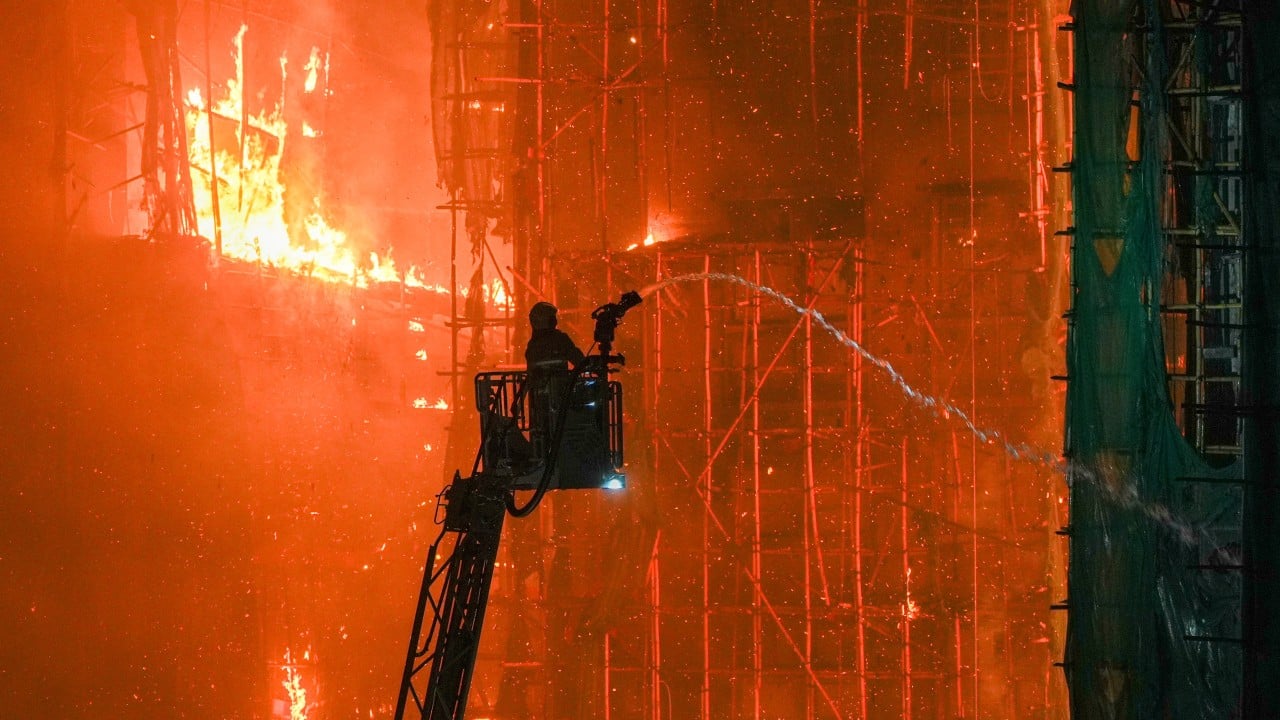
Every time an audit exposes a backlog of skipped fire inspections, the political playbook is identical. A security chief steps up to a podium, clutches a thick oversight report, and vows a sweeping "revamp" of the fire department.
It is pure theater. And if you believe a top-down administrative overhaul fixes lax fire prevention, you do not understand how municipal fire services actually fail.
The competitor coverage of this latest departmental censure falls straight into the trap of lazy consensus. They frame the crisis as a simple failure of willpower, accountability, and management discipline. Hire more inspectors, tighten the checklists, digitize the clipboards, and reprimand the leadership. Problem solved.
Except it never solves anything. In fact, the standard bureaucratic "revamp" almost always makes buildings less safe.
The Myth of the Lazy Inspector
When an oversight report censures a fire department for missing high-risk occupancy inspections, the public pictures municipal employees drinking coffee at the station while electrical panels spark across town. That caricature is convenient for politicians because it lets them blame frontline execution rather than systemic design.
I have spent years dissecting municipal risk management and watching cities throw millions at compliance software after a high-profile tragedy. The frontline inspectors are rarely lazy. They are drowning in mathematical impossibility.
Consider the ratio of commercial structures to certified fire prevention officers in almost any major jurisdiction. A single inspector is frequently assigned hundreds—sometimes thousands—of occupancies ranging from dry cleaners and auto body shops to high-rise residential towers and subterranean transit hubs. Under National Fire Protection Association (NFPA) frameworks like NFPA 1730 (Standard on Organization and Deployment of Fire Prevention Inspection and Code Enforcement, Plan Review, Investigation, and Public Education Operations), inspection frequencies are supposed to be dictated by hazard classification. High-hazard occupancies require annual or semi-annual scrutiny; low-hazard spaces require far less.
What happens when a security chief vows a "comprehensive revamp" after a scathing audit?
Politicians hate nuance. To prove they are taking action, they mandate 100% completion metrics across the board. Suddenly, an inspector who should spend three full days tracing fire-damper actuators and smoke-control sequences in a 40-story hospital is penalized because they didn't clear forty low-risk nail salons and accounting offices by Friday.
When you measure volume instead of lethality, inspectors adapt to survive. They do "windshield inspections" or ten-minute walk-throughs. They check whether the exit sign bulb is lit and the fire extinguisher tag is signed, completely missing the compromised fire-rated drywall above the drop ceiling or the illegally chained stairwell door on the sub-basement level.
The audit numbers look great six months later. The compliance dashboard turns green. And the city is sitting on a powder keg.
Why Fire Prevention is Treated as a Second-Class Citizen
If you want to know why inspections slip through the cracks, stop looking at the inspection logs and start looking at the departmental budget and promotion ladder.
In virtually every traditional fire service, suppression is king and prevention is exile.
The culture of firefighting is built around acute emergency response—kicking down doors, pulling hose lines, and rescuing victims from flashovers. That is where the prestige lives. That is where the overtime budgets go. And that is where the union and executive leadership concentrate their political capital.
Fire prevention bureaus, by contrast, are routinely treated as either a dumping ground for injured firefighters on light duty or a stepping stone an officer tolerates for eighteen months just to check a box for a battalion chief promotion.
Think about the perverse incentives built into that structure:
- Zero institutional memory: Just as a uniformed officer finally learns the labyrinthine mechanical systems of a district's industrial plants and historic buildings, they rotate back out to a ladder company.
- Civilian vs. sworn friction: Departments that hire civilian fire protection engineers—people with actual degrees in fluid dynamics, fire modeling, and structural assembly—often cap their pay and authority below uniformed officers who lack technical engineering backgrounds.
- Budget cannibalization: When municipal tax revenues tighten, nobody cuts engine companies because closing a firehouse triggers immediate voter outrage. Instead, city halls quietly freeze hiring in the Fire Prevention Bureau. Nobody riots when an inspection backlog grows by 4,000 buildings—until one of them burns.
A security chief promising a "revamp" without decoupling fire prevention from suppression-centric promotion tracks is just rearranging deck chairs. You cannot fix a structural cultural hierarchy with a memo.
The Checklist Illusion and Regulatory Capture
Let's dismantle another sacred cow of municipal safety reporting: the idea that stricter, longer inspection checklists equal safer cities.
Modern fire codes—whether derived from the International Fire Code (IFC) or NFPA 1—are extraordinarily dense. Over the past thirty years, code cycles have expanded exponentially, adding layers of requirements for lithium-ion battery storage, automated smoke evacuation, active shooter lockdown integrations, and complex sprinkler hydraulics.
Imagine a scenario where a veteran inspector walks into an older mixed-use building converted into an e-bike repair shop on the ground floor and apartments above. Under a rigid, compliance-obsessed revamp, the inspector might write up nineteen minor administrative violations: missing signage, a slightly obstructed electrical panel clearance, an outdated binder for emergency evacuation drills.
Meanwhile, the building owner plays the municipal delay game.
In most cities, a fire inspector has zero immediate enforcement teeth beyond issuing a notice of violation with a 30-to-90-day cure period. If the landlord ignores it, the case crawls into a municipal administrative court system backlogged by two years, where a sympathetic magistrate waives the fines as long as the landlord promises to hire a contractor next month.
The security chief's report almost always blames the fire department for "failing to follow up." They rarely ask why the city's own legal department refuses to prosecute repeat code offenders, or why business licensing departments allow commercial tenants to operate for years without a valid Certificate of Occupancy.
The fire department is being scapegoated for a city-wide failure of legal enforcement.
What People Actually Get Wrong About Fire Safety Audits
When news breaks about lax fire inspections, public anxiety spikes immediately. Citizens start asking the exact wrong questions because the media frames the issue around bureaucratic negligence rather than physical risk.
"How do I know if my building passed its last fire inspection?"
Asking whether your building "passed" is a trap. A passing inspection report is a snapshot in time, not a force field. A building can pass a rigorous inspection at 10:00 AM, and by 2:00 PM a contractor can prop open a fire-rated stairwell door with a wooden wedge, or a warehouse manager can stack pallets six inches below the sprinkler heads, rendering the entire suppression system useless.
Instead of trusting a municipal paper trail, look at the physical indicators of active maintenance:
- Fire doors: Do the heavy doors in your hallway or stairwell latch completely on their own when released, or do they drag on the carpet and stay ajar?
- Sprinkler heads: Are they painted over, covered in dust clumps, or blocked by storage racks within 18 inches of the ceiling?
- Alarm panels: Walk past the main annunciator panel in the lobby. Is it glowing clean, or is it beeping with a yellow "TROUBLE" or "SUPERVISORY" light that management has silenced for six months?
If building management ignores visible life-safety hardware, no municipal audit will save you.
"Should cities hire private contractors to clear the inspection backlog?"
Whenever a public agency gets censured, privatization consultants immediately circle the building like hawks. Handing routine inspections over to third-party private vendors sounds efficient on paper. In reality, it introduces a lethal conflict of interest.
When building owners or developers are allowed to hire and pay their own third-party inspection firms to certify code compliance, those firms quickly learn a brutal market truth: if you fail a client's building and force them into a $200,000 fire-alarm upgrade, you never get hired by that developer again. Even when the municipality pays the contractor directly, third-party vendors operate on thin margins that reward speed over depth.
The Grenfell Tower disaster in London and countless high-rise cladding failures globally proved what happens when regulatory oversight is outsourced to a fragmented web of private certifiers and self-policing contractors. Life safety cannot be governed by the lowest bidder.
"Will AI and digital inspection software fix the backlog?"
Every security chief's revamp announcement includes a breathless promise to "modernize technology" and deploy predictive analytics.
Software is great at scheduling routes and eliminating duplicate data entry. It is completely useless at walking up twelve flights of stairs to test water pressure at the standpipe outlet. More often than not, new municipal enterprise software adds thirty minutes of mandatory drop-down menus to every inspection, reducing the actual number of buildings an inspector can physically visit in a shift.
The Uncomfortable Truth About Risk-Based Triage
If you want to actually stop people from dying in preventable fires, you have to abandon the political fantasy that every building will be inspected on schedule.
No major city has the tax base to inspect every commercial property annually with thorough engineering rigor. Pretending otherwise guarantees mediocre, superficial inspections everywhere.
Real reform requires radical risk-based triage—and it requires political leaders brave enough to defend it when a low-risk building inevitably has a minor fire.
Here is what an actual, non-theatrical overhaul looks like:
- Publicly abandon universal annual quotas: Strip low-hazard occupancies (standard retail, small offices, single-story non-combustible structures) out of the annual physical inspection cycle. Shift them to a verified self-certification model backed by random, unannounced spot audits and massive financial penalties—think $10,000 per day, not $250—if a spot audit catches a lie.
- Concentrate 80% of sworn and engineering firepower on the lethal 20%: Dedicate your best technical personnel exclusively to high-life-hazard occupancies: high-rises, hospitals, nursing homes, nightclubs, illegal residential conversions, and facilities storing hazardous materials or high-density lithium-ion batteries.
- Grant inspectors immediate padlock authority: Stop begging landlords to fix blocked exits and disabled sprinkler valves. Give senior fire marshals the statutory authority to issue immediate cease-and-desist orders and vacate premises on the spot when imminent life-safety hazards exist—the exact same authority health inspectors already have to shut down a restaurant with roaches in the kitchen.
- Separate the Fire Prevention Bureau from suppression politics: Build a dedicated, high-paying career track for fire protection engineers and career fire marshals that does not require rotating back to fire engines to earn a pension bump.
The Downside Nobody Wants to Admit
Even this approach carries a severe political vulnerability, and pretending otherwise would be dishonest.
When you explicitly deprioritize low-risk properties to focus on high-consequence buildings, you accept a statistical certainty: a small, uninspected storefront or warehouse will eventually catch fire. When it does, the local press will pull the property's file, discover it hadn't been inspected in four years, and run the exact same outrage headline that triggered this mess in the first place.
Politicians hate risk triage because you cannot prove a negative. You never get credit for the nursing home fire that didn't happen because an inspector caught a faulty transfer switch during a three-day deep dive. You only get blamed for the warehouse fire that made the evening news.
That is why security chiefs keep choosing the fake revamp. They would rather preside over a broken system that looks busy on a spreadsheet than defend a rational system that exposes them to political blame.
Until city halls value technical engineering over bureaucratic theater, every "sweeping overhaul" is just a countdown to the next audit.