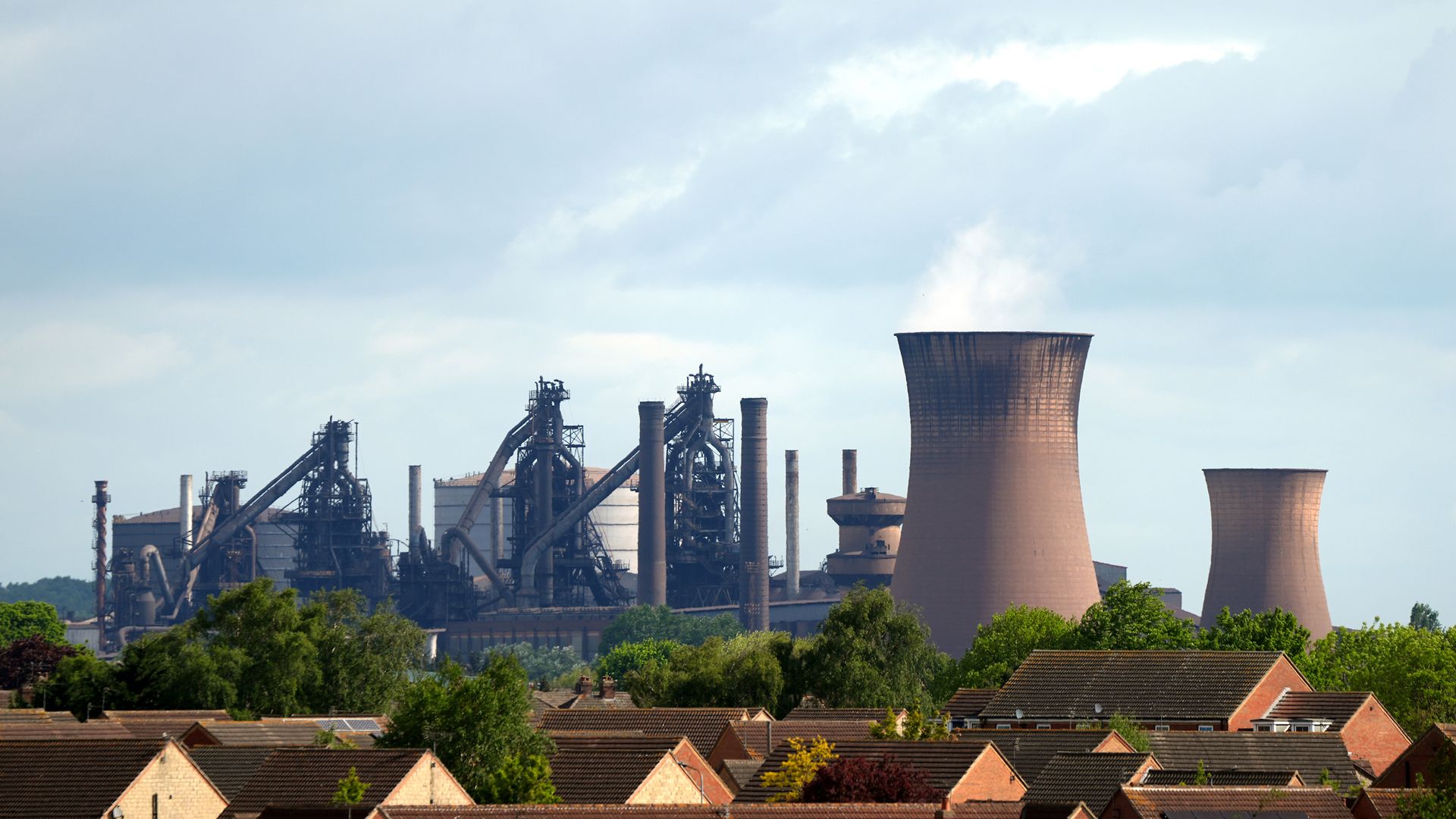
The collective weeping over the decline of British steelmaking is the most expensive performance art in modern economics.
Every time a major domestic steel producer teeters on the brink of insolvency, a predictable coalition of trade unions, regional politicians, and sentimental commentators line up to demand the same failed solution. They want the taxpayer to step in. They want nationalization. They want a blank check to preserve an industrial relic under the guise of sovereign capability and regional pride.
It is a monumentally bad idea.
Taking British Steel into public ownership, or spending billions in state subsidies to keep its blast furnaces on life support, is not a strategy. It is an act of economic self-harm masquerading as patriotism. We are told that steel is a foundational industry, that national security demands domestic production, and that green steel will spark a manufacturing renaissance.
None of this is true. The consensus surrounding the salvation of British steel is built on economic myths, outdated industrial nostalgia, and a refusal to face the brutal realities of the global energy market.
The Sovereign Steel Myth is Financially Illiterate
The most common defense of state-backed steel is national security. The argument goes like this: we cannot rely on foreign nations for the core material used to build our warships, submarines, tanks, and critical infrastructure.
This sounds reasonable until you examine how modern defense procurement actually works.
The UK military does not buy raw steel slabs straight from a blast furnace in Scunthorpe. It requires highly specialized, high-performance alloys. Most of these specialized steels are already imported or processed by niche, private metallurgical firms, not the mass-market commodity producers currently begging for state bailouts.
More importantly, the UK steel sector is structurally incapable of competing on the global stage for one simple, unalterable reason: energy costs.
To turn iron ore into steel in a traditional blast furnace, you need massive amounts of coal and electricity. UK industrial electricity prices are consistently among the highest in Europe, often double what French or German competitors pay, let alone Chinese or Indian producers who operate under far looser environmental and labor regulations.
Average Industrial Electricity Prices (Approximate relative comparison):
[UK]       ████████████████████ (Highest)
[Germany]  ███████████
[France]   ████████
[US/Asia]  █████
Nationalizing British Steel does not magically lower the price of a megawatt-hour. It merely shifts the burden of those exorbitant energy bills from a private balance sheet directly onto the taxpayer. If the state takes over, it inherits a business that loses money on every single ton of steel it pours. The government becomes a captive buyer of its own uncompetitive product, pouring public cash into a furnace that yields nothing but financial ash.
The Toxic Math of Job Preservation
I have sat in boardrooms where executives pitch restructuring plans, and the playbook is always the same. They leverage the threat of mass layoffs to extort subsidies from desperate politicians.
The emotional blackmail works because the human cost of a mill closing is real. Towns like Scunthorpe have built their entire identity around steel. But we must look at the actual math of these bailouts.
When governments intervene to "save" thousands of steel jobs, they rarely calculate the cost per job. Historically, state interventions in failing heavy industries work out to hundreds of thousands of pounds per worker.
Imagine a scenario where the government spends £1 billion to keep a failing plant afloat for an extra five years to protect 3,000 jobs. That is over £330,000 per worker.
Instead of trapping those workers in a dying, subsidized industry with no long-term future, that capital would be infinitely more productive if deployed directly into the local economy.
- Direct transition grants to help workers retrain for industries with genuine structural tailwinds.
- Infrastructure investments to attract modern logistics, advanced manufacturing, or clean energy firms to the region.
- Tax incentives to turn former industrial sites into enterprise zones.
Sinking billions into a bankrupt steel mill to preserve jobs is not employment policy; it is incredibly expensive, state-funded hospice care for an industry that has already passed its expiration date.
The Green Steel Transition is a Capital Trap
The latest justification for state ownership is the transition to "green steel." The narrative is highly seductive: by using electric arc furnaces (EAFs) powered by renewable energy and recycling domestic scrap, we can build a carbon-neutral industrial powerhouse.
This is a fantasy wrapped in a green flag.
First, electric arc furnaces do not make virgin steel from iron ore; they melt down existing scrap metal. While the UK generates a massive amount of scrap steel, the high-grade steel required for specialized manufacturing and automotive applications cannot easily be made from run-of-the-mill scrap without extensive, costly refining processes.
Second, EAFs are incredibly electricity-intensive. Moving from coal-fired blast furnaces to electric arc furnaces actually increases the industry’s dependence on the UK's broken, expensive national grid. Without a fundamental overhaul of the entire domestic energy sector, green steel produced in the UK will be wildly uncompetitive on the global market.
Third, who pays for this transition? The capital expenditure required to convert traditional blast furnaces to EAFs runs into the billions. If the state nationalizes these assets, the taxpayer is on the hook for both the operating losses and the multi-billion-pound decarbonization bill.
We are asking the public to fund a massive capital project for a business that has no path to organic profitability. It is a classic sunk-cost fallacy. We are throwing good green money after bad gray money.
Governments are Terrible Industrial Managers
Let us address the structural reality of state-owned enterprises.
A state-run steel company does not answer to the market; it answers to politicians. Politicians do not care about operational efficiency, margin optimization, or supply chain resilience. They care about election cycles, union negotiations, and positive press releases.
When a private company faces market headwinds, it is forced to adapt. It cuts fat, pivots to high-margin products, and closes unviable lines. When a state-owned company faces headwinds, it lobbies the Treasury for more money.
We have played this game before. The nationalization of British Steel in 1967 led to a bloated, inefficient behemoth that required constant state injections to survive, culminating in massive, painful restructuring anyway.
The hard truth is that the global steel market is plagued by structural overcapacity, largely driven by state-subsidized Chinese mills that dump cheap product onto the global market. You cannot defeat state-subsidized dumping by copy-pasting the exact same flawed model of state subsidization in a high-cost western economy. You will simply go broke faster.
Dismantling the PAA Premise: Is Steel a Strategic Necessity?
People often ask: "Can a major G7 economy survive without a primary steel industry?"
The premise of the question is fundamentally flawed. It assumes that "survival" requires domestic raw manufacturing of every single component.
We do not mine our own lithium, we do not refine most of our own fuel, and we do not manufacture our own advanced microchips. We rely on diversified, international supply chains secured by trade agreements and strategic alliances.
Steel is no different. There is a deep, highly liquid global market for steel slabs and rolled coils. Buying steel from allied nations like Sweden, Germany, or the United States is not a vulnerability; it is basic economic specialization.
If we truly want to secure our manufacturing supply chains, we should focus our resources on high-value, IP-heavy sectors like aerospace, advanced materials, and clean energy technology. We should stop trying to compete at the bottom of the value chain in a commodity market where we have zero structural advantages.
The true national security risk is not importing steel. The true risk is wasting billions of pounds of national capital on an economic black hole, leaving less money for education, defense research, and actual infrastructure.
Let British Steel go.
If a private buyer cannot find a way to run these plants profitably, then they should be allowed to close. Take the billions of pounds earmarked for this eternal bailout cycle and hand it directly to the communities affected. Build new industries. Retrain the workforce. Clean up the industrial sites for modern commercial use.
Stop worshiping the heavy industries of the 19th century and start building the economic realities of the 21st.