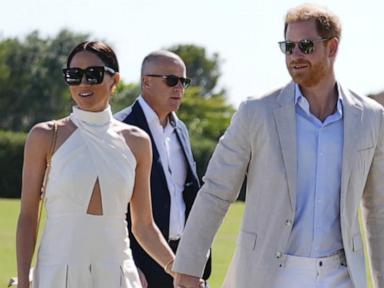
Every royal-adjacent gossip rag and celebrity news blog is currently hyperventilating over a predictable combination of milestones. Meghan Markle drops a birthday tribute for Prince Harry while their children quietly shuffle off to a brand-new educational institution. The headline-churning machine treats this standard life occurrence as an epoch-shifting drama. The lazy consensus across the media landscape is that elite schooling choices, carefully curated social media posts, and strategic geographic relocations amount to a masterclass in protecting family privacy and securing an ordinary upbringing.
It is absolute theater. And the public eats it up every single time.
I have spent years watching high-profile families attempt to engineer normalcy through tuition checks and gated campuses, and the playbook never changes. The narrative always suggests that moving children to a fresh school solves the fundamental friction of growing up under a media microscope. It implies that brick-and-mortar walls can somehow block out the gravitational pull of generational notoriety.
That premise is entirely false.
Changing schools does not isolate children from public curiosity. It merely changes the venue. When parents use educational transitions as a shield while simultaneously feeding the publicity beast with calculated social media crumbs, they are running a masterclass in cognitive dissonance.
Let us dismantle the mechanics of this illusion.
The Architecture of Manufactured Privacy
The standard defense offered by public relations handlers for high-profile figures is that moving children across continents or switching them to private academies is an act of fierce protection. The argument goes that elite institutions offer airtight security, discretion, and a peer group of similarly situated elites who do not care about who your parents are.
This sounds comforting. It is also historically illiterate.
Elite schools do not neutralize status; they hyper-charge it. Putting a child in an exclusive, high-ticket private school does not hide their lineage from classmates or staff. It puts them in a pressure cooker where every peer is hyper-aware of social hierarchies, family wealth, and media relevance. The idea that wealthy teenagers or prep-school children are immune to gossip is a fantasy sold by admissions directors.
When you relocate children to escape public pressure while keeping your own brand permanently tethered to public output, you create a split reality for those kids. One parent is curating birthday posts for global consumption, while the other is navigating school drop-offs surrounded by security protocols. Children are not stupid. They absorb the contradiction instantly. They learn that their lives are currency, even when told the exact opposite.
The Real Cost of the PR Balancing Act
Let us look at the fundamental contradiction of modern public image management. You cannot simultaneously demand total obscurity and feed the machine that generates your relevance.
The media circus surrounding royal descendants, celebrity offspring, and high-profile transplants always frames these moves as brave acts of liberation. They fled the gold-plated cage! They are building a normal life in the sunshine!
Except normalcy cannot be bought by switching zip codes or enrolling in progressive private academies. Normalcy requires anonymity, and anonymity is mathematically incompatible with building a multi-million-dollar commercial brand based on personal narrative. Every time a birthday tribute is broadcast to millions, every time an exclusive profile details the domestic bliss of a Montecito backyard, the walls of that supposed sanctuary get a little thinner.
Imagine a scenario where a high-profile family genuinely cuts the cord—no profiles, no commercial partnerships, no strategic birthday drops, and zero media leaks for five consecutive years. The public would forget them within eighteen months. That is the dirty secret of modern celebrity. The public does not care about the privacy; they care about the product. And when the product is the family's lifestyle, privacy is just another marketing angle.
Why the School Move Narrative Fails the Data Test
Journalists love to write about school changes because it feels tangible. A new backpack, a new campus, a fresh start. It provides an easy narrative arc for an audience that loves a redemption or reinvention story.
Yet, educational sociologists have pointed out for decades that institutional transitions amplify existing family stressors rather than cure them. When children carry the weight of an internationally debated family feud, historic institutional baggage, and constant public scrutiny, changing the playground doesn't change the psychology.
The elite institutions targeted by high-net-worth families pride themselves on discretion, but they are also breeding grounds for hyper-ambitious social climbing. The other parents aren't starstruck peasants; they are venture capitalists, media executives, and tech moguls who view social access as a commodity. Dropping a pair of globally recognized children into that ecosystem does not shield them. It places them directly onto a different kind of chessboard.
The mistake observers make is confusing institutional exclusivity with emotional safety. They are entirely different metrics. A school with armed guards and a ten-acre campus can still be an emotional fishbowl.
The Unspoken Downside of the Contrarian Reality
Let us be completely transparent about the flaws in this critique. Attacking public relations strategies and calling out the performative nature of celebrity parenting sounds cynical, and it is. The downside of this perspective is harsh: it strips away the comforting fiction that people can have it all.
Consumers want to believe that their favorite figures can wield immense global influence, rake in commercial deals, maintain a constant media footprint, and still raise grounded, anonymous children in a sun-drenched paradise.
They cannot.
Physics applies to fame just as it applies to energy. Every action has an equal and opposite reaction. You cannot monetize your biography and expect your children's biography to remain unwritten by the public. You cannot weaponize privacy as a PR strategy while keeping the spotlight firmly fixed on your front door.
Stop Asking the Wrong Questions
People ask: How can these families protect their kids from the press?
It is the wrong question. It assumes the threat comes exclusively from outside forces—paparazzi lenses, tabloid gossip, invasive reporting.
The real threat to children in the spotlight has never been the tabloid photographer hiding in the bushes. The real threat is the internal family dynamic that treats privacy as a brand asset and normal life as a press release.
If you want to protect children from the circus, you have to step out of the ring entirely. Until public figures are willing to trade relevance for actual obscurity, every school move, every birthday post, and every breathless media report is just another act in a play that never ends.
Stop buying the script.