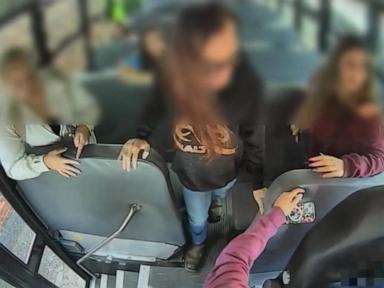
Every few weeks, the internet erupts over a viral headline praising teenagers who heroically wrestled a school bus to a stop after the driver slumped over mid-route. The comments flood in with tearful emojis, declarations of faith in the younger generation, and hollow nods to youthful resilience. We love these stories. They make us feel warm inside. They let us pretend that random acts of adolescent heroism are a functional substitute for basic structural competence.
They are nothing of the sort. For an alternative view, read: this related article.
Every single time we celebrate a child stepping into the driver seat of a forty-foot moving metal tube because an adult collapsed, we are cheering for a catastrophic systemic failure disguised as a heartwarming human-interest segment. We are romanticizing crisis management while ignoring the fact that the crisis should have been entirely preventable.
Let us strip away the feel-good varnish and look at the mechanical and operational reality of modern pupil transportation. School districts across the country run on razor-thin budgets, squeezing operational costs down to the absolute floor. What gets cut first? Driver retention, rigorous baseline health screening, wage competitiveness, and fleet maintenance. When you pay drivers poverty wages and subject them to grueling split shifts with zero health benefits, you do not attract a stable workforce. You attract a demographic scraping by on the edge of exhaustion. Similar analysis on this trend has been published by BBC News.
Then, when an overworked driver experiences a medical emergency behind the wheel—something entirely predictable given the physiological toll of chronic overwork and inadequate health care—we turn our cameras toward the nearest fourteen-year-old and call them a savior.
It is a brilliant deflection. It shifts the burden of operational safety from the adults in charge, who collect salaries to manage risk, onto children whose only job description should be learning algebra and avoiding social embarrassment.
Consider the lazy consensus of the mainstream narrative. The standard media script tells you that children possess hidden depths of courage that emerge only when pressure spikes. It feeds the myth that crisis brings out the best in us, so therefore, crises are somehow valuable trial-by-fire moments. This is romantic nonsense. A moving vehicle with fifty children on board is not an obstacle course designed to test adolescent mettle. It is a high-stakes logistics operation governed by physics and human biology. If the safety of that operation relies on a middle schooler reacting with split-second precision to a dying adult, the operation has already failed at every single preceding checkpoint.
We need to talk about the physical reality of the modern school bus. Modern commercial transport vehicles are heavy machinery. Older buses lack automated emergency braking systems that can detect driver incapacitation and bring the rig safely to a halt. While commercial aviation and long-haul trucking have integrated dead-man switches, lane-keep assist, and medical monitoring systems for decades, the yellow school bus—the primary transit method for millions of children—often operates on thirty-year-old safety engineering assumptions. We rely on the driver's grip remaining firm. When that grip fails, we cross our fingers and hope a teenager is paying attention instead of looking at their phone.
That is not a safety protocol. That is a prayer.
Transport safety experts have pointed out repeatedly that driver health monitoring remains an afterthought in municipal transit contracting. Districts accept the lowest bidder for bus routing services, squeezing profit margins until safety buffers evaporate. When operators cut corners on medical clearances or look the other way regarding chronic fatigue among drivers, they are playing Russian roulette with a cargo of minors.
Yet, when the inevitable happens, the community response is entirely backwards. We plaster the kids on morning talk shows. We give them plaques at city hall. We hand out oversized ceremonial keys. We give everyone involved a collective dopamine hit that absolves them of the hard, unglamorous work of demanding institutional accountability.
Nobody wants to ask why a driver with an underlying medical condition was cleared for a route in the first place. Nobody wants to audit the contractor's dispatch protocols or evaluate whether split-shift schedules are driving people into early graves. It is much easier to buy a plaque than to fund a robust public infrastructure that treats student transportation with the gravity of commercial flight.
We are teaching children a toxic lesson about systemic dysfunction. We teach them that when the adults drop the ball, it is noble and good for them to dive into traffic to catch it. We frame exhaustion and corner-cutting as opportunities for character building.
Stop calling these kids heroes. Call them witnesses to a breakdown in governance.
If we actually cared about these students, we would stop relying on their reflexes to fix broken municipal systems. We would mandate automated safety interventions on every bus in service. We would tie transit funding to driver wellness, mandatory rest periods, and livable compensation that attracts professionals who can focus entirely on navigation without worrying about making rent.
Until we fix the engine, clapping for the passenger who grabs the wheel after the driver collapses is just applauding the crash.


