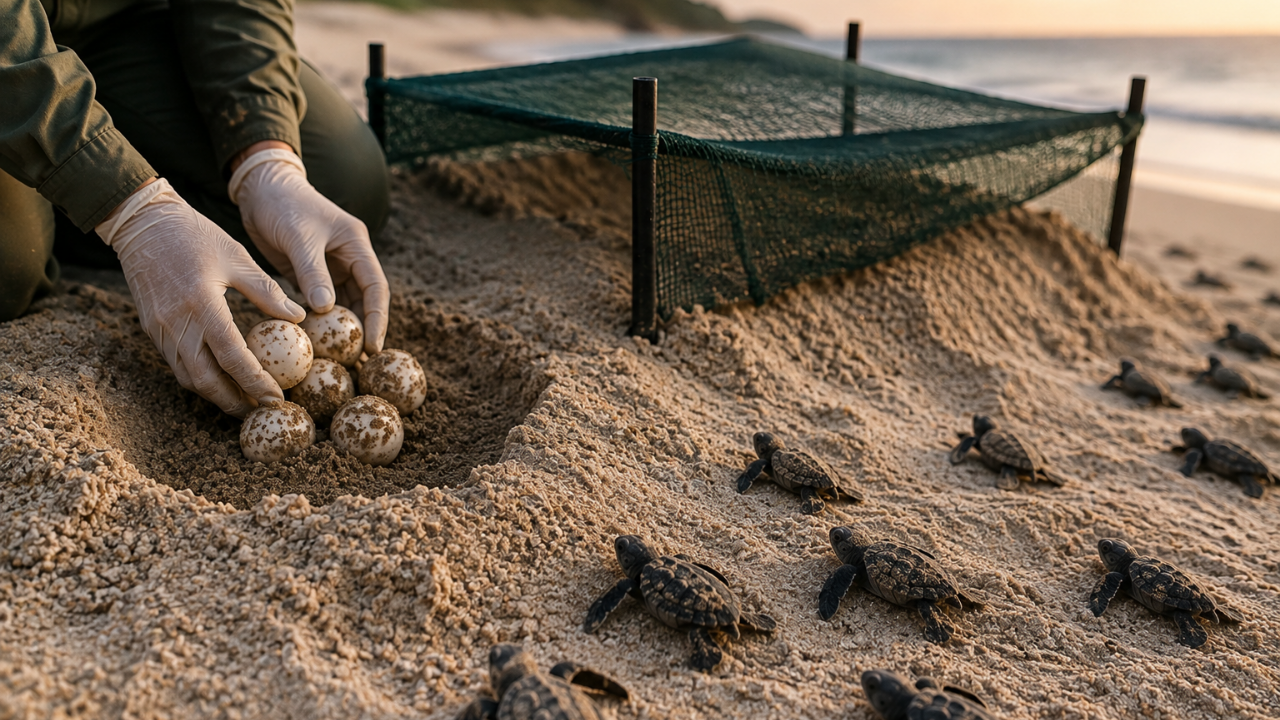
Conservation biology suffers from a severe addiction to interference. Give well-meaning field researchers a shovel, a GPS unit, and a clutch of buried eggs, and they suddenly turn into hyperactive urban planners trying to micromanage mother nature. The lazy consensus dominating conservation circles dictates that whenever a sea turtle lays eggs too close to the high-tide line, human hands must intervene. We dig them up. We relocate them to higher ground. We pat ourselves on the back for saving the brood from an encroaching wave.
Then we look at the data, throw up our hands in manufactured panic, and write panic-stricken papers lamenting that relocated turtle nests produce fewer hatchlings, smaller young, and a heavily female-biased sex ratio.
Stop the presses. The eggs moved by human hands suffer worse outcomes than the ones left alone? Color me shocked.
We treat these outcomes as mysterious anomalies requiring more grants, more bureaucracy, and more meddling. The real story gets buried beneath layers of bureaucratic institutional ego. The problem is not that relocation protocols need minor tweaks. The problem is that relocation itself is a fundamentally flawed intervention built on a profound misunderstanding of evolutionary trade-offs and nest-site selection mechanics.
The Hubris of the Beach Management Bureaucrats
Let us look at what actually happens during a nest relocation. A technician spots a crawl track, digs down into the sand, extracts delicate leathery eggs by hand, and places them into a bucket. Already, the mortality clock is ticking. Every degree of rotation, every micro-shift in orientation, risks detaching the internal membranes of the egg, suffocating the embryo before development even begins.
Then, the technician carries that bucket down the beach—or worse, drives it in an ATV—to a designated "hatchery" or a supposedly safer stretch of dry sand. The eggs are dropped into a human-dug hole that mimics roughly zero of the actual chemical, thermal, and moisture gradients chosen by the female turtle.
When those hatchlings crawl out smaller, weaker, and skewed heavily toward females, conservationists act baffled. They blame the sand compaction. They blame ambient temperature shifts. They never blame their own clumsy intervention.
Let us define terms precisely. Temperature-dependent sex determination in reptiles is not an evolutionary flaw that needs fixing. It is a dynamic survival mechanism fine-tuned over millions of years. Female production surges in warmer temperatures. When a mother turtle selects a specific spot, she is integrating dozens of micro-environmental variables—salinity, root density, gas exchange, and thermal fluctuations—that human spot-checkers simply cannot replicate with a handheld thermometer and a prayer.
When we move nests to open-air hatcheries to protect them from poachers or coastal erosion, we strip away the natural environmental variance that builds resilient populations. We trade short-term egg survival for long-term physiological compromise.
Dismantling the Myths of Relocation Logic
People ask why we cannot simply refine hatchery temperatures or shade the relocated nests to fix the sex ratio skew. This question misses the forest for the trees. It assumes human management can consistently outperform evolutionary pressure.
Consider a scenario where every single vulnerable nest on a nesting beach gets relocated to a centralized, monitored hatchery to maximize raw hatching counts. You get a massive bump in emergence numbers on day one. You also get a genetic bottleneck, a generation of underperforming hatchlings with compromised thermal adaptation, and a total disruption of natural natal homing cues.
Hatchlings do not just crawl to the ocean; they absorb information during their frantic dash across the sand and their initial swim through the surf. The specific thermal history of the nest programs their metabolic rate, their swimming stamina, and their ability to fight off pelagic predators. When you incubate eggs in a sterile, human-managed nursery grid, you manufacture fragile swimmers that get picked apart by reef fish before they reach the sargassum lines.
The prevailing literature wrings its hands over the female-biased sex ratios found in relocated nests, often pointing to climate change as the primary culprit. While rising global temperatures undeniably shift sex ratios, our obsession with artificial relocation exacerbates the problem. By moving nests to open, unshaded stretches of sand to keep them safe from tidal inundation, researchers routinely expose those clutches to higher ambient solar radiation than the mother ever intended. We bake the eggs, force a 95 percent female skew, and then write papers warning about the imminent collapse of breeding populations due to a lack of males.
The call is coming from inside the house.
What Real Conservation Looks Like
Fixing this mess requires abandoning the urge to play God with a styrofoam box and a clipboard. Real conservation protects the habitat, not just the individual embryo.
First, stop armoring coastlines with seawalls that squeeze beaches out of existence and force turtles to nest too close to the water. The only reason we face a crisis of "inundated nests" in the first place is that coastal real estate development has trapped beaches between concrete and the rising sea. If we want natural nests to survive, we need to remove the artificial barriers choking our coastlines and let beaches migrate naturally.
Second, treat nest relocation as an absolute emergency room measure, not a routine management tool. If a nest faces imminent destruction from heavy machinery or an oil spill, move it. Otherwise, leave it in the sand. Let the tides do what tides do. Let some nests fail. Nature is not a garden that needs weeding; it is a brutal, self-correcting system that builds strength through selective pressure.
We have spent decades and millions of dollars perfecting the art of producing sub-par turtles in bulk. We optimize for the metric that looks best on an annual report—raw hatchling counts—while sacrificing the physiological quality that actually gets a turtle across the finish line of life.
The next time you hear a conservation group boast about how many thousands of eggs they rescued and relocated, do not applaud. Ask them how many of those hatchlings actually made it past year one, and ask them why they think they know better than an animal that has been mastering coastal survival since the Cretaceous period.
Stop managing every grain of sand. Step back, let the system breathe, and trust the process that existed long before the first researcher ever picked up a clipboard.