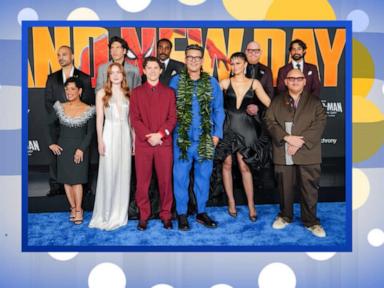
Another premiere. Another rented block of Hollywood Boulevard shut down for three hours. Another lineup of exhausted actors pretending they adore each other while publicists scream at photographers to get the lighting right. The trades published their breathless copy about the stars hitting the asphalt for Spider-Man Brand New Day, treating a corporate product drop like a civic holiday.
Spare me.
The lazy consensus in entertainment journalism treats every studio red carpet as a cultural milestone. They look at the flashbulbs, the screaming fans behind metal barricades, and the manufactured hype, and they conclude that magic is happening. They are wrong. This premiere was not a celebration of art. It was a funeral procession for risk.
I have spent two decades watching studios pat themselves on the back for executing the exact same logistical playbook week after week. I have seen marketing departments blow eight-figure budgets convincing the public that a brand-new iteration of intellectual property constitutes a radical reinvention. It does not. Brand New Day is not a bold creative pivot; it is a defensive crouch by a studio terrified of an audience that is finally starting to look at the math.
Let us dismantle the core deception.
The Illusion of Freshness
Look at the title. Brand New Day. It is a psychological trap designed to exploit your exhaustion. Studios know you are tired of the endless, bloated multiversal crossovers that require a spreadsheet and a master's degree in continuity to follow. They know you want a clean break, a street-level hero punching bank robbers instead of battling CGI sky-beams that threaten the fabric of existence.
So they slap a vintage comic book arc name on the marquee and hope you forget that the machinery behind the curtain remains identical.
Imagine a scenario where a restaurant keeps serving you the exact same frozen meatloaf for a decade, but every Tuesday they paint the plate a different color and call it an artisanal culinary evolution. That is modern Hollywood marketing. The studio execs look at dwindling opening weekend box office drops and think the fix is changing the font on the poster. They refuse to acknowledge the rot is structural.
The media falls in line because access journalism demands compliance. If a trade outlet writes that a premiere represents a tired studio recycling nostalgia because its writers room ran out of original ideas, that outlet loses its junket invites. So they print the press release instead. They tell you about the dazzling gowns and the electric atmosphere. They never mention that the audience sitting in the dark is watching a movie assembled by committee, test-screened into a gray paste, and graded on focus group metrics.
Why the Red Carpet is a Distraction
The red carpet exists for one reason: to obscure the product.
If you spend four million dollars flying influencers to Los Angeles, plying them with open bars, and filming reaction videos for TikTok, you can bypass critical scrutiny for at least forty-eight hours. By the time the collective hangover wears off and people realize the plot is hollow fan service wrapped in digital detritus, the opening weekend haul is already in the bank.
Let us be precise about the economics here. A modern tentpole blockbuster does not need to be good. It needs to be frictionless. It needs to clear international censorship boards, fit neatly into a fast-food meal promotion, and translate into five different languages without losing its punchlines.
When you strip away the premiere night hype and look at the actual text of Spider-Man Brand New Day, what you find is creative bankruptcy masquerading as crowd-pleasing entertainment. The action sequences are pre-vis cartoons designed by artists who never stepped foot on a physical set. The dialogue sounds like it was generated by an algorithm trained on ten thousand hours of internet discourse.
And yet, the industry demands that we clap. We are supposed to swoon when an actor walks down a red carpet in a vintage suit, as if their wardrobe choice somehow elevates a derivative script about corporate synergy and trademark preservation.
The Real Cost of Safe Choices
Defenders of the studio system will tell you that hundreds of millions of dollars are on the line, so playing it safe is just good business. They argue that audiences demand familiarity.
This is a self-fulfilling prophecy. You cannot starve an audience of original storytelling for twenty years and then point to their box office ticket purchases as proof that they hate originality. People buy what is heavily advertised to them because human beings cannot consume what does not exist in their field of view.
When every screen in every multiplex is dominated by the same three corporate conglomerates iterating on the same four characters, consumer choice is an illusion.
I have seen mid-budget dramas with actual cultural bite get buried in January dumps while four-quadrant superhero vehicles take up eighty percent of theater screens year-round. Then, when a mid-budget film fails to match the box office of a film backed by a billion-dollar global marketing campaign, the executives shrug and say, "See? Nobody wants original stories anymore."
It is a racket. And the Hollywood premiere is the ribbon tied around it.
The Uncomfortable Truth About Nostalgia
We need to talk about the weaponization of nostalgia, because Brand New Day is ground zero for this psychological trick.
Nostalgia is an emotional pain caused by remembering a time in the past. It used to be studied as a medical condition. Now, it is a multi-billion-dollar business model. Studios take the emotional resonance you felt as a kid reading a comic book or watching a cartoon, strip it of its subversiveness, and feed it back to you as a high-priced digital slurry.
They call it paying homage. I call it intellectual recycling.
When a character is rebooted for the third time in fifteen years, it is not because a visionary filmmaker had a burning compulsion to tell a new story about responsibility and power. It is because corporate accountants calculated that the trademark would lose value if it sat idle for more than forty-eight months.
The actors standing on that Hollywood Boulevard stage aren't artists pouring their souls into a collaborative endeavor. They are human billboards wearing couture lent to them by fashion houses that paid the studio for the placement. Every interaction is transactional. Every smile is calculated.
What You Should Do Instead
If you want to support actual art, stop participating in the opening weekend rituals. Stop treating the release of a corporate product like an event in your own life.
When you spend your hard-earned cash on ticket prices, merchandise, and streaming subscriptions that feed the maw of risk-averse megacorporations, you are casting a vote for more of the exact same content. You are telling Hollywood that you prefer safe mediocrity over dangerous originality.
Look for the films made without safety nets. Look for the projects funded by independent financiers who risk their own capital rather than corporate subsidiaries playing with house money. They exist, but they are hiding in the shadows while the red carpet circus blinds you to their absence.
Next time you see a headline about a star-studded Hollywood premiere dominating the news cycle, remember what is actually happening behind the flashing cameras. It is not the celebration of cinema. It is the marketing department making sure you buy the ticket before you find out there is nothing inside.
The red carpet was rolled up hours ago. The trash has been swept off the boulevard. The stars are back in their compounds.
The only question left is how much longer you are going to keep buying tickets to the same old show.