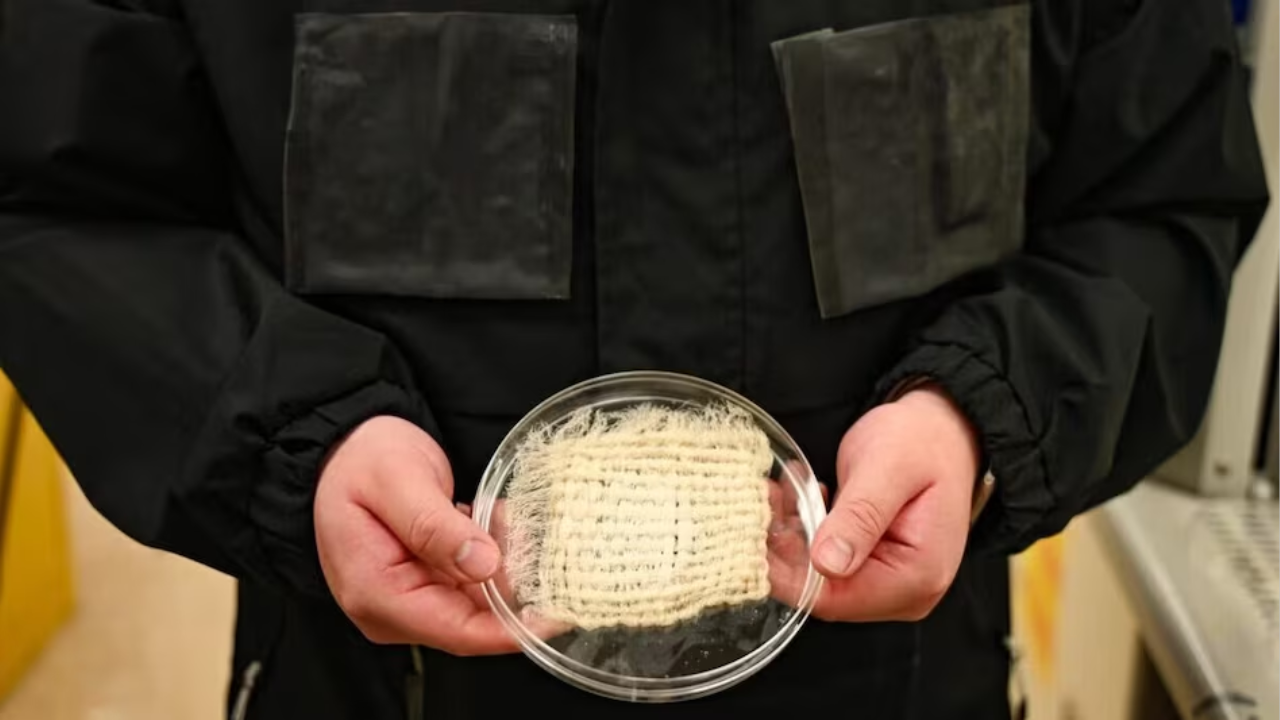
Tech headlines are swooning over a shiny new piece of wearable wizardry: a hydrogel-infused jacket built by engineers at the University of Texas at Austin that supposedly pulls nearly a liter of clean drinking water straight from thin air. The media narrative is painfully predictable. We are told this "wearable stillsuit" will protect hikers, rescue workers, and desert-dwellers from dehydration by transforming the very atmosphere into a personal hydration pack.
It sounds like a triumph of material science. It is actually an exercise in thermodynamic delusion.
I have spent years evaluating hardware prototypes, and I have seen overhyped clean-tech ideas drain millions of dollars from investors while ignoring basic, unyielding physics. The "lazy consensus" surrounding this atmospheric water-harvesting jacket ignores the brutal operational realities of thermodynamic efficiency, energy input, and human metabolic cost. Stripping away the public relations gloss reveals why wearable atmospheric water generation is an evolutionary dead end for survival gear.
The Mirage of the One-Liter Jacket
The core claim sounds impressive: the jacket’s biomass-derived hydrogel fibers absorb moisture and transport it into detachable units, yielding 400 to 900 milliliters of drinkable water per day. The fundamental flaw lies in how that water is actually extracted from the material.
The hydrogel does not magically leak liquid water into a straw. It binds atmospheric vapor. To turn that bound moisture into something you can drink, the user must remove the detachable harvesting units, place them into a separate, foldable collector piece, and apply heat.
This requirement introduces a devastating logical bottleneck. If an emergency responder or a soldier in an arid region needs to burn fuel, wait on solar heat, or expend valuable electrical energy just to bake their clothing to extract 14 ounces of water, the net resource equation flips instantly into the negative. You are wasting energy to create a fraction of a water bottle.
The Thermodynamic Tax on Your Back
The math behind atmospheric water harvesting is notoriously unforgiving. To transition water from a vapor state to a liquid state, you must contend with the latent heat of vaporization. For water, this requires roughly 2.26 megajoules of energy per kilogram under standard conditions.
Even with the UT Austin team’s impressive molecular engineering—which optimizes the transport pathway from vapor to liquid on the fiber surface—the heat required to release that trapped liquid from the hydrogel matrix is a massive thermodynamic tax.
Consider the operational reality for a hiker in a hot environment:
- The Weight Penalty: Hydrogels are heavy when saturated. Carrying a jacket loaded with trapped moisture increases the wearer’s metabolic output, causing them to sweat.
- The Sweat Paradox: If the metabolic cost of wearing a heavy, moisture-absorbent jacket causes you to sweat out 500 milliliters of fluid over hours of exertion, but the jacket only yields 400 milliliters of water after a complex heating cycle, you have physically dehydrated yourself to harvest water.
- The Climate Catch-22: In truly arid zones where water is desperately needed, atmospheric humidity drops below 20%. The jacket's yield plummets to its lowest point precisely when the survival risk is highest. Conversely, in highly humid areas where the jacket hits its maximum 900-milliliter yield, finding a terrestrial water source is rarely the primary challenge.
Dismantling the Dune Fantasy
Promotional articles love to invoke Frank Herbert's Dune, comparing this prototype to the fictional sci-fi stillsuits that recycle sweat and urine to keep humans alive in deep deserts. This comparison is structurally backward.
A fictional stillsuit is a closed-loop recycling system. It captures moisture leaving the body and retains it. The UT Austin jacket is an open-loop collection system trying to catch ambient molecules from a sparse, external environment while the wearer is actively radiating heat and moisture.
Imagine a scenario where an agricultural worker wears this garment under the blazing sun. The jacket absorbs surrounding humidity, but it also acts as an insulation layer. By trapping body heat and altering the microclimate next to the skin, it actively increases the user's risk of heat exhaustion. You cannot dress a human in a sponge, force them to work in the sun, and call it a net win for health and safety.
The Decentralized Stationary Reality
Is atmospheric water harvesting a useless science? Absolutely not. The same UT Austin team led by Professor Guihua Yu developed a separate, stationary solar-powered device that pulled 1.3 liters of water per day in desert field tests. That device is highly valuable.
Stationary, passive atmospheric water generation works because a static box does not sweat, does not experience metabolic fatigue, and does not require a human to wear an insulating hydrogel blanket in 100-degree weather.
The industry is making a classic design mistake: forcing a highly promising material science breakthrough into a wearable form factor simply because "wearables" capture headlines and patent interest. The true future of decentralized water access belongs to scalable, low-cost stationary panels placed on rooftops or in base camps—not sewn into the sleeves of a heavy coat.
Shifting the form factor from a static panel to a wearable garment solves a marketing problem, not a survival problem. Until a fabric can passively condense and dispense water continuously without external heating cycles or metabolic penalties, keeping your water in a flask and your tech on a bench remains the only logical choice.