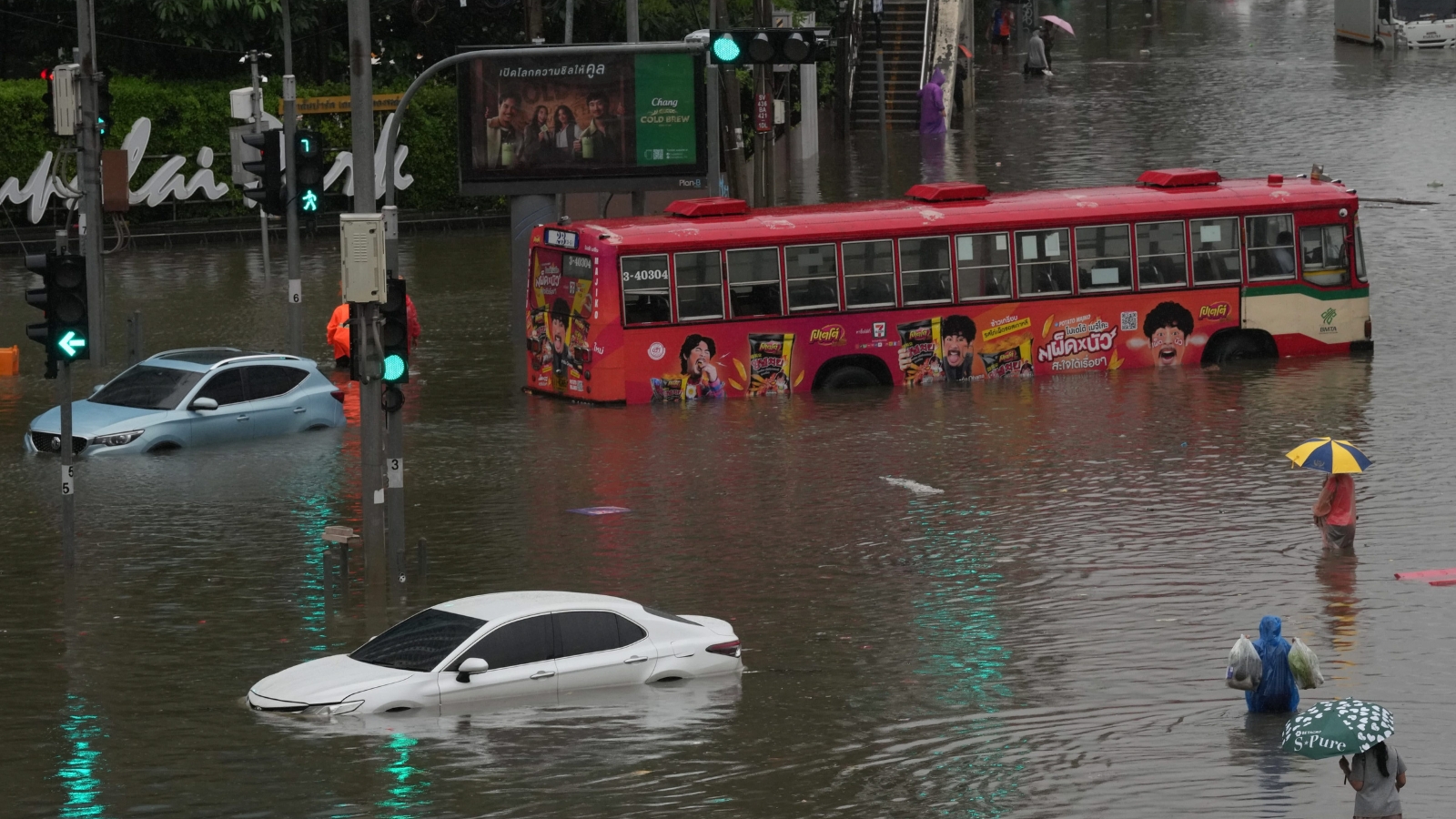
The headlines scream about catastrophe. Fifty districts declared disaster areas. Travel advisories flashing red. Tourists canceling flights, hotels issuing frantic refunds, and armchair observers declaring the entire Chao Phraya basin an uninhabitable swamp.
It is the same lazy narrative every single rainy season. The media treats Bangkok like a fragile sandcastle about to dissolve at the first drop of monsoon rain, and travelers fall for it every time. They see water in a street and assume the city has ground to a halt. For a more detailed analysis into similar topics, we suggest: this related article.
They are entirely wrong.
I have watched tourists panic over ankle-deep puddles in Sathorn while locals casually sip iced coffee at a street cart ten feet away, completely unbothered. Bangkok does not break when it floods. It adapts. The conventional travel advisory is written by risk-averse bureaucrats who have never navigated a soi during a high tide in their lives. For additional background on this issue, comprehensive reporting can also be found at AFAR.
Let us dismantle the panic and look at the structural reality of how this city actually functions under water.
The Geography of Misunderstanding
To understand why the "Bangkok is sinking" narrative is overblown, you have to look past the dramatic drone shots of murky brown water.
Bangkok is a delta city built on a swamp. Water is not an anomaly here; it is the default state. When headlines announce that all fifty districts are disaster zones, they are using an administrative categorization, not describing an apocalyptic wasteland. Under Thai bureaucratic frameworks, declaring a district a disaster zone unlocks emergency funding and resources quickly. It is a political and logistical trigger, not an evacuation order.
The media relies on binary thinking: dry equals safe, water equals danger. But Bangkok operates on a gradient.
A localized inundation in a low-lying residential sub-district miles from the core tourist zones does not mean Sukhumvit, Silom, or the Riverside are underwater. The central commercial districts, transit arteries, and major hotel zones are engineered with massive flood walls, industrial-grade drainage pumps, and canal diversion systems managed by the Bangkok Metropolitan Administration.
When heavy rain hits, water pools because the drainage rate temporarily lags behind precipitation volume. Within hours, the pumps kick in, gravity does its work, and the concrete dries. Treating a temporary drainage delay as a permanent structural collapse is amateur hour.
Why Your Cancellation is Pure Fear, Not Logic
Travelers love the illusion of control. When an official-sounding alert hits their inbox, their internal risk calculator short-circuits. They picture being stranded on a rooftop or wading through chest-high sewage to catch a flight.
Let us look at the actual data. Major transport hubs like Suvarnabhumi Airport sit on engineered platforms designed to withstand significant hydrological stress, protected by ring dykes that cost billions of baht. The BTS Skytrain and MRT subway systems do not float away in a heavy downpour. While a station entrance might see some localized pooling, the transit infrastructure itself is continuously monitored and engineered to keep the city moving.
If you cancel your trip based on a blanket district-wide alert, you are not being smart. You are letting headline writers dictate your itinerary.
I have seen hotels on the Chao Phraya River install temporary flood barriers, lay down elevated wooden walkways, and continue serving breakfast with zero disruption to guest experience, all while foreign news outlets broadcasted footage from three weeks prior to make it look like a war zone.
The real risk in Bangkok during heavy rains is not drowning. It is getting stuck in traffic because a taxi driver refuses to navigate a puddle, or missing a dinner reservation because you panicked and stayed in your room watching weather porn on your phone.
How to Actually Navigate Bangkok When it Rains
If you refuse to be scared away by sensationalist alerts, you need a tactical playbook. Bangkok during a monsoon surge requires operational awareness, not cowardice.
First, embrace verticality. The city is built on multiple tiers. When street-level drains back up, stay on the elevated walkways, use the sky-bridges connecting shopping complexes, or pivot to the metro systems.
Second, rethink your transit choices. Taxis and ride-hailing cars are traps during heavy rain. They get funneled into the same surface-level bottlenecks as everyone else, turning a twenty-minute ride into a three-hour parking lot session. The Skytrain and subway do not care about street flooding. Stick to rail transit, and augment your walks with motorcycle taxis whose drivers know every dry shortcut through the labyrinthine alleys.
Third, ignore the blanket travel warnings and look at hyper-local conditions. Check live feeds, local expat forums, or hotel front desks rather than international news networks that aggregate panic for clicks.
The travelers who win during these periods get the best hotel rates of the year, encounter zero lines at top-tier restaurants, and experience a city that sheds millions of anxious tourists and reveals its authentic, resilient rhythm.
Stop reading the disaster alerts. Book the ticket. Pack waterproof shoes. And leave the panic to the amateurs.