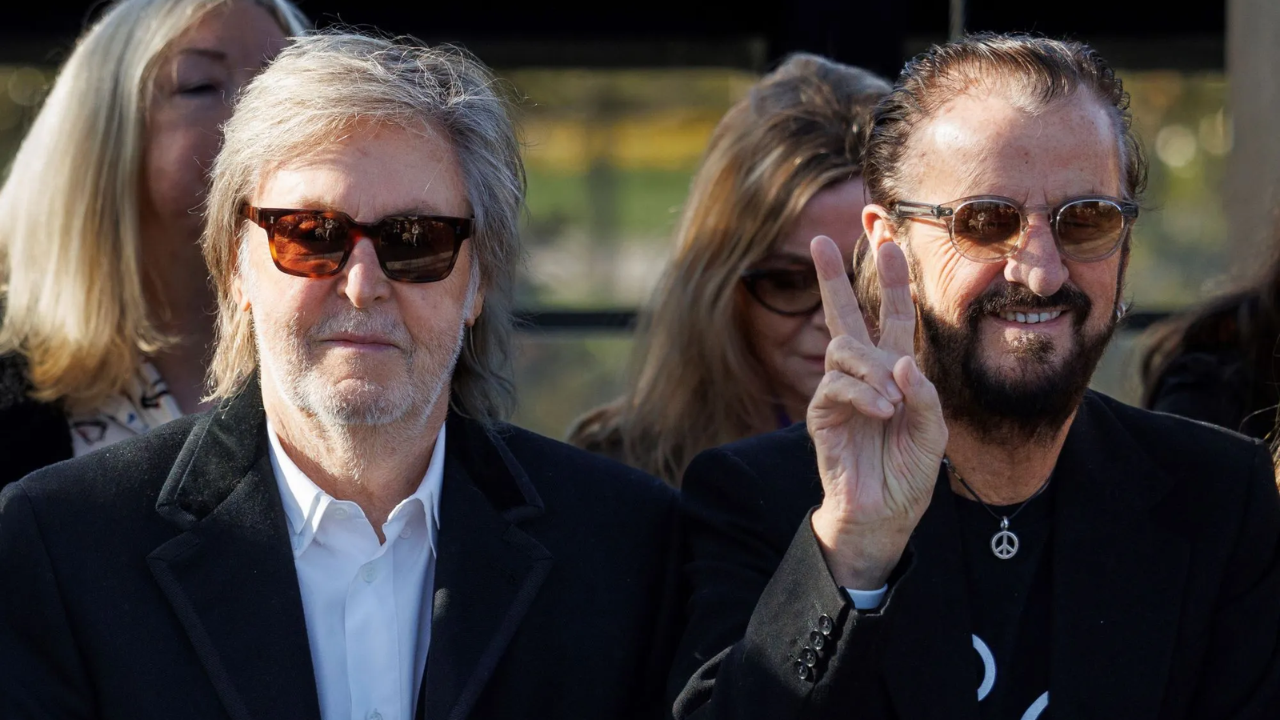
Every time Paul McCartney and Ringo Starr share a stage, the music press loses its collective mind.
Headlines scream about a "rare Beatles reunion." Nostalgia merchants start hyperventilating. Ticket brokers immediately crank dynamic pricing algorithms to the stratosphere. And millions of fans open their wallets under the spell of a comforting lie.
The recent chatter surrounding a 2027 Las Vegas charity concert featuring the two surviving Beatles follows this exact, predictable script. Notice that the competitor coverage treats a hypothetical or rumored charity appearance as a historic resurrection of the Fab Four. Let us dismantle that premise before another dollar changes hands.
First, you cannot have a Beatles reunion with half the band dead. Second, even if you look past the biological reality, treating a two-man guest spot at a Las Vegas benefit as a musical event misses the entire point of how the live entertainment business operates today. You are not buying a musical milestone. You are buying an expensive, carefully stage-managed nostalgia asset designed to maximize philanthropic optics and VIP table sales.
The Anatomy of the "Reunion" Myth
Let us define our terms with surgical precision. A reunion, in the context of legacy rock acts, implies the temporary reconstitution of the creative and sonic chemistry that made the original entity famous. When Led Zeppelin played the O2 Arena in 2007 with Jason Bonham on drums, the core harmonic and rhythmic architecture of the band was intact. When Pink Floyd stood together at Live 8 in 2005, all four primary architects of their classic catalog were present.
McCartney and Starr playing "With a Little Help from My Friends" or "Helter Skelter" at a charity gala is not a Beatles reunion. It is Paul McCartney's touring band—featuring Rusty Anderson, Brian Ray, Paul "Wix" Wickens, and Abe Laboriel Jr.—welcoming a legendary guest drummer to sit in for three songs.
I have spent two decades watching concert promoters, talent buyers, and PR firms manufacture scarcity out of thin air. In the touring industry, we have a specific term for this: synthetic milestones. When an artist has toured relentlessly for twenty-five years, standard market saturation sets in. Everyone who wants to see Paul McCartney has had dozens of opportunities to do so. Everyone who wants to see Ringo Starr's All-Starr Band has had the same access. Individually, their appearances are routine tour stops. Put them in the same ZIP code for fifteen minutes on a Vegas stage, slap the word "reunion" on the press release, and suddenly a standard charity gala becomes a global media frenzy.
The lazy consensus in entertainment journalism simply regurgitates the press release. Writers frame the event around emotional sentimentality—two old friends keeping the flame alive for a good cause. They completely ignore the cold, hard mechanics of why these appearances happen in Las Vegas, why they happen at charity benefits, and why the word "Beatles" is weaponized to drive seven-figure sponsorship packages.
Why Las Vegas and Why Charity
Look at the venue and the format. Las Vegas is no longer the graveyard where washed-up lounge singers go to die; it is the global capital of high-margin residency and gala economics.
When promoters stage a major charity event on the Strip, they are not relying on general admission lawn seats to cover the nut. They are selling corporate sponsorships, luxury suites, and $50,000-a-plate gala tables to casino executives, tech founders, and private equity partners. In that room, nobody cares about deep cuts from Revolver. They care about status signaling. Being able to tell your board of directors on Monday morning that you watched "The Beatles" from twenty feet away while eating filet mignon is the ultimate corporate flex.
By framing a brief guest appearance as a historic reunion, event organizers accomplish three things simultaneously:
- Instant Press Saturation: Major outlets give free, front-page publicity to a private benefit they would otherwise ignore.
- Corporate Table Justification: Wealthy donors can write off massive contributions while securing bragging rights that money normally cannot buy.
- Zero Rehearsal Liability: Unlike a full tour or a dedicated residency, a charity cameo requires minimal preparation. If the tempos drag or the vocal harmonies wobble, the charitable nature of the event shields the performers from critical scrutiny. Nobody writes a brutal review of a cancer fundraiser or a humanitarian benefit.
Imagine a scenario where McCartney and Starr announced a joint twelve-city stadium tour billed explicitly as "The Beatles." Critics would tear it apart within forty-eight hours. Purists would call it a cash grab. Audiences would judge the performance against the impossible standard of the studio recordings. By keeping these pairings sporadic, brief, and tethered to charitable causes, their management teams preserve the mystique while harvesting maximum goodwill. It is brilliant brand management, not spontaneous artistic magic.
Dismantling the Fan Fallacy
Fans routinely ask the wrong questions when these announcements hit the wire. Search engines light up with queries like: How much will tickets cost for the McCartney and Starr reunion? or What Beatles songs will Paul and Ringo play in Vegas?
You are asking the wrong questions because you are operating from a position of manufactured FOMO. Let us answer the questions you actually need to be asking.
Will this performance offer a superior musical experience to a standard solo show?
No. In fact, it will almost certainly be musically inferior to a regular McCartney concert. McCartney's regular touring band has played together longer than The Beatles were actually together. They are a razor-sharp, finely tuned machine capable of executing complex vocal arrangements and multi-instrumental transitions. Bringing in a guest drummer—even one as iconic as Ringo Starr—forces the band to simplify arrangements, adjust tempos, and cater to a two-drummer setup that muddies the low-end mix in live arenas. You get higher emotional novelty, lower musical precision.
Is this actually "rare"?
Hardly. McCartney and Starr have shared stages repeatedly over the last fifteen years. They played together at the David Lynch Foundation benefit in 2009. They appeared together at the Grammy Awards in 2014. Starr joined McCartney at Dodger Stadium in 2019 and again at the O2 Arena in London. Every single time, the media treated it as a once-in-a-lifetime occurrence. When something happens every few years on televised broadcasts and major stadium tours, calling it "rare" is a linguistic scam.
Are you paying for the music, or are you paying for proximity to history?
Be brutally honest with yourself. If you buy a ticket to a 2027 Vegas benefit, you are paying for proximity to two octogenarian icons while they are still vertical and touring. That is a completely valid reason to spend your money. Time is undefeated, and watching two architects of modern pop culture share a microphone has undeniable emotional weight. Just do not confuse emotional weight with artistic necessity.
The Economics of Legacy Nostalgia
To understand why the music press keeps pushing this narrative, you have to understand the crisis facing modern music journalism. Digital publications survive on clicks, and clicks come from recognizable intellectual property.
An article about a promising twenty-four-year-old indie songwriter generates four hundred views. An article with "Beatles Reunion" in the headline generates four hundred thousand views, gets aggregated across dozens of syndication networks, and triggers algorithmic recommendations across every major social platform. Editors know this. Writers know this. Publicists exploit it mercilessly.
Industry analysts and touring data providers like Pollstar have documented the massive consolidation of live music revenue around legacy acts for years. While emerging artists struggle to break even on club tours due to inflated bus leases, crew shortages, and venue merchandise cuts, legacy acts command record-breaking grosses. Why? Because corporate buyers and affluent baby boomers treat legacy concerts as blue-chip experiences.
In this financial ecosystem, the word "reunion" acts as a pricing multiplier. Look at what happened when Oasis announced their return, or when the Eagles launched their seemingly endless string of farewell tours. Scarcity—real or imagined—eliminates price sensitivity. When consumers believe they are witnessing the final chapter of a cultural monument, rational budgeting goes out the window.
What Smart Music Fans Do Instead
If you love the music of The Beatles and want to spend your entertainment budget wisely, stop chasing VIP charity galas and hyper-inflated "reunion" tickets. Follow a ruthless, value-driven strategy instead.
- Target Standard Tour Dates Over Special Events: If you want to see Paul McCartney, buy a ticket to a standard arena or stadium date on his regular tour. You will get a three-hour setlist, peak band cohesion, superior sound engineering, and a fraction of the corporate distraction you will encounter at a Las Vegas benefit.
- Ignore Pre-Sale Panic: Ticket platforms thrive on artificial urgency. Platinum pricing and VIP packages are front-loaded during the first forty-eight hours of an on-sale to trap impulsive buyers. Wait until seventy-two hours before the show. Production holds—seats reserved for crew, stage sightlines, and artist guests—inevitably get released back into the primary market at standard face value.
- Separate Philanthropy From Entertainment: If you genuinely care about the charitable cause attached to a Vegas gala, donate directly to the organization. A direct contribution ensures that roughly ninety percent of your money reaches the intended recipients rather than paying for venue security, catering, lighting rigs, and ticket platform service fees.
- Seek Out Deep-Catalog Tribute Productions: If your primary goal is hearing the complex studio arrangements of Abbey Road or Sgt. Pepper's performed live with surgical accuracy, look toward specialized theatrical productions like The Analogues. They use exact vintage instrumentation and full orchestral sections to recreate studio tracks that The Beatles themselves never performed live—and that McCartney and Starr will never touch on a Vegas stage.
The Counter-Argument You Must Consider
I will admit the obvious flaw in my own critique. Pure logic does not govern live music, and reducing every concert to a cost-per-song spreadsheet misses the irrational magic that makes live entertainment worth attending in the first place.
When seventy thousand people in a stadium—or five thousand people in a Vegas theater—scream in unison as Ringo Starr walks behind a Ludwig drum kit and Paul McCartney straps on a Höfner bass, the collective adrenaline in that room cannot be replicated by a tribute band or a vinyl record. For a fan who grew up listening to those records in a childhood bedroom, seeing those two men smile at each other across a stage delivers a dopamine hit that transcends rational pricing.
If you are that fan, and you have the disposable income to burn without blinking, buy the ticket. Enjoy the moment. Sing along to "Hey Jude" until your voice gives out.
Just do not walk out of the arena thinking you saw The Beatles. You saw two legendary survivors taking a well-earned victory lap in a town built on illusions. Keep your eyes open, keep your expectations grounded in reality, and never let a press release tell you what you are witnessing.