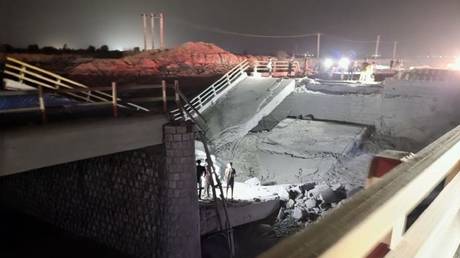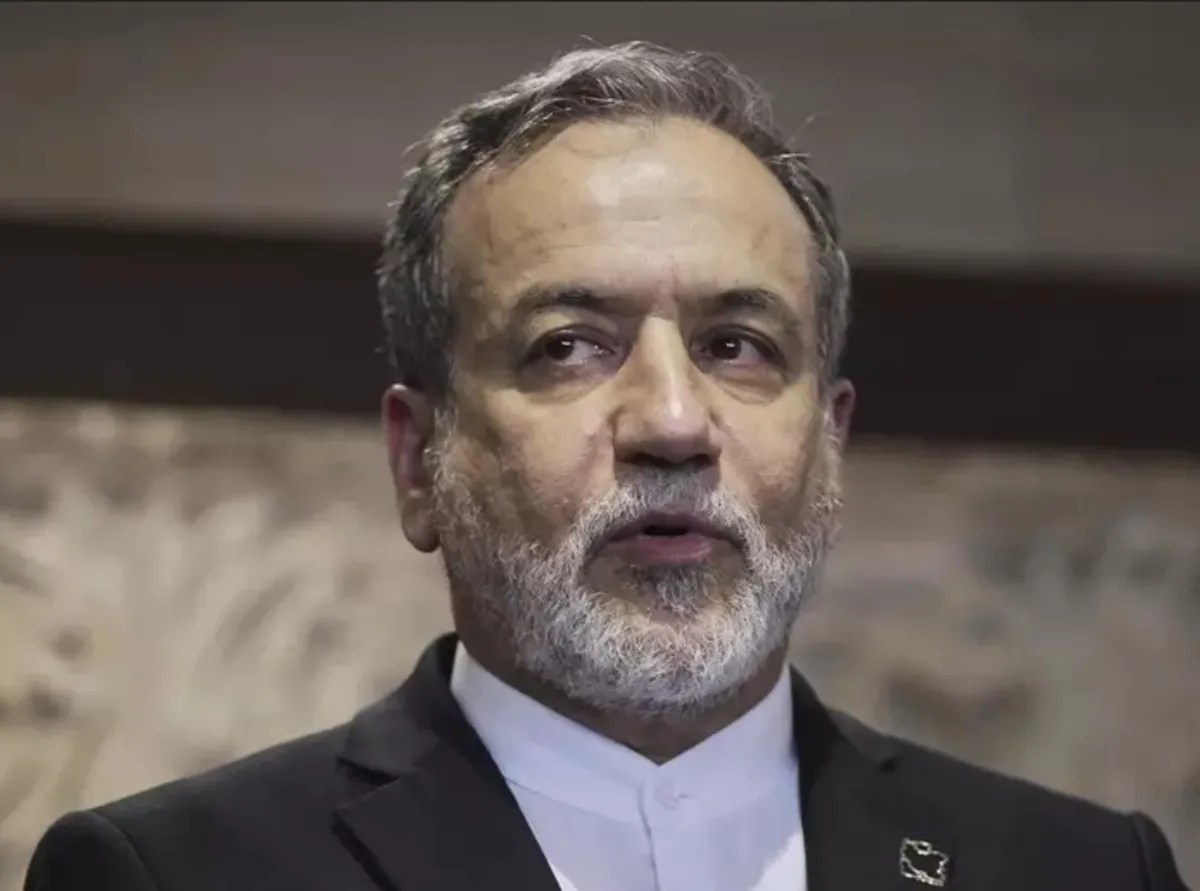
Iranian Foreign Minister Abbas Araghchi recently took to the global stage to declare that United States complicity in strikes against Iran constitutes a "war crime."
It is a dramatic headline. It makes for excellent television. It is also a complete misunderstanding of how global power actually functions.
The media loves this rhetoric. One side prints Araghchi's accusations as gospel; the other dismisses them as desperate propaganda. Both sides miss the point. The entire debate around "war crimes" in the Middle East has degenerated into a useless theatrical performance.
By treating international law as a moral scoreboard, commentators ignore the cold, calculated reality of modern warfare. The United States and Iran are not operating in a breakdown of international law. They are operating exactly within the grey zones that they, and other global powers, spent decades meticulously designing.
The Legal Fiction of Co-Belligerency
Let us dismantle the core of Araghchi’s argument. The claim is simple: because the US provides intelligence, refueling, and weapons to Israel, the US is a direct participant in the attacks on Iranian soil. Under this logic, the US shares direct criminal liability.
It sounds logical to a layperson. In the real world, international law does not work on vibes.
To understand why this accusation is legally empty, you have to look at the doctrine of state responsibility. Under international law—specifically Article 16 of the International Law Commission’s Articles on State Responsibility—a state is only complicit if it aids or assists another state with the intent to facilitate a wrongful act, and if the act would be wrongful if committed by the assisting state itself.
Good luck proving intent in an international court.
When the US supplies munitions or shares satellite data, it operates under the cover of "defensive assistance" and "alliance commitments." This is not a loophole discovered by accident. It is a feature of the system.
Historically, the International Court of Justice (ICJ) set the bar for direct attribution incredibly high. In the famous 1986 Nicaragua v. United States case, the court ruled that even financing, organizing, training, supplying, and equipping a rebel group did not equal "effective control" over their specific illegal operations.
If funding an entire rebel army does not legally make a superpower responsible for every trigger pulled, then providing defense systems to a sovereign nation certainly does not make the US the direct author of strikes on Tehran. Araghchi knows this. He is a career diplomat, not a naive observer. He is playing to an audience, utilizing lawfare as a weapon of public relations.
The Mirror Image of the Iranian Strategy
The great irony of Iran’s moral outrage is that Tehran’s entire national security architecture is built on the exact same legal grey zones they are now complaining about.
For decades, Iran has perfected the art of proxy warfare. Through the "Axis of Resistance" they have armed, funded, trained, and directed non-state actors across the region.
- When rockets rain down from southern Lebanon, Tehran claims it is the independent action of local actors.
- When drones disrupt global shipping lanes, Iran points to regional grievances, washing its hands of direct responsibility.
- When militias strike US bases, the official line from Tehran is always one of moral support, never operational command.
This is the exact same legal shield the US uses.
Proxy Warfare Legal Shields:
[Sovereign State] ---> (Funding & Intel) ---> [Proxy/Ally] ---> (Kinetic Action) ---> [Target]
                                                                        |
                                                     [Plausible Deniability Established]
Iran cannot have it both ways. You cannot pioneer the modern doctrine of plausible deniability through proxy networks and then act surprised when your adversaries use the state-level equivalent of the same strategy against you. The US provides the hardware; Israel pulls the trigger. Iran provides the rockets; proxies pull the trigger.
It is the same game. Only the scale of the weapons is different.
The Uselessness of the War Crime Label
We must stop pretending that labeling an action a "war crime" changes the behavior of nuclear-armed states or their primary allies.
The International Criminal Court (ICC) and the ICJ are treaties of the willing. They possess no police force. They have no sovereign power to enforce a ruling against a state that does not wish to comply. The US has long maintained the American Service-Members' Protection Act—frequently called the "Hague Invasion Act"—which authorizes the use of military force to free any US citizen or ally detained by the ICC.
When Araghchi screams "war crime," he is not preparing a legal brief that will ever see the inside of a functioning courtroom with enforcement power. He is executing a diplomatic pivot.
By framing the conflict in the language of human rights and international law, Iran attempts to:
- Isolate the US and Israel diplomatically in global forums like the UN General Assembly.
- Provide cover for their own inevitable retaliatory strikes, framing them as legal "self-defense" under Article 51 of the UN Charter.
- Deflect from the domestic failures of their own air defense and intelligence networks.
It is a defensive crouch disguised as a moral crusade.
The Real Danger of Lawfare
This constant dilution of the term "war crime" has a dark side. When everything is a war crime, nothing is.
If every act of intelligence sharing, every arms sale, and every diplomatic veto is branded as a war crime, the actual definition of the term loses all utility. The Geneva Conventions were designed to limit the brutality of war by establishing clear, enforceable boundaries on the treatment of prisoners, civilians, and neutrals.
When politicians turn these serious legal codes into press release talking points, they strip them of their gravity. We are left with a world where international law is not a shield for the vulnerable, but a rhetorical cudgel used by armed states to justify their next strike.
The US is not going to stop supporting its allies because of a press conference in Tehran. Iran is not going to stop funding its proxies because of Western sanctions. The shadow war will continue, fought in the grey zones of law and the black nights of missile strikes.
The next time a foreign minister steps up to a podium to declare a geopolitical strike a "war crime," turn off the television. They are not talking to a judge. They are talking to you, hoping you are naive enough to believe that international relations are governed by a rulebook instead of raw, unadulterated power.