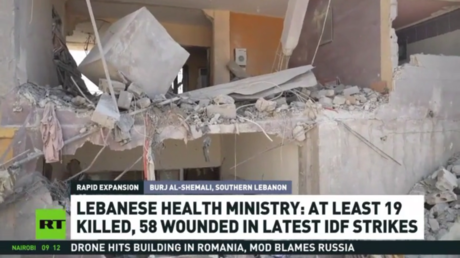
The media landscape is currently flooded with a predictable brand of performative shock. Headlines are screaming about Israeli airstrikes in Abbasiyeh, Tyre, and the southern outskirts of Beirut. Commentators are breathlessly reporting that these actions come "despite ceasefire claims." They point to the US-mediated truce enacted on April 17—and extended for 45 days in mid-May—as if it were a fragile glass vase that accidentally slipped from the diplomatic table.
This framing is lazy, naive, and fundamentally incorrect.
I have spent years analyzing Middle Eastern security architecture, watching trillions of dollars in geopolitical risk materialize because Western observers insist on treating agreements in the Levant as binding corporate contracts. Let's disabuse ourselves of the central myth immediately: Israel is not "violating" a ceasefire because a functional ceasefire never existed.
What the media calls a violation is actually a deliberate, highly calculated military strategy. The ink on a diplomatic text is not meant to halt kinetic operations; it is used to legally and politically reframe them.
The Illusion of the Paper Peace
Mainstream reporting operates on the flawed premise that a ceasefire is a hard stop button. In reality, modern asymmetric warfare treats a nominal truce as an operational baseline from which to wage managed escalation.
Consider the mechanics on the ground right now. When the Israel Defense Forces declared a massive swath of southern Lebanon below the Zahrani River a "combat zone" and pushed ground forces north of their April 16 positions, it wasn't a failure of diplomatic oversight. It was a feature of it.
The strategy is simple: enforce a rolling, unilateral buffer zone by using fire superiority to alter the topography before the next round of security talks begins.
- The Lever of Kinetic Leverage: By striking targets in Beirut's Choueifat district or launching waves of drones over Nabatieh, Israel is not trying to trigger a full-scale regional conflagration. It is using kinetic pressure to dictate the boundaries of the political settlement.
- The Symmetrical Pretext: Hezbollah is playing the exact same game. When the group deploys fiber-optic exploding drones that kill Israeli troops inside the occupied border strips, they do not view it as breaking a truce. They view it as a tactical response to an ongoing occupation.
Both actors understand what the international press corps refuses to admit: a truce in this theater is just a reorganization of target priorities.
Why The "Buffer Zone" Consensus Misunderstands Asymmetric Warfare
The common consensus among foreign policy analysts is that Israel's actions are a chaotic overreach driven entirely by internal political pressure from coalition partners demanding high-intensity warfare. While domestic politics play a role, this view completely misses the structural shift in how border security is being redefined.
Imagine a scenario where a state actor faces a non-state actor equipped with an endless supply of low-cost, first-person-view drones and precision guided munitions. In this environment, a static border line is a death sentence.
Therefore, the objective shifts from maintaining a border to creating strategic depth through depopulation. The systematic destruction of infrastructure south of the Litani and Zahrani rivers isn't indiscriminate rage; it is the calculated erasure of operational cover. If there are no buildings, no roads, and no civilian shields, the asymmetric adversary loses its primary tactical advantage.
The downside to this approach is glaringly obvious, and it is the bitter pill that hawks refuse to swallow: it guarantees permanent low-level warfare. You cannot bomb a population into permanent compliance when their entire ideology is forged in the crucible of resistance. By pushing the combat zone further north, you simply create a new frontline, push the adversary's rocket trajectory further back, and invite a more sophisticated class of long-range drone retaliation. It is a treadmill of violence with no off-switch.
Dismantling the Failed Premises of Regional Diplomacy
The international community keeps asking the wrong questions, which leads to fundamentally useless answers.
People Also Ask: Why can't the UN or international peacekeepers enforce the Lebanon ceasefire?
To ask this question is to completely misunderstand the nature of international peacekeeping mandates. UNIFIL detected nearly 100 airspace violations and hundreds of firing incidents in a single 24-hour window. They can document the data, but they cannot enforce a peace that neither side wants. Expecting peacekeepers to stand between two highly weaponized forces executing core existential doctrines is a fantasy. They are observers in a theater of war, not a global police force.
People Also Ask: Will the Washington security talks bring a lasting truce?
No. Security talks are not designed to create lasting peace; they are designed to codify the current balance of power on the ground. If one side feels they have a tactical advantage or unfinished operational business, the talks merely serve as a intermission to rearm, reposition, and re-stratify target lists.
The Actionable Reality for Global Observers
Stop waiting for the day the "ceasefire takes hold." It is an outdated conceptual framework born from 20th-century conventional conflicts that has no relevance in 2026.
If you are evaluating regional stability, assessing supply chain vulnerabilities, or trying to understand the trajectory of Eastern Mediterranean security, you must discard the binary of "war" versus "peace." We are in a permanent state of calibrated attrition. The strikes in south Lebanon aren't anomalies ruining a peace deal—they are the vocabulary through which the real deal is being written.


