The financial press wants you to get choked up over a billionaire's marital remorse.
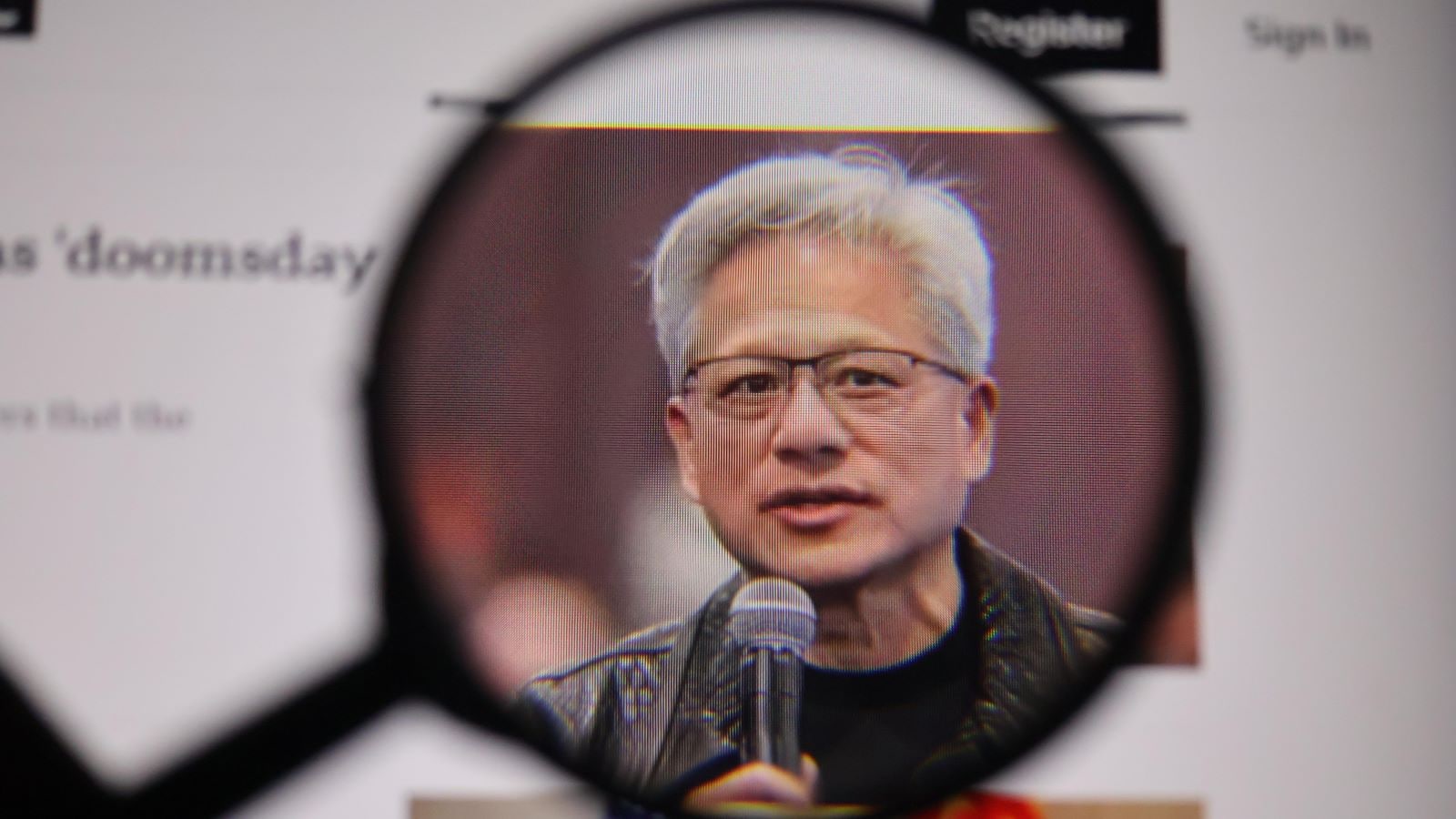
Read the mainstream coverage of President Donald Trump's recent sit-down with Stephen A. Smith, and you would think the biggest crisis in the semiconductor industry is Jensen Huang's personal heartbreak. Trump told the world that the Nvidia founder is "going through hell" and feels terrible about the collateral damage his extramarital affair with an alleged Chinese intelligence operative inflicted on his wife and family. The media ate it up. Outlets dutifully transcribed the quotes, framed the story around personal regret, and treated a massive national security and corporate governance failure like a daytime soap opera.
That framing is a masterclass in distraction.
While reporters obsess over whether Huang knew Alice Huang was gathering intelligence for Beijing, or whether he will bounce back emotionally, they are completely missing the structural rot exposed by this circus. The real story isn't that a tech titan had a messy personal life. The real story is that the boundary between the White House, the U.S. intelligence apparatus, and the world's most critical AI hardware supplier just evaporated in plain sight.
The Lazy Consensus of Executive Sympathy
Standard crisis PR relies on a predictable playbook. When an executive gets caught in a scandal that threatens shareholder value, you pivot immediately from accountability to humanity. You humanize the target. You shift the spotlight from boardroom negligence to private suffering.
The competitor coverage of Trump's remarks fell for this hook, line, and sinker. By centering the narrative on Huang calling the president to lament what he did to his family, the coverage subtly reframes a severe breach of executive judgment as a relatable human tragedy. It asks the reader to sympathize with the man rather than interrogate the system that allowed him to return to the corner office within weeks of stepping down.
I have watched boards of directors blow hundreds of millions of dollars trying to protect founder-CEOs who believed their own mythology. In every single case, the board confuses irreplaceability with impunity. They convince themselves that if the founder leaves, the stock goes to zero, so they bend every rule of corporate governance to keep the crown on his head.
Nvidia's board didn't just bend the rules. They let the President of the United States broker the deal.
The Mechanics of a Compromised Governance Model
Let's strip away the emotional theater and look at the cold, hard sequence of events.
First, reports surfaced detailing Huang's extramarital affairs—as many as three, according to reporting from El País—including a relationship with a woman U.S. intelligence officials flagged as an asset gathering information for Beijing. Nvidia's board, staring down the barrel of severe legal and national security liabilities, lost confidence. Huang stepped down, and CFO Colette Kress took over as interim chief. The market reacted exactly how markets react when an unchecked founder-CEO implodes: Nvidia shares tanked, wiping out hundreds of billions in market cap and triggering a broader tech sell-off.
Then came the political intervention.
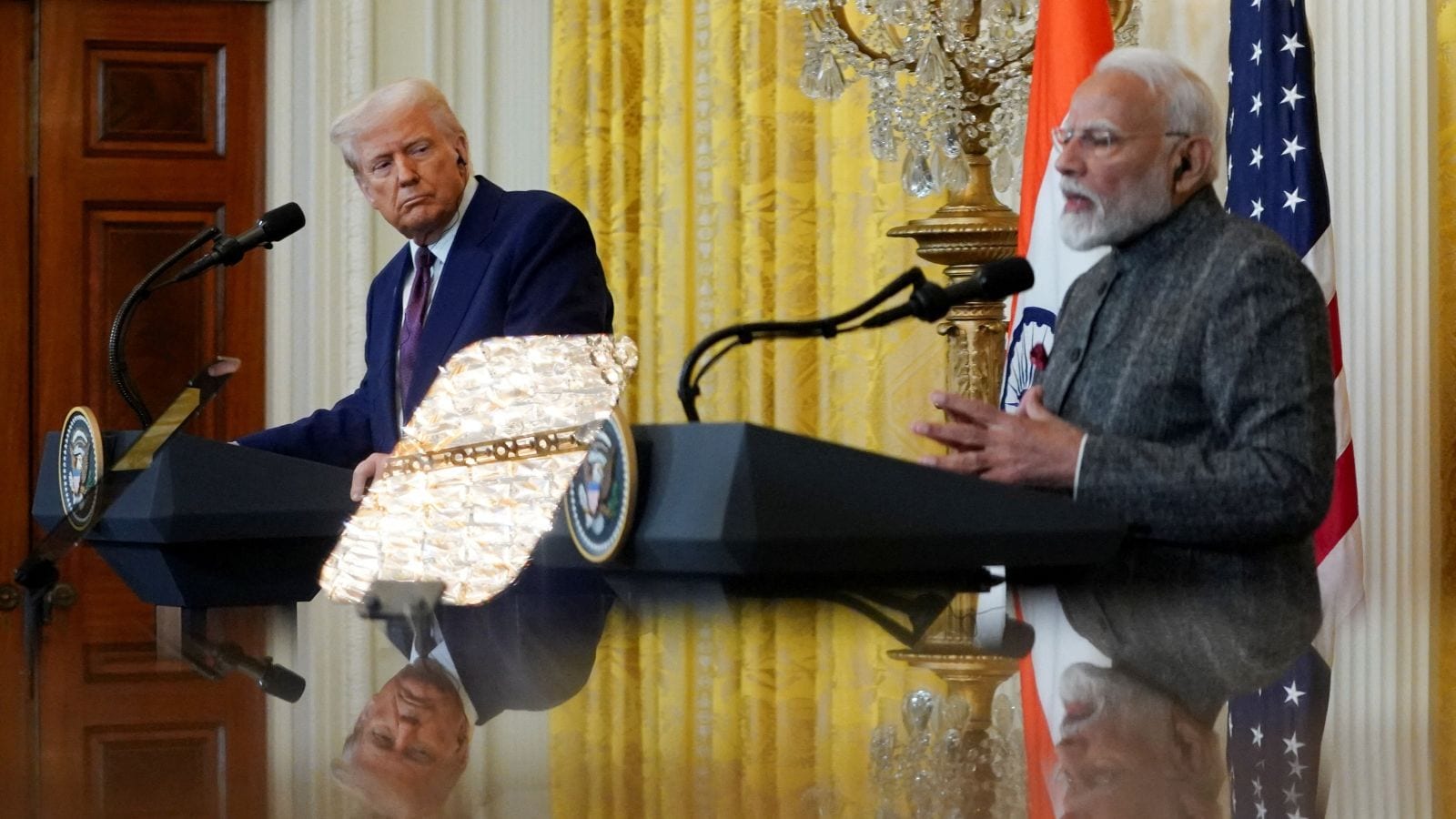
Instead of allowing the board to conduct an independent, rigorous search—or letting interim leadership stabilize the ship—the White House stepped directly into the boardroom. Trump publicly floated Tim Cook as a replacement, called Elon Musk to take the temperature of Silicon Valley, and personally phoned Nvidia board members to vouch that Huang was not a national security threat. "I convinced them," Trump told CNBC. "I made the deal."
Look at the incentives at play here. According to 2026 financial disclosures and Financial Times reporting, Trump held roughly 370,000 shares of Nvidia after purchasing millions in stock earlier in the year. When Huang was reinstated following White House assurances, Nvidia's stock surged over 31 percent, adding roughly $950 billion in valuation and netting the president's portfolio up to $15 million.
Call it whatever you want, but do not call it free-market capitalism. And definitely do not call it a heartwarming redemption arc.
Dismantling the Wrong Questions
If you search for this controversy right now, the algorithms feed you a steady diet of superficial queries. Let's look at what people are asking—and why those questions completely miss the mark.
Was Jensen Huang right to be distressed about his family?
Asking whether a public figure's remorse is genuine is a dead end. Of course he is distressed. Anyone watching their thirty-year marriage and legacy detonate on the front page of The New York Times is going to feel awful. But executive compensation—especially at the multi-billion-dollar level—isn't paid out for having good intentions or feeling bad after the fact. It is paid for risk management. When you run the company that designs the foundational compute architecture for American defense and AI infrastructure, personal vulnerability is operational vulnerability.
Did Huang know she was a Chinese spy?
This is the ultimate red herring. Trump told reporters he asked Huang point-blank if he knew, Huang said no, and Trump believed him. Notice how that framing lets everyone off the hook. If Huang didn't know, he's just a naive victim of a honeytrap.
In counterintelligence, intent is irrelevant. Basic operational security (OpSec) dictates that the CEO of a Tier-1 strategic technology asset does not maintain secret, compartmentalized relationships that create leverage for blackmail. Whether Alice Huang was a seasoned Ministry of State Security officer or an opportunistic acquaintance, the mere existence of hidden affairs created a massive counterintelligence blind spot. You don't need to pass classified schematics over dinner to compromise a company; you just need to give a foreign adversary leverage over the person who holds the keys to the kingdom.
Can Nvidia survive without Jensen Huang?
This is the foundational myth that coerced Nvidia's board into capitulating. Silicon Valley loves the "Great Man" theory of business—the idea that Steve Jobs, Elon Musk, or Jensen Huang possesses a mystical aura that cannot be replicated by mere mortal executives.
It is nonsense.
Nvidia's moat in 2026 isn't built on Huang's leather jacket or his keynote stage presence. It is built on CUDA—a software ecosystem with nearly two decades of developer lock-in—alongside supply chain strangleholds at TSMC and massive capital expenditure commitments from hyperscalers like Microsoft, Meta, and Alphabet. Colette Kress, who stepped in as interim CEO, has been the architectural architect of Nvidia's financial discipline since 2013. Suggesting that a $3 trillion enterprise would spontaneously combust without one man at the podium insults the tens of thousands of engineers who actually build the silicon.
The Dangerous Precedent of State-Sponsored CEOs
To understand why this matters beyond Nvidia's stock ticker, you have to understand fiduciary duty—the legal obligation requiring corporate directors to act solely in the best financial and strategic interest of the shareholders, free from outside coercion.
When a sitting president personally lobbies a public company's board to reinstate an ousted CEO, while holding a multi-million-dollar stake in that exact company, fiduciary duty dies.
Think about the signal this sends to every other boardroom in America. If you are a director at a major defense contractor, a biotech firm, or a semiconductor manufacturer, what is your takeaway from November 2026? You just learned that compliance rules, ethics clauses, and security clearances are optional, provided your CEO has the president's personal cell phone number.
Let's be fair to the counterargument. Defenders of Huang's reinstatement will point to the immediate market stabilization. They will argue that prolonged leadership vacuum at Nvidia during a hyper-competitive AI arms race posed a systemic risk to the U.S. economy and retirement portfolios nationwide. In a crisis, pragmatism beats purism. If keeping Huang in the chair prevented a trillion-dollar contagion and kept America's chip supply chain moving smoothly, maybe the board made the lesser-of-two-evils choice.
That argument holds water for about thirty days. After that, the bill comes due.
By short-circuiting the accountability process, Nvidia's board didn't solve their governance crisis; they deferred it and compounded the interest. They now have a CEO facing Senate summonses, an active SEC investigation into financial statements, and an ongoing FBI counterintelligence inquiry—all while the board has publicly signaled it lacks the spine to enforce its own code of conduct without permission from Washington.
What Institutional Investors and Boards Must Do Now
If you are managing capital or sitting on a corporate board, stop watching the cable news commentary about Huang's family and start auditing your own exposure to founder-dependency risk. Here is how serious operators handle this reality:
- Price in "Key-Person Political Risk." Traditional financial models treat key-person risk as a binary event: the CEO gets hit by a bus, or they don't. Update your risk models. In an era of hyper-politicized industrial policy, a CEO's personal conduct is directly tied to executive branch favoritism. If a company's valuation relies on White House intervention to survive a governance scandal, apply a governance discount to the multiple.
- Enforce Mandatory Executive Counterintelligence Briefings. If your C-suite handles intellectual property critical to national infrastructure, standard HR compliance training is a joke. Boards must mandate quarterly counterintelligence audits and enforce zero-tolerance disclosure rules for foreign contacts—no exceptions for founders.
- Separate the Visionary from the Operator. Boards need to end the imperial CEO model before a scandal forces their hand. Elevate the COO or CFO—executives like Kress—into visible, co-equal operational leadership roles before a crisis hits. When the market knows the #2 executive already runs the machine, a CEO's personal scandal becomes a PR headache instead of a $950 billion market crash.
The Illusion of the Comeback
Trump predicted on air that Huang "will end up on his feet" because he is a smart, honorable guy. In terms of net worth and job title, the president was right. Huang got his chair back, the stock roared, and the sympathy tour is in full swing.
Do not confuse a stock rebound with institutional strength.
When a company becomes too big to govern, and a CEO becomes too connected to fire, you aren't looking at a triumph of American enterprise. You are watching the slow transformation of Silicon Valley into a state-backed oligarchy—one apology tour at a time.