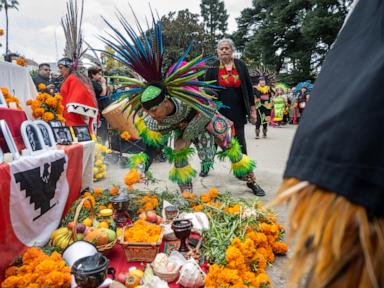
They tried to put Dolores Huerta in a wooden box while she is still out-organizing people half her age.
Look at the headline circulating across the wire services right now: "Dolores Huerta, late labor leader and civil rights icon, honored at memorial." Read that again. Look at the word "late." Look at the past tense. Look at the institutional urge to bronze a living human being, stamp an expiration date on her forehead, and file her safely away in a museum exhibit before she has actually stopped swinging.
Let's get the basic, verifiable facts straight before we dissect the media malpractice happening here. Dolores Huerta is alive. Born April 10, 1930, in Dawson, New Mexico, she is very much breathing, speaking, and running the Dolores Huerta Foundation out of Bakersfield, California. The "memorial" generating breathless, copy-pasted obituaries from lazy content mills wasn't a funeral—it was a tribute and legacy dedication, or a Premature Digital Tombstone engineered by algorithms that can't tell the difference between honoring a living organizer and eulogizing a corpse.
Even worse than the factual blunder is the lazy consensus behind it. Every major outlet treats Huerta like a harmless, sepia-toned grandmother who politely asked grape growers for water breaks in 1965. They sanitize her. They turn a ruthless, tactical, street-level political operator into a safe mascot for corporate diversity slide decks.
That version of Dolores Huerta is a lie. And treating her like a dead monument is the fastest way to miss the actual blueprint she built for modern power.
The Lie of the "Late" Icon and the Sanitization Machine
Why are editors and automated news aggregators so eager to slap the word "late" in front of Dolores Huerta's name? Because dead radicals don't interrupt press conferences. Dead organizers don't demand structural wealth redistribution. Dead icons can be quoted on tote bags without ever challenging the people selling the bags.
I've watched media teams and corporate communications departments do this for twenty years. The moment a fierce agitator crosses eighty-five, the establishment stops fighting them and starts building statues of them. It is the oldest neutralization tactic in politics. You turn an active threat into a historical artifact. Once someone is framed as "late"—even when they are literally standing at the podium—the public subconsciously checks out. The fight is framed as over. The victory is framed as won.
Look at the historical record they are erasing with that single four-letter word.
In 1962, Huerta didn't co-found the National Farm Workers Association with Cesar Chavez by writing polite op-eds. She walked away from a stable teaching career because she couldn't stand watching farmworkers' children show up to school barefoot and hungry. She didn't ask for charity. She built leverage.
When the media covers tribute events for Huerta today, they inevitably repeat the same three talking points:
- She coined the phrase "Sí, se puede" in 1972.
- She worked alongside Cesar Chavez.
- She received the Presidential Medal of Freedom from Barack Obama in 2012.
Notice what gets left out of the memorial fluff. They leave out that she was the primary contract negotiator for the United Farm Workers (UFW), staring down agribusiness titans who owned state legislators outright. They leave out that she directed the 1965 Delano grape strike boycott on the East Coast—a logistical masterclass that tanked table grape sales across New York and forced billion-dollar growers to the bargaining table. They leave out September 1988, when San Francisco police beat the 58-year-old mother of eleven with batons outside the St. Francis Hotel while she protested George H.W. Bush, rupturing her spleen and breaking multiple ribs.
She nearly died on that pavement. She didn't stop then, and she hasn't stopped now. Calling her "late" isn't just a copy-editing failure; it's an insult to a woman who survived state violence only to be killed off by an editor who didn't bother to fact-check a press release.
Why Everyone Asks the Wrong Question About Modern Organizing
When people search for news about Dolores Huerta today, the "People Also Ask" boxes are predictable: Is Dolores Huerta still alive? What is Dolores Huerta famous for? How old is Dolores Huerta?
Those are the wrong questions. They treat her life like trivia instead of an operating manual.
If you want to understand why modern advocacy movements burn out in six months while Huerta's infrastructure has lasted six decades, you have to dismantle the myth of the "charismatic savior." Most people think the farmworkers' movement succeeded because Chavez gave inspiring speeches and Huerta had a catchy slogan.
Wrong. Slogans don't sign union contracts. Moral outrage doesn't pay strike funds.
Huerta understood something that modern digital activists refuse to accept: power is purely transactional, and attention without organization is worthless.
Let's break down the actual mechanics of how she operated—and why today's movements fail when they ignore her playbook.
1. The Boycott Was Supply-Chain Warfare, Not Awareness
Modern campaigns obsess over "raising awareness." They trend a hashtag, get three days of cable news coverage, and wonder why nothing changes. When Huerta ran the New York boycott during the Delano grape strike, she didn't care about awareness. She cared about inventory spoilage and retail margin compression.
She organized housewives, union dockworkers, clergy, and students to picket specific supermarket chains. When A&P or Safeway kept California grapes on the shelves, Huerta's teams didn't just yell outside; they made it economically irrational for the store manager to stock the product. They targeted the point of sale where perishable goods couldn't sit in warehouses waiting out bad PR. Within five years, 17 million Americans had stopped buying grapes. Growers signed contracts not because their hearts grew three sizes, but because their balance sheets were bleeding out.
2. Legislative Lobbying Without the Polite Deferential Act
Before Huerta stepped into the California State Capitol in Sacramento, farmworkers were explicitly excluded from the National Labor Relations Act of 1935. They had zero legal right to organize. Huerta didn't wait for sympathetic politicians to rescue them. Working with the Community Service Organization (CSO) under Fred Ross—the legendary organizer who trained both Huerta and Chavez—she systematically registered voters, built precinct-level turnout machines, and forced lawmakers to pass Old Age Pensions for non-citizens, Spanish-language driver's tests, and eventually the landmark California Agricultural Labor Relations Act of 1975.
Politicians didn't like her. Many feared her. She knew their district vote margins better than their own chiefs of staff did.
3. The Brutal Cost Nobody Wants to Talk About
Here is where I have to be honest about the downside of the Huerta model, because romanticizing it is just as dishonest as writing her premature obituary.
The relentless, uncompromising organizing style that made Huerta effective came at a staggering personal price. She raised eleven children largely on strike pay—roughly five dollars a week plus food donations during the peak UFW years. Her children grew up in union halls, picket lines, and borrowed apartments. Multiple marriages collapsed under the weight of 18-hour days and constant travel. In interviews decades later, both Huerta and her children have spoken candidly about the trauma, instability, and friction caused by putting the movement ahead of domestic comfort every single day.
If you are looking for a work-life balance guru, look elsewhere. Huerta's career proves a hard, uncomfortable truth: structural change rarely happens on a 40-hour workweek with clean boundaries. You either pay the price in personal comfort, or you lose to opponents who are willing to outwork you.
The "Cesar Chavez Shadow" Fallacy
Even when mainstream outlets manage to get her vital signs right, they almost always frame Huerta as Cesar Chavez's sidekick. Co-founder. Right-hand woman. Trusted lieutenant.
That framing is historical revisionism baked into American media bias.
Chavez was the spiritual anchor and the public ascetic—the fasting symbol that captured television cameras. Huerta was the engine room. While Chavez was fasting for 25 days in Delano in 1968, who was running the day-to-day union operations, handling the press, negotiating with Bobby Kennedy, and keeping the strike from fracturing? Huerta.
Look at the structural division of labor inside the early UFW:
- Strategic Positioning: Huerta pushed aggressively for political alliances with the feminist movement in the late 1960s and 1970s—working closely with Gloria Steinem—recognizing early on that women were the primary decision-makers for household grocery budgets.
- Contract Architecture: Huerta drafted and negotiated the first collective bargaining agreements in U.S. agricultural history, securing health clinics, pension plans, and bans on toxic pesticides like DDT years before the federal government acted.
- Institutional Longevity: After leaving the UFW leadership in the late 1990s, she didn't retire to write memoirs. In 2002, at age 72, she founded the Dolores Huerta Foundation (DHF) to build "Vecinos Unidos" (United Neighbors) chapters across California's Central Valley—focusing on school board elections, clean water infrastructure, and LGBTQ+ youth protections in deeply conservative rural counties.
Imagine a scenario where a Silicon Valley founder co-built a category-defining company, negotiated every major enterprise contract, survived a near-fatal assault while defending the brand, and then launched a second high-impact organization in their seventies. Nobody on earth would call that person a "sidekick." Yet because Huerta is a Latina labor organizer, lazy journalists still treat her like a supporting character in her own life story.
How to Actually Honor a Living Strategist (Instead of Writing Fake Eulogies)
If an institution, city council, or media outlet wants to honor Dolores Huerta, they need to stop holding "memorials" for a woman who is still actively organizing voter registration drives. Tributes are cheap. Renaming a middle school or unveiling a plaque costs a municipality a few thousand dollars and requires zero structural accountability.
Real respect means applying her methodology to the broken systems sitting right in front of us.
Audit Your Rhetoric Against Your Leverage
If you run a campaign, a nonprofit, or a workplace advocacy group, look at your last thirty days of output. How much of it was performative signaling—statements, panels, awareness posts—versus direct leverage? Huerta never entered a negotiation without knowing exactly where her opponent's financial or political pain point lived. Stop asking decision-makers to "do the right thing." Build the mechanism that makes doing the wrong thing too expensive.
Build Neighborhood Infrastructure, Not Viral Moments
Look at what the Dolores Huerta Foundation actually does in places like Lamont, Arvin, and Weedpatch, California. They don't fly in consultants from Washington, D.C. They train local residents—farmworkers, parents, teenagers—to read municipal budgets, show up at 6:00 PM water district meetings, and run for local office. That is slow, unglamorous, hyper-local grinding. It doesn't generate viral clips, which is precisely why it works.
Check Your Sources Before You Publish
For editors, content creators, and newsroom leaders: stop trusting syndicated wire summaries and automated rewrite tools that hallucinate the word "late" onto living historical figures. When you publish an error like "Dolores Huerta, late labor leader," you aren't just embarrassing your masthead—you are actively degrading public memory in real time. Verify primary sources. Check the subject's active foundation. Make a single phone call.
Stop Putting Flowers on a Woman Who Is Still Fighting
Dolores Huerta does not need your premature eulogy. She does not need a pastel infographic reducing fifty years of brutal, bloody, tactical labor warfare into an inspirational quote about teamwork.
When a woman spends sixty years taking beatings on picket lines, dismantling agricultural monopolies, and training the next generation of working-class organizers—and is still outworking people in her nineties—the least you can do is notice she's still in the room.
Put the shovel away. She isn't done yet.