The media has a pathological obsession with "The Next COVID." It sells ads. It fuels panic. It keeps health bureaucrats in business. Every time a Hantavirus case pops up in the American West, the same predictable machinery starts grinding. We see headlines about "testing U.S. readiness" and "lessons learned from 2020."
It is a lie.
Hantavirus is not a pandemic threat. It never was. It never will be. Comparing a rodent-borne virus with a 35% fatality rate to a respiratory aerosol like SARS-CoV-2 is more than just lazy journalism; it is a fundamental misunderstanding of viral mechanics. If you want to talk about "readiness," stop looking at vaccine manufacturing pipelines and start looking at the derelict state of rural housing and the total collapse of basic public health sanitation.
The Mathematical Impossibility of a Hantavirus Pandemic
Let’s get the science straight before the fear-mongering takes hold. The Hantavirus strains native to the United States—specifically Sin Nombre—primarily cause Hantavirus Pulmonary Syndrome (HPS). It is brutal. It fills your lungs with fluid until you drown from the inside out.
But here is the catch: it does not spread from person to person.
To start a pandemic, you need a high $R_0$ (basic reproduction number). SARS-CoV-2 had an $R_0$ that fluctuated between 2 and 5 depending on the variant. Hantavirus in the U.S. has an $R_0$ of exactly zero. You cannot "catch" HPS from your neighbor, your spouse, or a stranger coughing in a grocery store. You catch it by breathing in aerosolized urine or feces from a deer mouse (Peromyscus maniculatus).
The "experts" quoted in mainstream rags love to mention the 1996 outbreak in Argentina where Andes virus showed limited human-to-human transmission. They use this as a "what if" bogeyman. It is a statistical outlier that has failed to replicate in any meaningful way in the North American strains for over thirty years. We are preparing for a lightning strike while the house is already on fire from a gas leak.
The Readiness Delusion
The competitor’s argument is that Hantavirus is a "test" of our post-COVID infrastructure. This is a corporate-speak hallucination.
What infrastructure? Our "readiness" consists of a broken supply chain for basic PPE and a public that has become entirely desensitized to health warnings because of the boy-who-cried-wolf cycle of the last five years.
I have spent years looking at how state health departments handle zoonotic "spills." When a Hantavirus case hits, the response is always reactive, never proactive. We wait for a hiker or a homeowner in Arizona to die, then we send out a PDF flyer telling people to wear a mask while cleaning their sheds.
If we were actually "ready," we would be talking about:
- Ecological Surveillance: Monitoring rodent population booms following heavy rainfall (the "trophic cascade" effect).
- Structural Remediation: Real investment in making rural housing rodent-proof, rather than just telling poor people to "be careful."
- Point-of-Care Diagnostics: Developing tests that can differentiate HPS from a common flu in a rural clinic before the patient’s lungs hit the point of no return.
Instead, we talk about "pandemic readiness." It’s a vanity project for the CDC to justify its budget.
Why the Mortality Rate is a Double-Edged Sword
Common wisdom says a higher mortality rate makes a virus more dangerous. In the context of a global outbreak, the opposite is true.
A virus that kills 35% of its hosts is an evolutionary failure. It burns too hot. It kills the host before they can move around and spread the pathogen (even if it were transmissible). COVID-19 was the perfect storm because it was just mild enough to keep people walking, talking, and flying on planes.
Hantavirus is a "dead-end" host situation. When it jumps from a mouse to a human, the virus has reached a biological cul-de-sac. It has nowhere else to go. Framing this as a "readiness test" for a global respiratory event is like saying a localized shark attack is a test for our readiness against a global flood. They are different categories of risk entirely.
The Real Threat: The Rural Health Desert
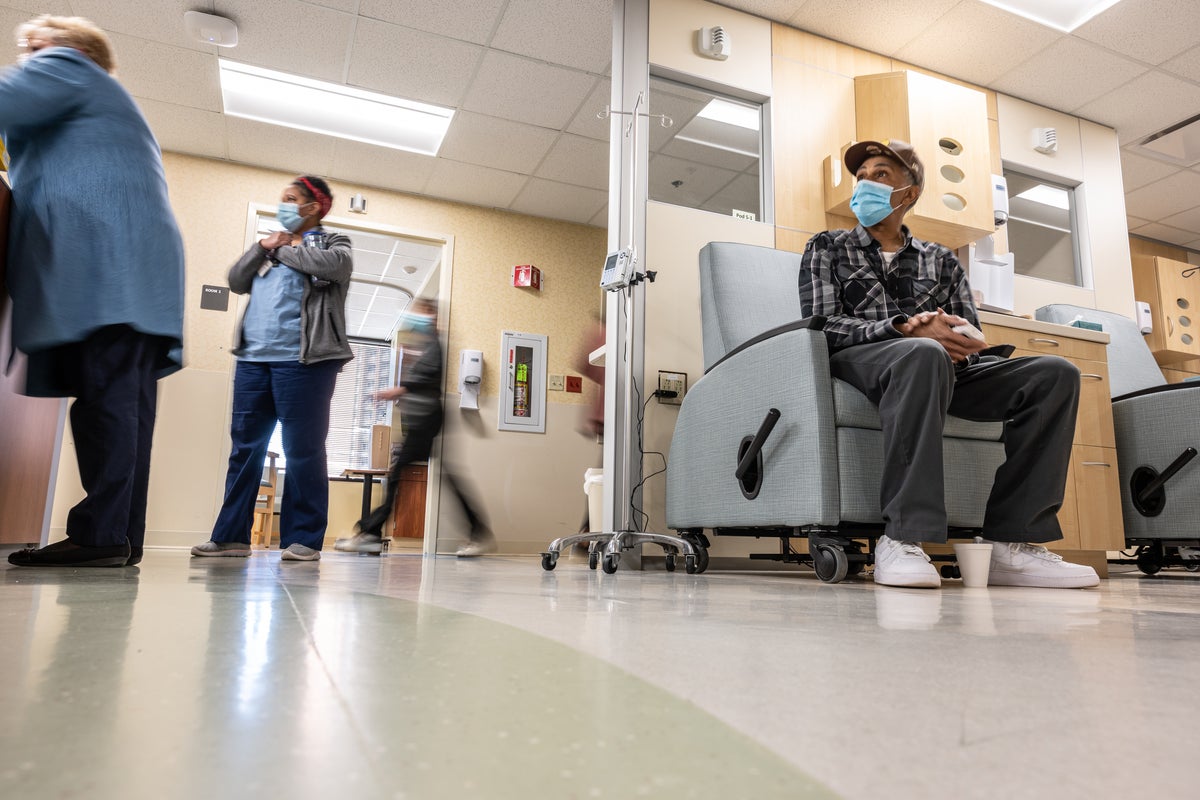
If you want to be contrarian, look at where Hantavirus actually kills. It doesn’t kill in San Francisco or New York. It kills in the "Four Corners" region. It kills in places where the nearest ICU with an ECMO machine (Extracorporeal Membrane Oxygenation) is a four-hour helicopter ride away.
The "readiness" problem isn't about viral surveillance; it's about the fact that we have gutted rural healthcare. HPS requires aggressive, high-tech intervention. If you are a rancher in a remote county, your "readiness" is zero because your local hospital closed in 2019.
We are obsessed with the "novelty" of the virus while ignoring the "permanence" of the poverty that facilitates its spread. Rodent infestations are a symptom of declining infrastructure. When we talk about Hantavirus, we are actually talking about the failure of the American dream in rural spaces.
The Myth of the "Lessons Learned"
The competitor article suggests we are applying lessons from COVID to Hantavirus. This is a lie we tell ourselves to feel safe.
What did we learn?
- We learned that the public will ignore health mandates if they feel politically targeted.
- We learned that the CDC's communication strategy is about as effective as a screen door on a submarine.
- We learned that "readiness" is just a buzzword for "buying more stuff we won't use."
Applying COVID "lessons" to Hantavirus is actually dangerous. COVID taught us to focus on masking and social distancing. If you apply that logic to Hantavirus, you miss the point. You don't need a social distance of six feet; you need to stop using a broom to sweep up mouse droppings (which kicks the virus into the air) and start using a bleach solution.
The "readiness" narrative shifts the responsibility from the state (infrastructure and ecological management) to the individual (behavioral compliance). It’s a classic shell game.
Stop Asking if Hantavirus is the Next Pandemic
The question itself is flawed. It’s the wrong metric for danger.
People ask, "Should I be worried about a Hantavirus outbreak in my city?"
The answer is: No. Unless you have deer mice living in your Soho loft, you are fine.
The real question is: "Why are we still losing 1 out of every 3 infected people to a virus we have known about since 1993?"
We haven't produced a vaccine because there is no money in it. The "market" for a Hantavirus vaccine is a few thousand rural workers and outdoor enthusiasts. Big Pharma doesn't care about a 35% mortality rate if the total body count doesn't hit six figures.
This isn't a test of "pandemic readiness." It's an indictment of a healthcare system that only moves when there’s a profit motive or a threat to the urban elite.
The Brutal Reality of Zoonotic Spills
Every time we encroach on wild spaces, we invite these spills. It is not a "mystery" why Hantavirus cases fluctuate. It is tied to climate patterns—the El Niño-Southern Oscillation (ENSO). More rain equals more pinon nuts, which equals more mice, which equals more dead humans.
We can predict this. We have the data. We just don't act on it because acting on it requires boring, unsexy work like improving the ventilation in tribal housing or subsidizing professional pest control for low-income families.
It is much easier to write a "scary" article about pandemic readiness than it is to address the fact that we let people live in conditions where breathing the air in their own basement is a death sentence.
Forget the "Grand Strategy"
The experts quoted in these articles love to talk about "One Health" and "Global Surveillance." It’s all high-level academic fluff that means nothing to a person currently suffocating because they cleaned out their garage.
If you want to actually be "ready" for Hantavirus:
- Throw away your broom. Use a wet-mopping method with disinfectant.
- Seal the gaps. A mouse can fit through a hole the size of a dime. Your "readiness" is a roll of steel wool and some caulk.
- Demand rural ICU funding. A ventilator in a city 300 miles away won't save you.
Stop letting the media use "Pandemic" as a catch-all for every biological threat. It dilutes the word and distracts from the specific, localized failures that actually kill people.
Hantavirus isn't the next COVID. It's something much more honest: a reminder that nature is indifferent to our "readiness" and our infrastructure is far more fragile than we admit.
Buy some bleach. Fix the holes in your floorboards. Stop reading the panic-bait.