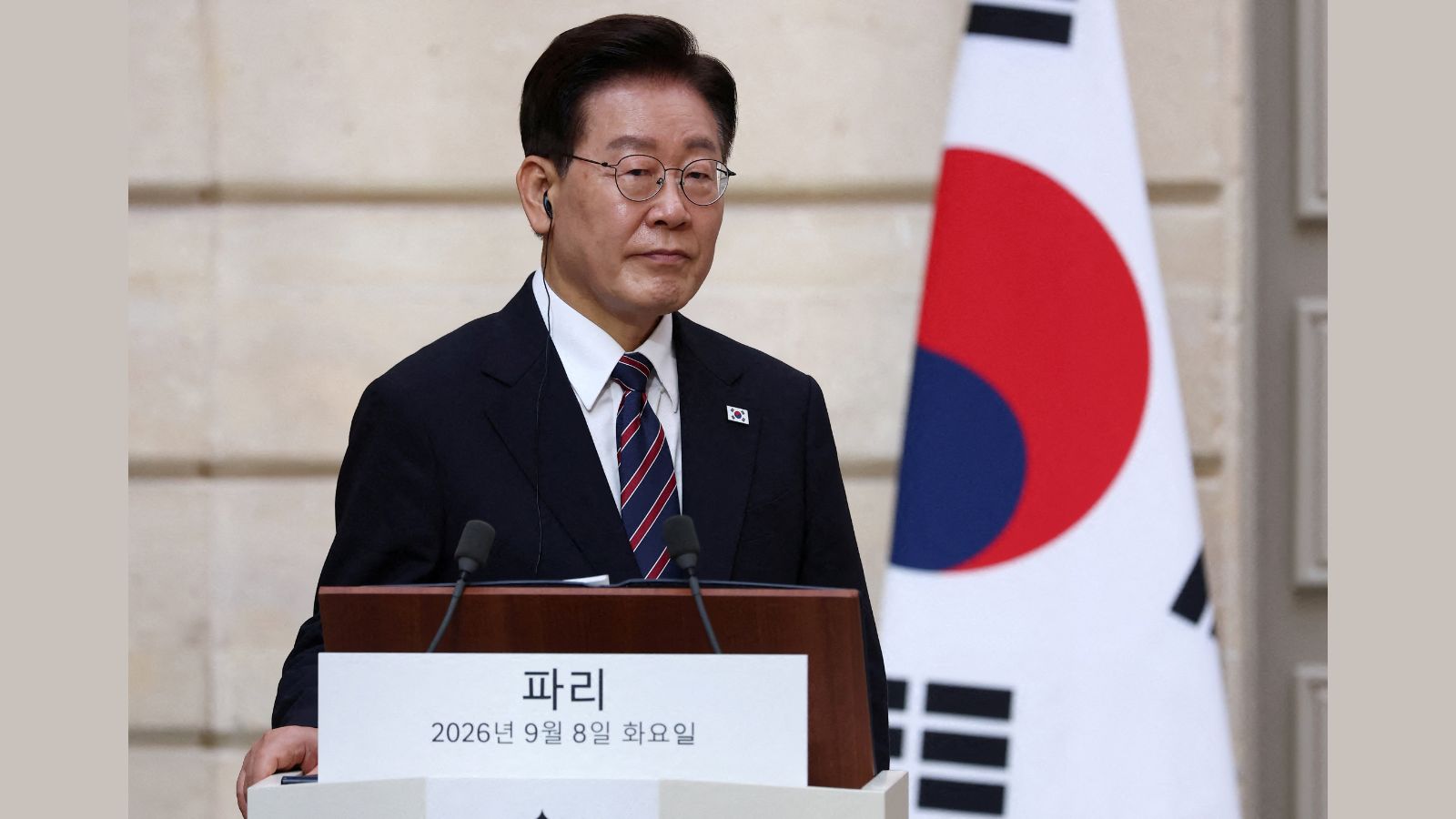
Every international wire service and domestic pundit is currently weeping over South Korean President Lee Jae-myung’s approval rating plumbing new depths. The lazy consensus echoing across newsrooms is predictable and shallow. They tell you that property curbs, tax tweaks, and a botched cabinet shuffle have alienated ordinary citizens who just want a roof over their heads. They paint a picture of a beleaguered politician caught in the crossfire of a classic supply crunch.
It is a comfortable narrative for lazy journalists. It is also entirely wrong.
I have watched urban property markets collapse, inflate, and mutate across global capitals for decades. I have seen politicians burn billions of dollars trying to outsmart basic market gravity, only to be thrown out of office by the very mobs they tried to appease. President Lee’s plummeting poll numbers are not a symptom of bad administration. They are the inevitable shockwave of an electorate waking up from a multi-decade financial hallucination.
To understand why the mainstream analysis is garbage, you have to look past the superficial panic over real estate policies and confront the raw, ugly mechanics of how South Korea turned cement and steel into a national religion.
The National Addiction to Asset Inflation
Let us clear up the first major delusion. The consensus narrative assumes that if the government simply unlocks more land, cuts red tape, and builds thousands of high-rises across Seoul, the housing crisis evaporates. This is magical thinking wrapped in an economics textbook.
Seoul is not short on housing units. It is short on affordable credit attached to speculative FOMO. For thirty years, the South Korean middle class tied its entire net worth, identity, and retirement security to residential real estate. The apartment complex you bought in Gangnam was never just a place to sleep; it was a speculative ticket, a status symbol, and a private pension fund all rolled into one.
When the state steps in with property curbs, heavier holding taxes, or tighter lending rules, it touches a nerve raw with terror. People are not angry because they cannot find a home. They are furious because the state is threatening the perceived liquidity of their primary speculative asset. Conversely, when prices drop, the buyers who were locked out scream bloody murder because they bought at the top or fear catching a falling knife.
President Lee is standing in the middle of a burning room, handing out fire extinguishers, and the occupants are screaming at him because the water is wet. Pundits pointing to Realmeter surveys showing disapproval ratings climbing past fifty percent miss the fundamental driver: citizens are not reacting to administrative incompetence; they are reacting to the painful realization that their paper wealth is evaporating.
The Political Schizophrenia of the Electorate
Politics in South Korea suffers from severe cognitive dissonance regarding urban development. Urban commentators like Kim Si-deok have pointed out the deep contradictions in how citizens view Seoul. On one hand, the public demands mass housing, infinite vertical expansion, and slashed prices so every young professional can own a slice of the capital. On the other hand, the exact same populace violently protests when a local green space is rezoned—such as the fierce battles over Yongsan land disputes—or when a transit project disrupts a neighborhood view, or when a proposal threatens to turn Seoul into a faceless collection of uniform concrete towers.
The electorate wants Seoul to remain a pristine, boutique cultural hub while simultaneously functioning as a low-cost, high-yield commodity market for millions of new buyers.
This is a physical and financial impossibility. You cannot preserve urban exclusivity while turning every square meter into mass-market inventory. Lee’s administration tried to thread this needle and ended up alienating both factions. The preservationists think he is selling out the city's soul to developers; the impatient buyers think he is dragging his feet to protect elite landlords.
When you try to please everyone in a zero-sum game, you achieve a political death spiral. His approval rating dipping into the thirties is not a referendum on his competence. It is the natural mathematical result of trying to manage an impossible contradiction that previous administrations simply kicked down the road.
The Jeonse Time Bomb and Cheap Debt
You cannot talk about South Korean real estate without confronting the structural insanity of the jeonse system—the unique lump-sum deposit lease arrangement that has fueled housing speculation for generations.
For decades, jeonse functioned as an informal, unregulated shadow banking system. Landlords used tenant deposits as interest-free borrowing power to buy multiple properties, betting that housing prices would perpetually outpace inflation. When interest rates were near zero, this system spun out of control. Every aspiring landlord became a micro-developer, snapping up apartments on margin.
When monetary policy tightened globally and domestic borrowing costs spiked, the underlying machinery seized up. Tenants faced deposit return crises; landlords faced liquidity crunches. The government's recent regulatory interventions were desperate attempts to defuse this ticking financial time bomb without triggering a systemic banking collapse.
Did the policies cause friction? Absolutely. Any intervention that forces an over-extended market to de-risk will cause immense pain. But blaming Lee for the friction is like blaming the surgeon for the pain of removing a malignant tumor. The tumor was already there, metastasizing for twenty years through bipartisan cowardice.
The Distraction of Ministerial Scapegoats
Another staple of the mainstream critique is that Lee’s cabinet reshuffles and political distractions torpedoed his public standing. Pundits point to canceled ministerial nominations, ethics controversies surrounding justice and gender equality picks, and squabbles within the ruling Democratic Party as the primary drivers of voter disgust.
This is a smoke screen. Cabinets stumble and ministers fall in every administration on earth. If a government is delivering steady economic growth and rising asset values, the public cheerfully ignores minor ministerial scandals. Scandals only become fatal when the foundational contract between the state and the citizen breaks down.
The foundational contract in South Korea was simple: work hard, buy real estate, and your wealth will compound infinitely. That contract is dead. Global economic headwinds, high interest rates, and demographic decline—South Korea’s birth rate is a flashing red alarm bell—have rendered the old growth model obsolete.
No amount of cabinet reshuffling or symbolic housing proposals will resurrect a dead economic framework. The public knows deep down that the old rules no longer apply. Lacking a coherent psychological framework to process this systemic anxiety, they project their rage onto the sitting president's approval ratings.
Why the Current Slide is Actually Rational
Let us look at this from a colder, more analytical angle. Why should a leader's approval rating remain high when an economy is undergoing a painful, long-overdue structural deleveraging?
In a functioning democracy, low approval ratings during a painful transition are not necessarily a sign of failure. They are often a sign that the government is refusing to print another round of toxic illusions. If Lee pandered entirely to the populist mob—if he slashed interest rates, wiped away property taxes, and fueled another speculative housing bubble—his approval numbers might bounce back tomorrow. But the resulting economic hangover would detonate the country's financial system within five years.
Choosing short-term unpopularity to prevent long-term insolvency is the definition of political risk. Most politicians choose self-preservation every single time, kicking the can until the economy collapses under the next guy. Lee is taking the structural hits directly on the chin. Whether his policy prescriptions are entirely correct is a valid debate; arguing that his unpopularity proves he is destroying the housing market is profoundly illiterate.
The Unspoken Demographic Reality
Behind every housing debate in Seoul lurks a terrifying demographic ghost. South Korea’s fertility rate is hovering near historical lows, well below replacement level. The population is aging at a breakneck speed.
Stop for a moment and run the mathematical implications of this demographic collapse against a housing market designed for perpetual growth. Who is going to buy these millions of apartments in twenty years? Who is going to service the mortgages? Who is going to pay the rents that sustain landlord financial exposure?
The housing discontent in Seoul is not just about today's high prices or last month's tax rules. It is an existential panic. Young Koreans realize they are being asked to buy into a shrinking demographic pyramid at peak prices. They are angry because they suspect the music is about to stop, and they are terrified of being left holding the empty chair.
President Lee cannot legislate away birth rates. He cannot decree that millions of missing children will suddenly appear to occupy future housing developments. Yet the political opposition and the media pretend that a clever zoning law or a tax exemption can repeal the laws of demographics.
Stop Waiting for a Savior
The relentless focus on presidential approval ratings misses the forest for the trees. South Koreans are treating the presidency like an oracle that can magically reconcile unaffordable real estate, aging demographics, high debt, and the desire for boutique urban aesthetics without anyone having to take a loss.
It cannot be done.
The market is unwinding. The cheap credit era is dead. The demographic reality is biting hard. Until the public accepts that housing can either be a stable, boring shelter or a speculative get-rich-quick casino, but never both simultaneously, no politician will ever satisfy them.
President Lee’s approval rating is not plunging because he broke the housing market. It is plunging because he is presiding over the exact moment the illusion finally breaks. Stop looking for policy tweaks to save a broken framework. The era of effortless Korean real estate wealth is over. The sooner everyone stops blaming the messenger and faces the math, the sooner the country can actually build a sustainable future.