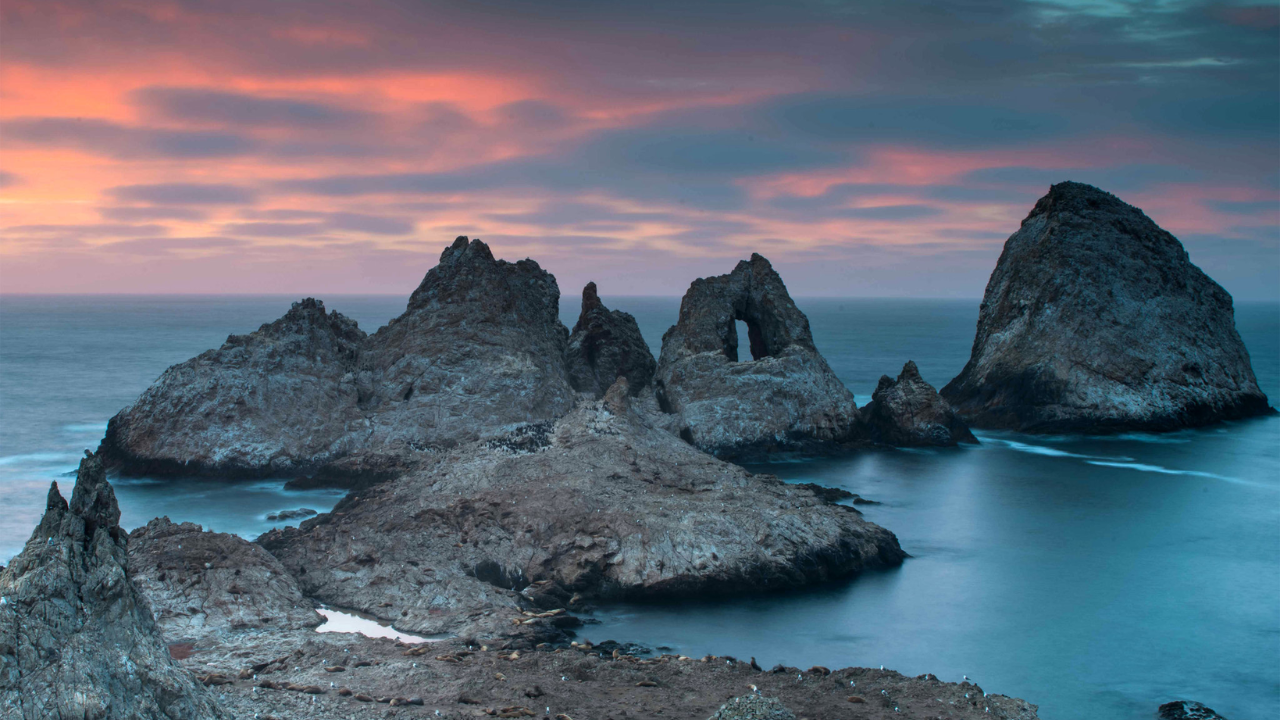
History loves a clean narrative. Wooden hulls creak, rotted canvas snaps in the salt spray, and clumsy sailors drop crates of grain onto isolated shores. Suddenly, an ecological tragedy unfolds across jagged rocks thirty miles off the coast of San Francisco.
The lazy consensus writes itself. Innocent islands untouched by human claws get swarmed by stowaway rodents because some nineteenth-century captain lacked basic cargo hygiene. It makes for a tidy bedtime story. It is also entirely wrong.
We have spent centuries treating islands as static museum glass, as if nature intended them to exist in permanent, fragile isolation until the industrial age ruined the aesthetic. That is not ecology. That is romantic fiction. Rodents did not conquer the Farallon Islands or similar Pacific outcrops merely because a wooden brig happened to drift past. They arrived because ecosystems are dynamic, opportunistic machines, and a rock surrounded by churning saltwater is just an open vacancy sign for anything tough enough to eat seabird eggs and survive a gale.
The Myth of the Pristine Rock
Let us dismantle the core falsehood first. The popular narrative assumes these offshore islands were pristine Edens before the arrival of sealing ships and cargo vessels. Ecologically speaking, an island thirty miles out to sea is not a sanctuary. It is an extreme survival test.
Before human ships ever cast off, these rocks were subjected to natural colonization vectors for millennia. Avian migration, driftwood rafts, violent storm surges, and mammalian rafting events engineered continuous species turnover. When we point an accusatory finger at nineteenth-century merchant vessels, we use human guilt as a shortcut for complex biogeography.
Ships did not introduce mice to an impossible-to-reach sanctuary. Ships merely sped up a delivery that the Pacific Northwest jet stream and coastal currents were already attempting every winter.
Consider the physical reality of these outposts. The Farallon Islands sit on the edge of the continental shelf, battered by heavy winds and cold upwellings. When house mice established footholds there, conservationists panicked—and rightfully so, given the devastation wrought on native seabird colonies and endemic invertebrates. But the institutional response missed the mark entirely. Officials treated the mice as a foreign aberration rather than a symptom of a much larger, systemic ecological vulnerability: the severe disruption of apex predators.
The Predator Vacuum We Refuse to Discuss
If you remove every natural check on a population, do not act surprised when that population acts like it owns the place.
Nineteenth-century commercial exploitation did not just drop mice onto these islands; it systematically wiped out the creatures that would have treated those mice as a light afternoon snack. Fur sealers, egg-gatherers during the California Gold Rush, and commercial fishermen decimated the local populations of marine mammals, shorebirds, and raptors.
When you slaughter the gulls, hawks, and owls that keep small mammal numbers suppressed, you open a wide-lane highway for rodents to multiply unchecked. The mice did not win because they possessed superior biological engineering. They won because humans cleared the board of every single piece that could counter them, then blamed the shipping industry for the ensuing chaos.
I have watched modern conservation agencies repeat this exact mistake on a corporate scale. They pour millions into localized eradication programs—dropping rodenticide pellets by helicopter, setting traps, patting themselves on the back for a sterile victory—while ignoring the broader trophic imbalance. Eradicating a pest without restoring the predator baseline is like bailing out a sinking ship with a teaspoon while refusing to patch the hull. You are not solving the problem. You are buying time for the next wave to take over.
The Real Cost of Sanitized Conservation
The obsession with returning islands to an imaginary pre-contact state is more than just naive. It is actively counterproductive.
When we frame ecological challenges as moral failures caused by historical villains—greedy sealers, careless captains, industrial expansion—we obscure the mechanical realities of modern habitat management. Nature does not care about your moral framework. It operates on pressure, carrying capacity, and resource distribution.
If an island has abundant nesting seabirds, rich organic matter, and zero persistent predators, a mouse will thrive whether it arrived via a clipper ship in 1850 or a modern research boat in 2020. Framing this as a historical accident lets us pretend that if we just turn back the clock hard enough, the problem will vanish.
It will not.
Species dispersal is constant. Islands are not frozen in amber. Climate shifts, changing ocean temperatures, and human shipping lanes mean that biological mixing is the permanent default setting of our planet. Pretending we can erect an invisible force field around a rocky outcrop thirty miles off the coast of California is a fool's errand.
What Actually Works
If we want to manage island ecosystems without wasting millions of dollars on cyclical exterminations, we need to abandon our romantic notions of ecological purity and adopt a rigorous, mechanical approach.
First, stop treating biosecurity as an administrative afterthought. Modern cargo inspection on vessels heading near sensitive wildlife reserves is often sloppy. If we spent half the energy on rigorous vector control that we spend writing hand-wringing retrospective articles about nineteenth-century sailors, we would actually stop new introductions.
Second, prioritize native predator recovery alongside pest management. You cannot drop poison on an island, clear out the mice, walk away, and expect the ecosystem to heal itself. Without robust native food webs and predatory checks, the ecological vacuum will simply draw in the next opportunistic organism.
Third, redefine success. Total eradication in perpetuity is a marketing pitch used to secure grant funding. In a warming, hyper-connected world, long-term resilience requires adaptive management, constant surveillance, and the admission that nature is an ongoing negotiation, not a pristine painting you can hang on a wall and leave alone.
The mice on those islands did not arrive because history made a mistake. They arrived because biology does not recognize borders, and vacuums do not stay empty for long.
Stop blaming the sailors. Start fixing the food web.