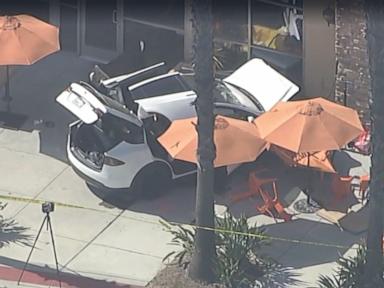
Headlines across mainstream media instantly defaulted to the standard script when a white Tesla model veered off a travel lane in a Simi Valley Target parking lot, jumping the curb and crashing into the outdoor seating area of an Urbane Cafe. One pedestrian, a 79-year-old woman, tragically lost her life, and five others suffered injuries. Instantly, the name of the vehicle brand took center stage in every broadcast. The underlying, lazy consensus embedded in the reporting is clear: imply that a rogue autonomous vehicle or some technical failure is the primary culprit before investigators even pull the black box data.
This fixation misses the glaring reality of automotive telemetry data. Decades of analyzing vehicle safety data shows that the vast majority of low-speed, sudden-acceleration incidents in parking lots are not caused by software glitches. They are caused by pedal misapplication. Drivers panic, mistake the accelerator for the brake, and floor it. By treating every electric vehicle crash as a referendum on autonomy, the public discourse ignores a critical flaw in human-machine interfaces and infrastructure design.
The Reality of Pedal Misapplication
Every time a high-profile vehicle hits a storefront, a predictable wave of public skepticism hits the internet. Commentators point fingers at advanced driver assistance systems like Full Self-Driving (FSD) or Autopilot. Yet, historical National Highway Traffic Safety Administration (NHTSA) data reveals that pedal misapplication occurs roughly 16,000 times a year in the United States alone. These incidents happen predominantly in commercial parking lots, driveways, and intersections.
When a driver intends to press the brake but hits the accelerator, a psychological feedback loop takes over. The vehicle surges forward. The driver, believing their foot is already on the brake, presses down significantly harder out of panic. In a high-torque electric vehicle, this mistake manifests instantly and violently.
The vehicle data from previous, identical public outcries tells a consistent story. When a driver blamed their vehicle for a fatal crash into a home, the onboard loggers routinely proved the opposite: the driver depressed the accelerator to 100% capacity, sending the car roaring into the structure. The corporate data loggers do not lie about manual overrides.
Why the Tech Narrative Dominates
Media outlets leverage brand names because they drive engagement metrics. If a 15-year-old internal combustion sedan plows into a storefront, the headline reads: "Car crashes into business." When it is a modern electric vehicle, the brand name is mandatory real estate in the title. This creates an availability heuristic where the public overestimates the dangers of new automotive technology while ignoring systemic infrastructure issues.
Consider the layout of the modern suburban shopping center. High-mass vehicles travel inches away from vulnerable pedestrians separated by nothing more than a two-inch concrete curb and a decorative patio umbrella. Strip malls and big-box store parking lots are configured to maximize parking stalls at the absolute expense of pedestrian safety zones.
The focus belongs on implementing passive structural barriers—such as crash-rated bollards—rather than obsessing over whether a vehicle was operating on driver-assist software. A standard concrete bollard stops a runaway vehicle regardless of whether a human or a computer is operating the pedals.
The Trade-off of High-Torque Fleets
Admitting the downsides of modern automotive progression requires looking at the raw specifications of contemporary vehicle fleets. The transition to electric drivetrains means that even entry-level commuter vehicles possess instantaneous torque and immense curb weight due to heavy battery packs.
- Weight Dinamics: A modern electric SUV can weigh anywhere from 5,000 to over 6,000 pounds.
- Kinetic Impact: When a 2.5-ton object accelerates from zero to thirty miles per hour in a split second inside a parking lot, the structural damage upon impact is catastrophic compared to older, lighter vehicles that require time to build engine RPM.
This is the true structural nuance of the problem. Human error has remained constant for a century. What has changed is the potential kinetic energy unleashed in the first 10 feet of a panic response. Drivers have less time to correct their mistakes, and infrastructure built forty years ago is wholly unprepared to absorb the mass of modern vehicles.
Stop asking whether the vehicle's computer failed. Start asking why cities continue to permit outdoor dining plazas to exist directly in the impact path of perpendicular parking spaces without reinforced steel barriers. The answer isn't to fixate on the branding of the car; it's to fix the vulnerable architecture that surrounds them.