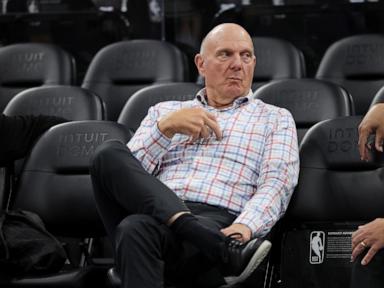
Steve Ballmer capitulated. The Los Angeles Clippers owner dropped his high-priced legal defiance, apologized to fans, and agreed to pay a punishing thirty million dollar fine alongside severe franchise sanctions. This sudden retreat ended a toxic standoff over salary cap circumvention linked to star player Kawhi Leonard. For months, the organization screamed bias and swore complete innocence. Then reality arrived in the form of an unwinnable war against the league office.
Power dynamics in professional sports rarely shift overnight, but the events leading to Ballmer's reversal exposed the structural vulnerabilities of modern team ownership. Billionaires are accustomed to buying their way out of friction. They treat regulatory compliance as a complex negotiation rather than an absolute boundary. When the National Basketball Association dropped the hammer—suspending Ballmer for a year, stripping draft assets, and delivering a financial penalty that would sting even a tech titan—the initial response from the Clippers was pure corporate combat. They claimed the investigation was tainted. They insisted that the accusations regarding secret endorsement conduits were absurd.
That posture crumbled under the weight of sustained reporting and institutional pressure.
The Anatomy of a Billionaire Bluff
Arrogance is a common affliction among hyper-successful entrepreneurs who transition into sports ownership. Ballmer built his fortune on software dominance and aggressive market capture. In his view, obstacles were merely engineering problems waiting for a larger check or a louder voice. When journalists and league investigators began tracking financial footprints connecting franchise leadership to dubious corporate entities tied to Leonard, the standard playbook was deployed. Deny everything. Attack the source. Threaten pushback.
Yet sports leagues are private cartels governed by collective self-preservation. Adam Silver and the league's board of governors possess absolute authority over franchise operations under the collective bargaining agreement. An owner cannot simply sue the league without breaking the sacred compact of ownership unity. To challenge the punishment in a court of law would invite mutual destruction, dragging proprietary financial records, internal memos, and backroom communications into public discovery.
Ballmer discovered that his immense wealth could not purchase immunity from institutional survival rules.
An extreme short sentence changed his trajectory. He realized he had nowhere to run.
The legal team advising the Clippers likely looked at the evidentiary trail and delivered a sobering verdict. Fighting would only deepen the wound. The optics of a tech billionaire whining about fairness while owning a franchise that pushed regulatory boundaries began to curdle public sentiment. Fans do not sympathize with billionaires arguing over accounting tricks. The apology that followed was carefully scripted, designed to cauterize a bleeding wound before it infected the entire brand identity of the newly built Intuit Dome.
Following the Paper Trail
To understand why Ballmer backed down, one must examine how the scandal unfolded. The entire crisis did not materialize out of thin air. It was unearthed through meticulous investigative work that mapped out obscure financial channels and corporate connections.
Reports detailed how a fraudulent environmental enterprise named Aspiration became a quiet conduit for funds. Leonard had signed an endorsement deal with the company back in 2021, an arrangement that allegedly required virtually no promotional output from the player. Meanwhile, top executives within the Clippers organization and associated corporate structures maintained financial ties to the same sinking ship. Millions flowed through corporate layers, creating a circumstantial labyrinth that looked remarkably like deferred compensation designed to bypass the strict constraints of the salary cap.
The National Basketball Association cannot ignore such mechanisms. If owners are allowed to subsidize superstar salaries through third-party corporate vehicles, the entire competitive balance of the league collapses. Small-market franchises would find themselves entirely priced out, reduced to farm teams for hyper-wealthy ownership groups willing to subsidize players through private investments, real estate partnerships, or shell corporations.
Cap circumvention is the ultimate heresy in modern American sports. It threatens the illusion of parity that underpins billions of dollars in television rights and ticket sales. Once the league's investigative arm gathered enough internal documentation, emails, and financial transfers, the case became airtight. The defense strategy shifted from active denial to quiet damage control.
The Cost of Defiance
The penalties levied by the office of the commissioner were historically severe. A thirty million dollar fine is pocket change for a man of Ballmer's net worth, but the loss of draft capital and the personal suspension hit where it actually mattered. Losing a year of active governance means being stripped of voting power, boardroom influence, and direct oversight of a franchise that has consumed billions in capital and emotional investment.
For an owner whose brand is built on hyper-visible sideline enthusiasm, forced isolation is a crushing blow. Ballmer is not a passive investor who watches box scores from a quiet estate. He is an active, vocal participant in the sensory experience of every home game. Sitting on the sidelines cheering with unbridled intensity is his signature public persona. Being barred from those seats for an entire season strips away the very gratification that makes owning an NBA team appealing to a man of his temperament.
Furthermore, the forfeiture of draft picks damages the long-term competitive trajectory of the organization. Building a championship contender in a major media market requires flexibility, young talent, and future assets to trade. Slicing away draft selections kneecaps the front office's ability to refresh the roster through the entry draft, forcing the front office into an expensive cycle of aging veteran acquisitions and luxury tax penalties.
The Corporate Culture Question
Beyond the immediate financial and structural penalties, this episode casts a harsh light on how modern franchises manage compliance. Every major sports organization employs armies of legal counsel, financial advisors, and compliance officers whose entire job is to ensure that every contract, sponsorship, and endorsement adheres to the strict letter of league regulations.
When a scandal of this magnitude breaches the surface, it indicates a systemic failure within the internal checks and balances of the organization. Did the compliance department look the other way because instructions came from the top? Did executives operate under the assumption that aggressive financial engineering would never face scrutiny from league auditors?
In corporate governance, plausible deniability is a weak shield. Executives are paid to anticipate regulatory traps and steer clear of them. When top leadership gets suspended and millions are paid in penalties, it signals that the organizational culture prioritized winning at all costs over institutional integrity. The apology issued by ownership was an admission that the corporate firewall had failed, leaving the franchise exposed to public ridicule and regulatory vengeance.
The Broader Industry Fallout
The repercussions of this scandal extend far beyond the southern California franchise. Every front office in professional sports is currently auditing its own books, examining every third-party marketing agreement, and scrutinizing every commercial relationship involving players and team-affiliated investors.
Agents and executives are having uncomfortable conversations behind closed doors. The era of loose corporate partnerships and informal arrangements is effectively over. The league office has signaled that it will utilize forensic accountants and expanded audit powers to catch any owner attempting to bend the rules. When interactions with sports agents must be documented and preserved for years, the entire ecosystem of player recruitment shifts toward hyper-vigilance.
Competitors across the league are watching closely. Franchises with deep-pocketed owners who previously tested the boundaries of luxury tax thresholds and supplementary income streams are now pulling back. The fear of incurring a similar public flogging has created a chilling effect on creative financial arrangements.
The Unresolved Horizon
Despite the apology and the payment of the fine, the story is far from finished. Legal analysts note that sports penalties are merely the administrative phase of a much larger vulnerability. The intersection of private enterprise, corporate insolvency, and professional sports contracts invites external scrutiny from regulatory bodies that do not answer to the commissioner.
When federal investigators or financial watchdogs start asking questions about corporate bankruptcies and money flows, the defense mechanisms designed for sports leagues fall apart. The shadow of ongoing inquiries means that the front office cannot fully close the book on this chapter simply because the commissioner's office has tallied the bill.
Steve Ballmer wanted to change the culture of basketball in Los Angeles by outspending and out-engineering the competition. Instead, he became the primary case study in the limits of corporate impunity within a regulated sports cartel. The money was paid. The apology was issued. Yet the underlying tension between limitless wealth and rigid league parity remains entirely unresolved, lingering like a dark cloud over the future of the franchise.