The sun hadn’t quite cleared the Alborz Mountains when the first vibration rippled through the soles of Farhad’s boots. It wasn't the tremor of an earthquake, though Tehran knows those well enough. This was rhythmic. Heavy. A mechanical heartbeat that seemed to pulse from the very asphalt of Baharestan Square.
Farhad is a fictional composite of the men I’ve sat with in the tea houses of Darband, men who remember the scent of cordite from the 1980s and who watch the morning news with a practiced, weary squint. On this particular morning, he wasn't looking at the mountains. He was looking at the long, dark barrels of mobile missile launchers rolling past, their tires hissing against the pavement.
The world sees a headline: "Tehran holds military parade as ceasefire nears end." But for those standing on the curb, breathing in the blue-grey exhaust of heavy transport trucks, the event isn't a headline. It is a visceral reminder that peace is often just a timed interval between the movements of heavy machinery.
The Choreography of Deterrence
There is a specific theater to a military parade in the Islamic Republic. It is not merely a display of inventory. It is a language.
As the S-300 batteries and the indigenous Bavar-373 systems lumbered through the streets, the message wasn't aimed at the locals buying Barbari bread at the corner stall. It was a broadcast aimed at satellites and high-altitude reconnaissance drones. The timing was surgical. A ceasefire elsewhere was ticking down like a cheap kitchen timer, and the air was thick with the possibility of renewed kinetic action.
When a nation displays its teeth, it is usually because it feels the walls closing in. For Iran, these parades serve as a physical manifestation of "Strategic Patience"—a term frequently used by diplomats that translates, on the ground, to a state of permanent readiness.
Consider the engineering required to move a Ghadr ballistic missile through a crowded metropolitan center. These are monsters of steel and volatile fuel, draped in banners that scream defiance. They are awkward, terrifying, and undeniably impressive in their sheer scale. To the Western eye, they look like relics of a Cold War aesthetic. To the Iranian government, they are the only insurance policy that matters in a neighborhood where borders are written in shifting sand.
The Invisible Stakes at the Dinner Table
While the steel rolled through the capital, the real tension lived in the quiet spaces. It lived in the fluctuating price of the Rial displayed on the black-market exchange boards and in the way people lowered their voices when discussing the "situation" over tea.
The end of a ceasefire is a phantom that haunts every household. If the guns start firing again—whether in a proxy conflict or a direct confrontation—the first casualty isn't a soldier. It’s the price of chicken. It’s the availability of imported medicine. It’s the hope that this year, finally, the shadow of sanctions and the threat of "all options on the table" might recede.
I remember talking to a carpet merchant in the Grand Bazaar who compared the region’s politics to the knots in a Tabriz rug. "If you pull one thread too hard," he said, rubbing a thumb over a silk pattern, "the whole design distorts. You cannot fix the blue without affecting the red."
The parade is the red thread. It is loud. It is bright. It demands you look at it. But the blue thread is the millions of people who just want to know if they should stock up on rice before the weekend. The tragedy of the "human element" in these geopolitical maneuvers is that the individual becomes a rounding error in a calculation of "regional influence" and "breakout capacity."
The Weight of History
You cannot understand the roar of a tank in Tehran without understanding the silence of 1980. The Iran-Iraq war isn't ancient history here; it is a scar that still aches when the weather changes.
The generation currently commanding these parades grew up in the trenches of Faw and the marshes of Majnoon. They learned a singular, brutal lesson: nobody is coming to help. When the chemical weapons fell, the world looked the other way. When the cities were bombed, the international community issued "concerns" but no solutions.
That collective trauma birthed the domestic arms industry we see today. If you want to know why Iran obsesses over drone technology and long-range missiles, don't look at their ideology first. Look at their geography. They are surrounded by American bases and historical adversaries.
The parade is a way of saying, "We remember what it was like to be defenseless."
It is a logical conclusion drawn from a series of historical betrayals. Whether one agrees with the regime's current trajectory or not, the internal logic is consistent. If you believe the world is a dark room full of people with knives, you spend your time sharpening your own.
The Mechanics of the Moment
Let’s look at the hardware for a second, because the hardware tells its own story.
During this specific display, the focus wasn't just on the massive rockets. It was on the "suicide drones"—the Shaheds. These are the modern-day equivalent of the longbow at Agincourt. They are cheap. They are swarmable. They are a nightmare for traditional air defense systems that are designed to shoot down million-dollar jets, not five-thousand-dollar lawnmowers with wings.
$$C_{intercept} >> C_{attack}$$
This simple inequality is the nightmare of every modern strategist. When the cost of the interceptor ($$C_{intercept}$$) is significantly higher than the cost of the attacking drone ($$C_{attack}$$), the defender loses the war of attrition long before they lose the physical territory.
By parading these systems exactly as a ceasefire was ending, Tehran was performing a live-action risk assessment for its rivals. They were showing that they could saturate any battlefield with low-cost, high-impact technology. It’s a move of extreme confidence, or perhaps, extreme vulnerability disguised as such.
The Human Cost of Constant Vigilance
Standing on a balcony overlooking the route, one sees the faces of the young conscripts sitting atop the armored vehicles. They are mostly twenty-somethings. They have iPhones in their pockets and dreams of becoming software engineers or filmmakers. For a few hours, they are cogs in a machine of national projection.
They look bored. They look hot. They look like young men everywhere who are tired of being told that they are the vanguard of an eternal struggle.
There is a fatigue that sets in when a nation lives in a state of perpetual "high alert." You can only maintain the peak of an adrenaline rush for so long before the body—and the body politic—starts to crash. The parades are designed to keep the blood pumping, to remind the populace that the "enemy" is always at the gates.
But what happens when the gates are fine, but the roof is leaking?
The invisible stakes of the parade are the billions of dollars diverted from infrastructure and education into the maw of the defense budget. It is a classic "guns vs. butter" dilemma, played out on a stage where the actors are forbidden from questioning the script.
The Ending of the Clock
The ceasefire clock doesn't just tick for the diplomats in Vienna or Geneva. It ticks in the hearts of the mothers whose sons are stationed on the borders. It ticks in the minds of the students who wonder if their degrees will be worth anything in a war-torn economy.
As the last of the heavy trucks cleared the square and the traffic police began to reopen the intersections, the smell of diesel lingered. It hung in the air, thick and acrid, refusing to dissipate.
Farhad turned away from the street. He had a shop to open. He had a life to live. He had lived through the "War of the Cities," the "Maximum Pressure" campaign, and a dozen "final warnings."
He walked toward his storefront, the sound of the tanks still ringing in his ears, and wondered if this time the ceasefire would end with a whimper or a roar. Or perhaps, in the strange, suspended reality of the Middle East, it wouldn't end at all. It would just continue to expire, day after day, while the missiles stayed on their trailers and the people stayed on their toes.
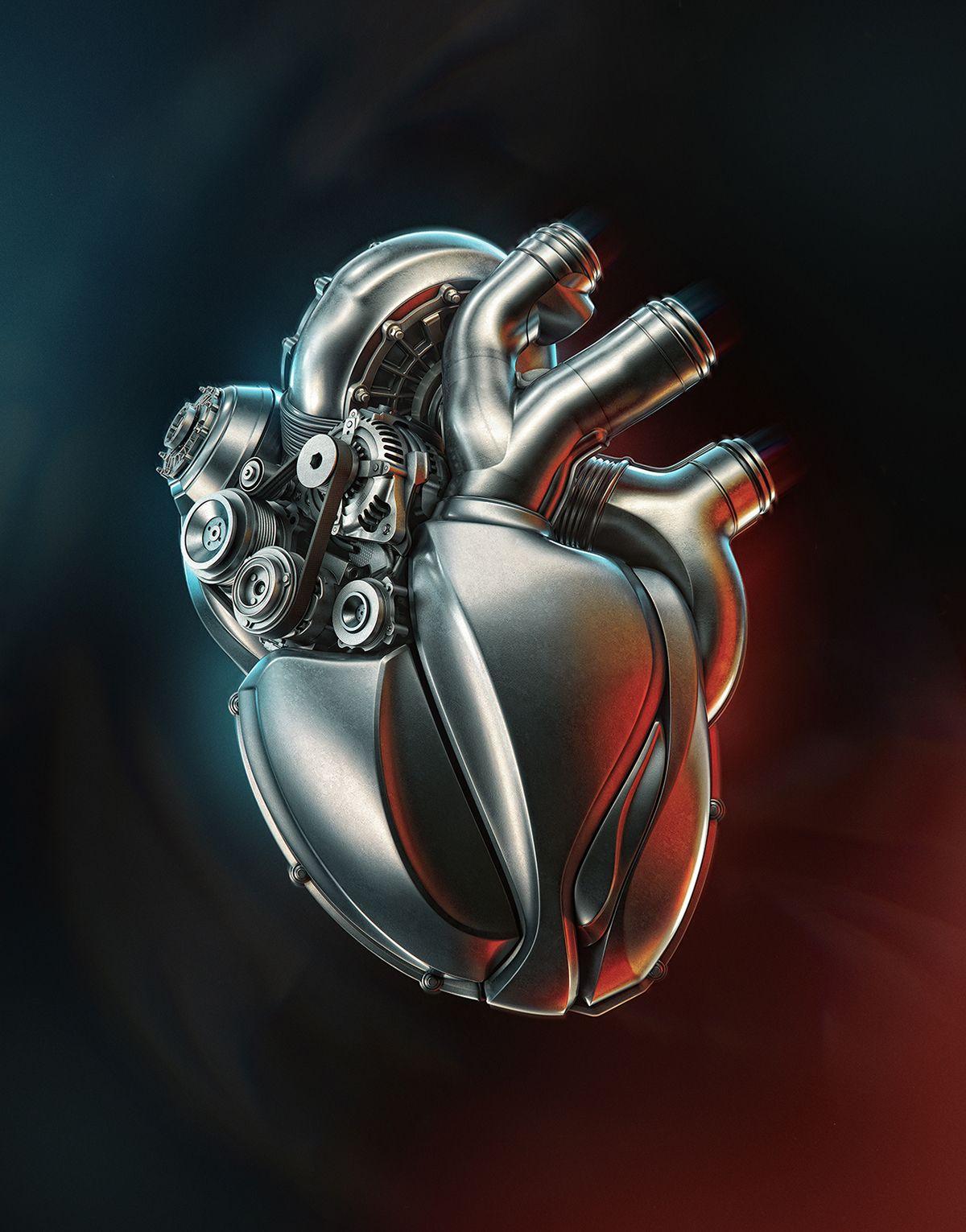
The steel heart of the city kept beating, but it felt more like a shudder.
The parades are over for now. The banners will be folded. The missiles will be tucked back into their underground silos, waiting for the next time the theater of power requires a new set of actors.
Out in the street, a young boy picked up a small paper flag that had fallen from a spectator's hand. He didn't look at the slogans. He just folded it into a paper airplane and threw it into the wind, watching it catch a thermal and rise far above the soot-stained buildings, higher than the drones, until it was nothing but a speck against the vast, indifferent blue of the Persian sky.