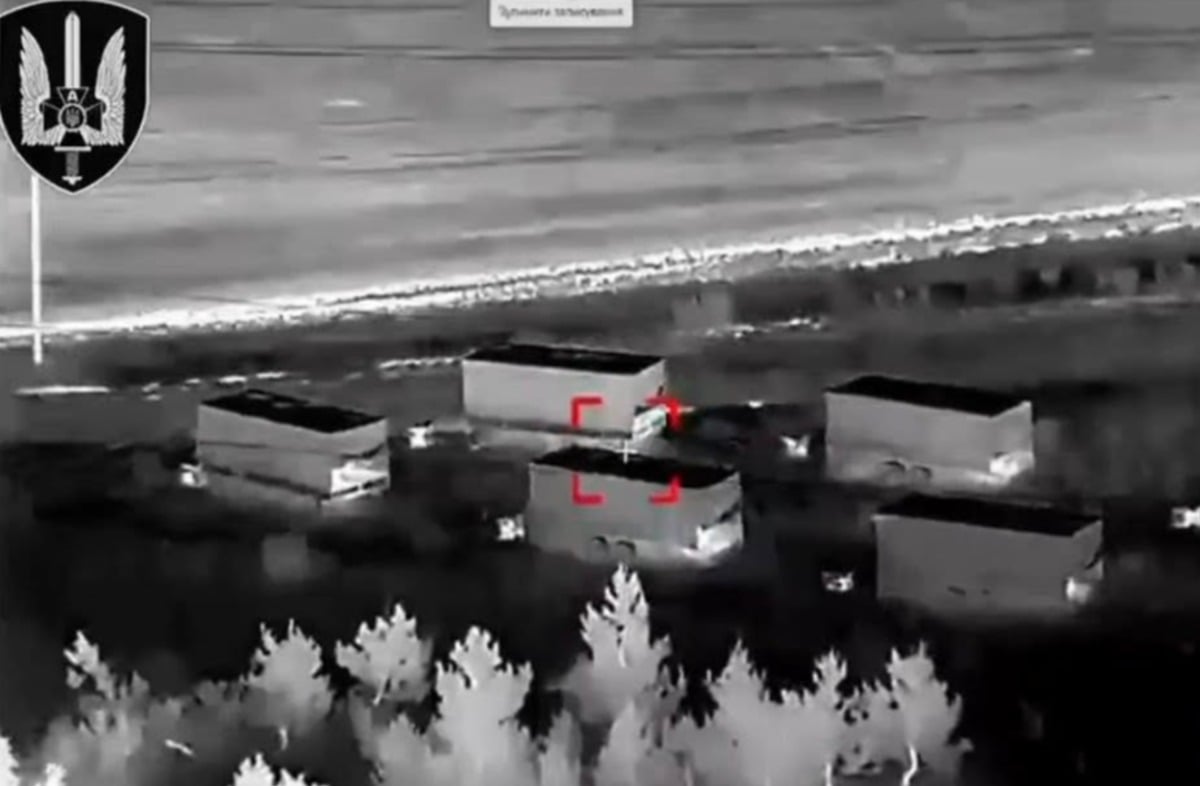
The media wants a spy thriller. They want you to picture Ukrainian special forces slipping through the muddy forests of the Donbas, laser-designating a multi-million-dollar Russian electronic warfare vehicle, and watching it blow up in a cloud of cinematic smoke. It makes for great headlines. It feeds the narrative of a high-tech David vs. a clumsy Goliath.
It is also an absolute waste of blood, sweat, and artillery shells.
The dominant narrative surrounding the electronic battlefield in Ukraine follows a lazy, linear consensus: Russia builds big, expensive jammers; those jammers blind Starlink terminals; Ukraine must hunt down and destroy those jammers to keep the frontline connected.
This view is fundamentally flawed. It misunderstands the physics of signal propagation, the economics of hardware attrition, and the core architecture of commercial megaconstellations. Having spent years analyzing tactical communications systems and watching military bureaucracies throw money at the wrong problems, I can tell you that trying to shoot your way out of an electronic warfare bottleneck is a fool's errand.
The obsession with kinetic hunting ignores a brutal reality. Electronic warfare is an asymmetric game of math, physics, and manufacturing capacity. You do not win it by hunting individual transmitters. You win it by making those transmitters irrelevant.
The Physics Problem Your Favorite Tech Pundits Ignore
To understand why hunting jammers is a losing strategy, you have to understand how Starlink actually works—and how it fails.
Most civilian commentary lumps all electronic interference into a single bucket called "jamming." In reality, disrupting a satellite system like Starlink requires two completely different approaches: uplink jamming and downlink jamming.
Uplink jamming targets the satellite itself. A massive, high-powered emitter on the ground blasts noise toward the sky, trying to drown out the relatively weak signals coming from soldier terminals on the battlefield. Here is the problem for Russia: Starlink operates in the Ku and Ka bands. These are highly directional, narrow-beam frequencies. To jam a satellite orbiting at 550 kilometers in low-Earth orbit, a ground station must look up, track a rapidly moving target traveling at 27,000 kilometers per hour, and maintain a precise line of sight.
Even if a system like the Russian Bylina or Tirada managed to do this, it would only disrupt a tiny, localized footprint of the constellation for a few minutes before the satellite moved out of view. The architecture is inherently distributed.
This brings us to downlink jamming, which is what is actually happening on the front lines. Russian troops are not hacking the heavens; they are flooding the local ground environment with radio frequency noise to blind the user terminals.
[Russian Downlink Jammer] ----(High-Power Noise)----> [Starlink Terminal Blinded]
                                                              ^
[Starlink Satellite] --------(Weak Orbital Signal)------------|
Because the terminal is looking up at a weak signal coming from space, a local Russian emitter pushing out high-power noise across the horizon can easily overwhelm the terminal’s sensitive front-end amplifiers. This creates a local bubble of denial.
Now, consider the tactical math. A Russian EW asset like the Pole-21 or a truck-mounted R-330Zh Zhitel does not need to sit on the zero line to achieve this. They can operate miles back, deeply hidden within layered air defenses and electronic deception networks.
Sending a drone team or a high-end reconnaissance asset deep behind enemy lines to hunt a single mobile transmitter that can be replaced by another unit within forty-eight hours is a negative return on investment. You are trading irreplaceable human lives and premium precision munitions to fix a temporary radio frequency inconvenience.
The Asymmetry of Shovels vs. Silicon
Let's look at the financial and operational attrition. The conventional view says that electronic warfare systems are rare, exquisite assets. If you destroy a Zhitel station, you have dealt a permanent blow to Russian capabilities.
That was true in 2022. It is dangerously obsolete now.
The electronic conflict has industrialized. Russia has shifted from relying solely on scarce, Soviet-legacy behemoths to churning out thousands of cheap, single-frequency trench jammers. These are commercial components stuffed into ruggedized boxes, slapped onto the tops of armored vehicles, or dug into infantry bunkers with basic generators. They cost a few thousand dollars each.
If Ukrainian forces spend a $100,000 Excalibur GPS-guided artillery shell—which ironically can be degraded by the very jamming it is trying to destroy—to wipe out a $5,000 localized emitter, Russia wins the economic equation every single time.
I have watched western defense contractors pitch overly complex, multi-million-dollar counter-EW systems designed to triangulate and destroy these emitters. It is a spectacular way to blow a defense budget without moving the needle on the battlefield. Emitters are like hydra heads. Pop one, and two more turn on from a different treeline.
Furthermore, hunting the jammer does nothing to solve the systemic vulnerability. The vulnerability exists because commercial off-the-shelf hardware is being used in a high-intensity peer conflict. Starlink was designed to give internet to rural homes and maritime vessels, not to provide command-and-control infrastructure under the glare of the world’s most sophisticated electronic warfare military.
The Uncomfortable Truth About Starlink's Geofencing
There is an even dirtier secret that the "hunter-killer" narrative conveniently sweeps under the rug: software restrictions matter more than hardware interference.
A significant portion of the connectivity blackouts experienced by forces on the ground are not caused by Russian interference at all. They are caused by SpaceX’s own geofencing protocols. To prevent Russia from using captured terminals, and to comply with complex regulatory and political red lines, SpaceX continuously updates strict geographic boundaries where the service is allowed to function.
When frontline positions shift rapidly during an offensive or defensive operation, troops frequently find themselves moving into "grey zones" where their terminals are automatically bricked by the system's software.
Imagine a special operations unit executing a high-risk raid to eliminate a Russian jamming station because their communications went down, only to realize later that the outage was caused by an automated policy update pushed from an office in Hawthorne, California. It sounds absurd, but this is the operational reality of relying on a commercial entity for wartime survival.
Stop Hunting Emitters; Fix the Terminals Instead
If hunting down jammers is an operational dead end, how do you survive the electronic landscape? You stop fighting the emitter and start fighting the physics of the receiver.
Instead of deploying kinetic assets to hunt mobile radio towers, resources must be pivoted toward localized, passive hardware modifications that harden the terminals against horizontal noise.
The most effective counter-EW strategies are remarkably low-tech, cheap, and immediately deployable. They require zero artillery support.
- Physical Shielding: If a Russian jammer is operating on the horizon, it is pushing a horizontal signal. A Starlink terminal needs to talk to a satellite overhead. By digging a terminal into a narrow, deep hole, or surrounding it with makeshift earthworks or metal mesh, you block the horizontal line-of-sight noise from the jammer while preserving the vertical cone of sight to the sky.
- Directional Phased-Array Tuning: Software engineers can force the terminal’s beamforming array to completely ignore signals coming from low angles of elevation. This degrades the overall data rate slightly because it limits the number of satellites the terminal can talk to, but it effectively nullifies ground-based interference.
- Decoy Proliferation: If you must play the kinetic game, turn the tables. Deploying hundreds of cheap, automated radio beacons that mimic the electronic signature of Ukrainian command nodes forces Russian EW assets to reveal their positions or waste their own resources trying to jam empty fields.
These methods are unglamorous. They do not look good in a promotional military video. They do not involve explosions. They just work.
The Dangerous Illusion of Kinetic Dominance
The Western military apparatus has a deep, cultural bias toward kinetic solutions. If something is broken, we want to blow up the thing that broke it. This mindset is a relic of twentieth-century desert campaigns where the adversary had zero electronic sophistication.
In a peer conflict characterized by massive industrial capacity and rapid technology cycles, that bias is fatal. Emitters are data streams turned into physical reality; you cannot shoot down a data stream with a howitzer. Every hour spent planning a mission to destroy a Russian jammer is an hour stolen from implementing the structural, systemic hardware fixes required to make the entire network resilient by design.
The hunt for Russian jammers is not a victory strategy. It is a distraction from the unsexy, technical reality that the electronic war is won in the dirt, in the code, and in the shielding of the terminal itself. Stop chasing the noise. Build a better ear.