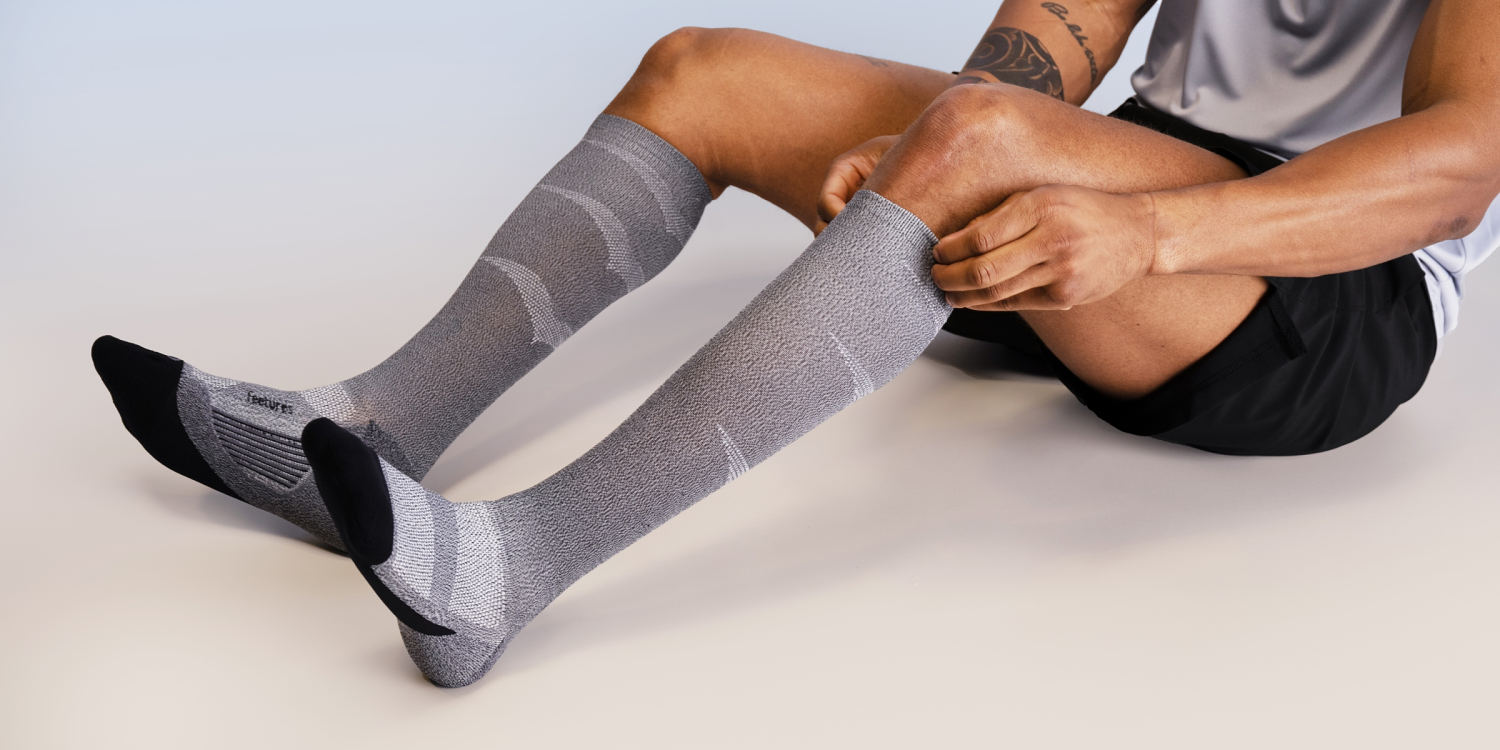
The multi-billion-dollar compression wear market operates on a simple, enticing promise. By wrapping your limbs in tightly engineered elastic fibers, you can reverse the pull of gravity, banish lower-limb fatigue, and slash your recovery time after a grueling workout or a twelve-hour shift. It sounds like basic physics. Yet, a rigorous look into the manufacturing reality reveals that a staggering number of compression socks on the market fail to deliver the physiological benefits they advertise. Consumers routinely spend premium dollars on what amount to little more than overpriced, constricting tube socks.
True therapeutic compression requires a precise gradient. The pressure must be highest at the ankle and decrease predictably as it moves up the calf. Achieving this requires specialized, high-precision circular knitting machines and meticulous quality control. Most lifestyle brands rushing into this space skip these steps, relying on uniform tightness that can actually trap fluid in the lower extremities rather than pumping it back toward the heart.
To find the pairs that actually deliver on their medical and athletic claims, we cut through the marketing noise and put the industry’s leading options through exhaustive real-world testing.
The Anatomy of the Compression Lie
Go to any online marketplace and you will find hundreds of brands claiming a standardized pressure rating, usually expressed as 15–20 mmHg or 20–30 mmHg (millimeters of mercury). These numbers are treated as gospel by consumers looking to prevent deep vein thrombosis on long flights or reduce edema after standing all day.
The reality is far messier. The manufacturing of cheap elastic hosiery is plagued by a lack of standardization. When a bargain brand knits a sock, they often achieve tightness by simply making the garment smaller or using cheaper, high-tension spandex. This creates uniform compression. If a sock squeezes your calf with the exact same force that it squeezes your ankle, it acts as a tourniquet. Instead of assisting the calf muscle pump, it impedes venous return.
True graduated compression demands complex tension adjustments during the knitting process. As the machine works its way up the leg, the feeding mechanism must precisely slacken the elastomeric yarns. This creates a pressure profile that mimics the body's natural mechanics.
Consider a hypothetical scenario where an airline passenger wears a poorly engineered, uniformly tight sock during an eight-hour flight. Instead of preventing fluid accumulation, the tight band at the top of the calf creates a bottleneck, leaving the passenger with more swelling at the ankle than if they had worn no socks at all.
The Pure Performance Lie
Athletes have been conditioned to believe that wearing compression sleeves during a race will instantly unlock new tiers of speed and endurance. The science does not back this up. Multiple independent physiological studies have shown that wearing compression garments during acute exercise provides negligible improvements to oxygen uptake, running economy, or blood lactate clearance.
The real magic happens afterward. The true value of high-quality compression is found in post-exercise recovery.
By maintaining a graduated squeeze on the deep veins during rest, these garments prevent blood from pooling in the lower legs, which accelerates the removal of metabolic waste and reduces delayed onset muscle soreness. If you are buying these to shave seconds off your 5K PR, you are falling for the hype. If you are buying them so you can walk without pain the morning after a marathon, you are on the right track.
The Standout Pairs That Pass the Test
Out of dozens of options subjected to months of flight testing, hospital shifts, and post-marathon recovery sessions, only a select few proved they could maintain their structural integrity and precise pressure gradients over time.
Sigvaris Performance
Sigvaris is a medical-grade powerhouse that transitions perfectly into civilian life. Originally designed for patients suffering from severe venous insufficiency, their athletic and daily wear lines carry over the same rigorous engineering standards.
The difference is immediately apparent in the weave. The fabric feels substantial, almost stiff, when you first pull it over your heel. It requires effort to put on, which is the hallmark of a genuine therapeutic garment. Once in place, the ankle lock is absolute, tapering off with mathematical precision just below the knee. The blend of synthetic fibers manages moisture exceptionally well, preventing the swampy heat buildup that plagues cheaper polyester blends during long periods of immobility. They are expensive, but they do not lose their elasticity after ten cycles through the washing machine.
CEP Compression The Run Waves
CEP is the athletic arm of Medi, a German manufacturer deeply rooted in medical compression. Their sports socks are built on a proprietary compression profile that specifically targets the calf muscle belly to dampen the vibrations that cause muscle micro-tears during high-impact activities.
The knitting density of these socks provides a locked-in feel without binding at the toes. Many brands skimp on toe box engineering, forcing the toes into a cramped bunch that leads to blisters and blackened nails. CEP leaves the toe area remarkably relaxed while maintaining a fierce, uncompromising grip through the midfoot and ankle. For recovery after heavy lifting or long-distance trail runs, these are the gold standard.
Sockwell Damask
Medical-grade synthetics are excellent for performance, but they are not always ideal for a long day in an office or a casual weekend. This is where Sockwell excels by subverting the industry's reliance on pure nylon and spandex.
Sockwell utilizes a custom blend of merino wool, bamboo rayon, and microfiber. The natural crimp of merino wool provides inherent elasticity, meaning the sock can deliver a legitimate 15–20 mmHg moderate graduated compression profile without feeling like a synthetic vice grip. The thermoregulating properties of wool mean your feet stay dry in the summer and warm in the winter. They lack the raw power required for severe clinical edema, but for the average commuter or desk worker looking to fight afternoon leg lethargy, they are unmatched in comfort.
Red Flags to Watch For When Buying
Navigating this market requires a healthy dose of skepticism. The first thing to examine is the sizing chart. If a brand determines your sock size solely based on your shoe size, walk away immediately.
Shoe size has absolutely nothing to do with the circumference of your ankle or the volume of your calf. A proper compression fitting requires a tape measure. You must know the narrowest measurement of your ankle and the widest part of your calf. A brand that ignores these dimensions is selling you a fashion accessory, not a functional performance tool.
Look closely at the top band. A poorly designed sock relies on a thick, tight elastic band at the very top to keep the garment from sliding down the leg. This is a cheap shortcut. A properly engineered graduated sock stays up because the overall taper conforms to the natural shape of your leg. If the top band leaves a deep, red indentation into your skin after an hour of wear, the sock is actively restricting your superficial circulation.
Laundering and Longevity
The downfall of even the finest compression garment is poor maintenance. Lycra and spandex are highly sensitive to heat and chemical degradation.
Washing these socks in hot water or throwing them into a commercial dryer will rapidly destroy the elastomeric cores responsible for the graduated squeeze. The heat causes the microscopic synthetic strands to snap and lose their memory. Within weeks, a premium medical sock degrades into a loose, useless piece of fabric.
To preserve your investment, wash them in cold water using a mild detergent free of fabric softeners. Softeners coat the fibers, ruining both the moisture-wicking capabilities and the elasticity. Lay them flat to dry on a towel. It requires extra effort, but it ensures that the 15 mmHg pressure profile you paid for actually remains 15 mmHg six months down the line. Turn the socks inside out before washing to clear out the skin flakes and sweat salts that accumulate within the tight knit matrix, which can act like sandpaper against the fibers over time.