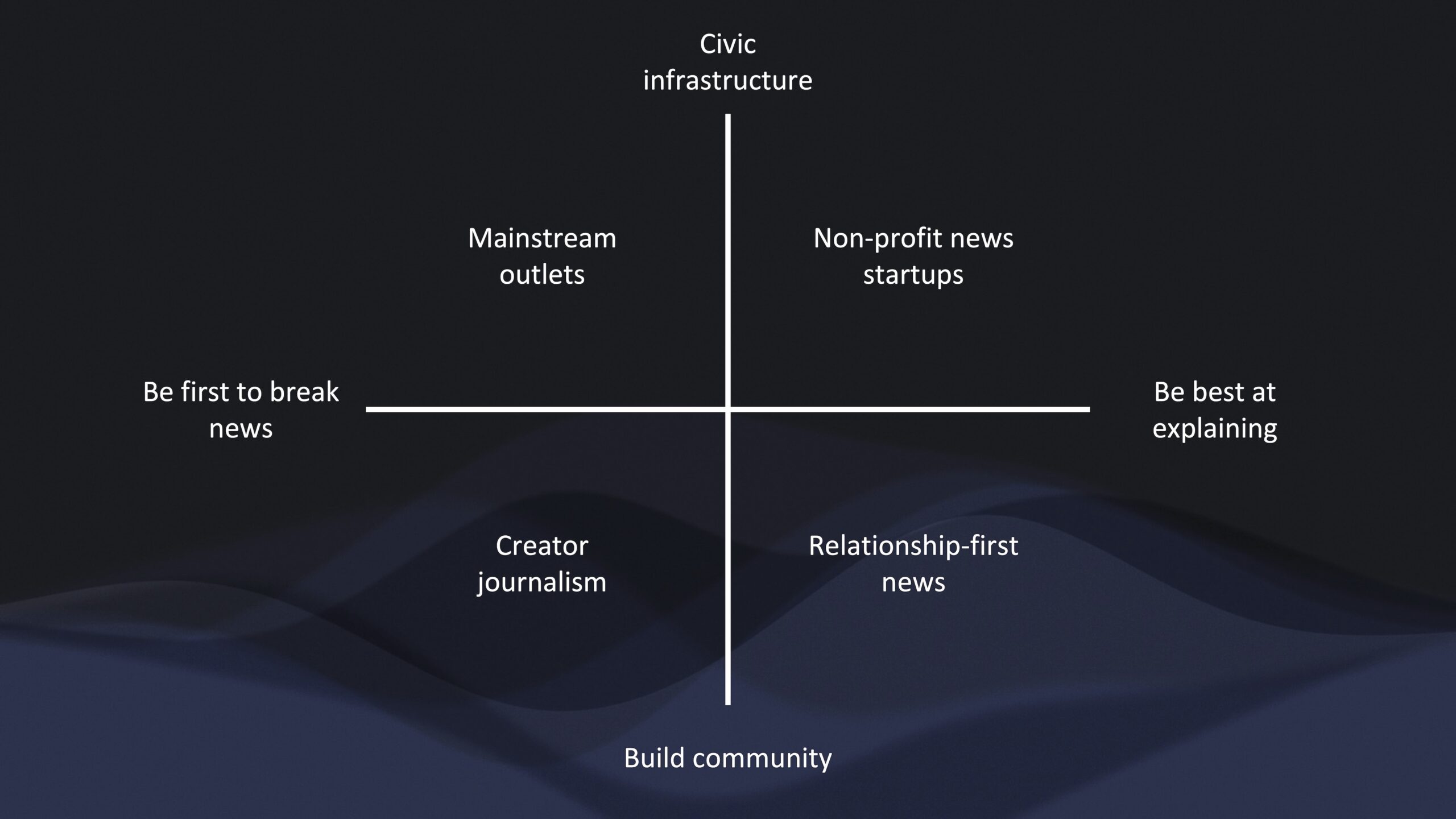
The white pollution doesn't shout. It drifts. If you walk along the coastlines of Shandong or navigate the canal networks of South Holland, you see it tangled in the reeds. Polyethylene. Polypropylene. Legacy plastics designed to survive for centuries, manufactured in minutes, used for seconds.
For decades, the scientific community harbored a quiet obsession with corn. Specifically, polylactic acid, or PLA. It was supposed to be the savior of the packaging world. It was bio-based, degradable under industrial conditions, and derived from a crop we already grew by the gigaton. But if you have ever held a standard corn-plastic spoon, you know the fatal flaw. It snaps. It melts if the coffee is too hot. It lacks the muscle to replace the cheap, stubborn polymers derived from crude oil. If you found value in this post, you might want to look at: this related article.
To replace oil, a material needs to be both tough and stretchy. In the language of materials science, it needs high tensile strength and high elongation at break. Usually, you only get one.
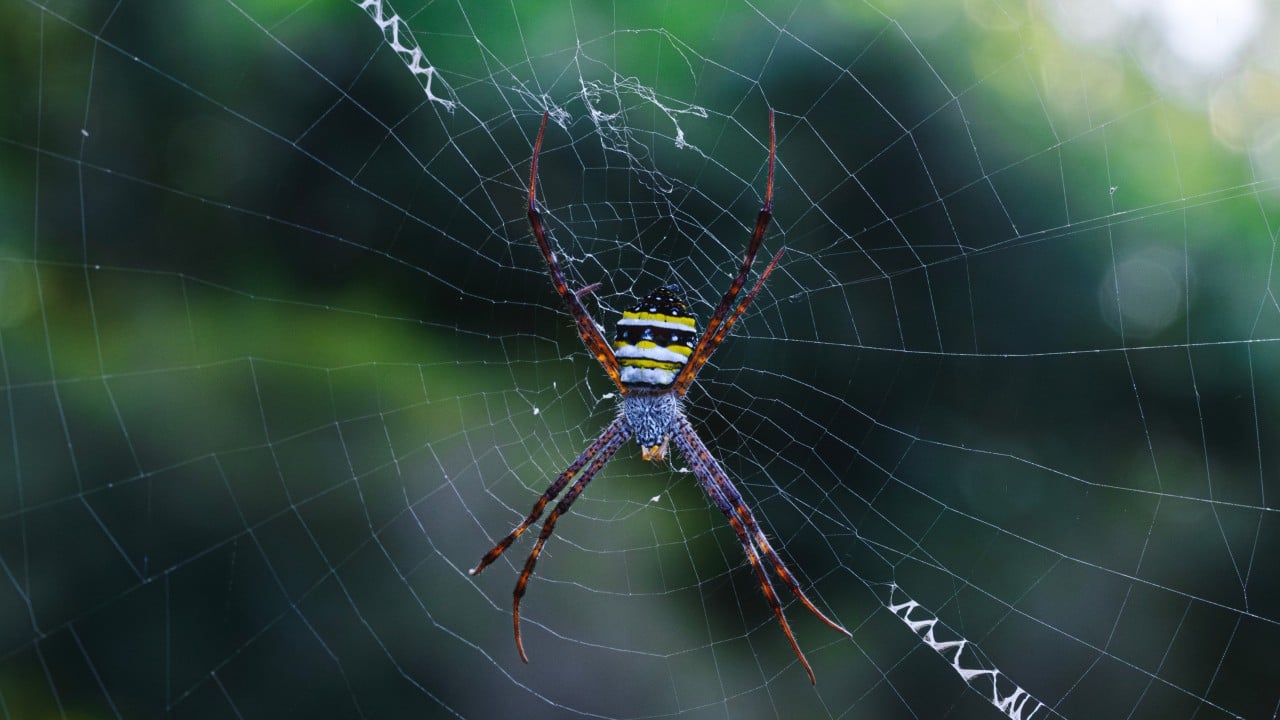
Then, a joint team of researchers from China and the Netherlands stopped looking at the oil refinery, stopped looking at the standard plastic extruder, and looked at a web glistening in the corner of a greenhouse. For another look on this story, refer to the latest coverage from The Next Web.
The Architect in the Corner
Consider the spider. It spins a thread thinner than a human hair, yet pound for pound, that thread is stronger than steel and more flexible than nylon. It can absorb the impact of a bumblebee flying at full speed without snapping.
Scientists have spent millions trying to farm spiders for their silk. It fails every time. Spiders are territorial cannibals; put ten thousand of them in a room to harvest their silk, and you soon end up with one very large, well-fed spider. Synthetic biology offered a workaround by inserting spider silk genes into bacteria or goats, but the process remained prohibitively expensive for making something as mundane as a grocery bag or a shipping crate.
The breakthrough came when researchers at Jiangnan University in China and Wageningen University in the Netherlands stopped trying to copy the spider’s DNA. Instead, they copied its physics.
They asked a different question: How does a spider transform a liquid protein inside its body into a solid, hyper-tough thread in a fraction of a second, using nothing but water and ambient temperature?
The answer lies in microfluidic spinning and the specific orientation of molecules. When a spider forces silk dope through its spinneret, the shearing forces align the protein chains into perfectly ordered, crystalline blocks called beta-sheets, interspersed with amorphous, flexible loops. The crystals provide the strength. The loops provide the stretch.
The Sino-Dutch team realized they didn't need the spider's expensive proteins. They just needed the corn plastic to behave like them.
Breaking the Molecular Marriage
To understand why standard corn plastic fails, we have to look at how molecules hold hands. In traditional PLA, the polymer chains are tangled like a cold bowl of spaghetti. When you pull on it, the chains can't slide past each other smoothly; they catch, bind, and the material fractures.
The researchers introduced a second bio-based component to act as a molecular mediator. They blended the rigid corn-derived PLA with a softer, highly flexible bio-polyurethane. On its own, blending these two is like mixing oil and water. They separate. The boundaries between the two materials become weak points where cracks form.
To fix this, the team engineered a specific chemical bridge—a compatibilizer—that bound the two distinct polymers at the microscopic level. But the real magic happened during the processing phase, where they mimicked the mechanical shearing of the spider's spinneret.
They subjected the molten bio-blend to intense, controlled stretching and shearing forces. Under this specific stress, the rigid PLA domains stretched out into long, ultra-thin nanofibrils, while the flexible bio-polyurethane formed a supportive matrix around them.
The result was a structural mirror of spider silk. They had created a material where hard, crystalline tracks were embedded within a highly elastic network.
The Numbers on the Scale
The metrics of this new material alter the conversation around bioplastics.
Standard PLA generally possesses a tensile strength of around 60 megapascals, but its elongation at break is notoriously poor, often sitting at less than 10 percent. It behaves like glass; it holds its shape under a specific load, then shatters completely without warning.
The new biomimetic corn plastic achieved an elongation at break exceeding 200 percent while maintaining a tensile strength that rivals traditional petroleum-based plastics like high-density polyethylene and polypropylene.
It did not require extreme, energy-intensive petrochemical processes to manufacture. The synthesis relies on existing agricultural feedstocks and processing methods that can be scaled using current factory infrastructure. The implications for carbon budgeting are significant. Every ton of traditional plastic produced emits roughly five times its weight in carbon dioxide when factoring in extraction, refining, and lifetime incineration. The corn-spider hybrid utilizes carbon already captured from the atmosphere by the crop during its growth cycle.
The Mud Test
The true test of any material claiming the title of sustainable does not happen inside a pristine laboratory beaker. It happens in the dirt.
Many supposedly degradable plastics require industrial composting facilities that heat the material to over 60 degrees Celsius for weeks under precise moisture controls. If these plastics end up in the ocean or a backyard compost pile, they remain intact for decades, breaking down only into smaller, more insidious microplastics.
Because the new hybrid material utilizes a highly engineered network of natural ester bonds, it presents a much more appealing target for soil microbes. In testing scenarios mimicking natural soil environments, the material demonstrated a capacity to break down into harmless organic byproducts, water, and carbon dioxide within a fraction of the time required by traditional polymers. The engineered chemical bridges that give the material its strength under use conditions are the exact vulnerabilities that microorganisms exploit once the material is discarded.
Beyond the Laboratory Gate
Scaling a laboratory breakthrough into an industrial reality is where green technology usually goes to die. The history of materials science is littered with miraculous polymers that proved too expensive, too volatile, or too difficult to manufacture at a scale of millions of tons per year.
The collaboration between the Chinese and Dutch institutions was designed specifically to bypass this bottleneck. By pairing the agricultural processing insights of the European partners with the high-throughput manufacturing research of the Chinese team, the development focused on drop-in compatibility from the start. The goal is a material that can be fed directly into the injection molding machines and blow-molders currently churning out oil-based single-use items worldwide, without requiring factory owners to retool their multi-million-dollar production lines.
The challenge shifts from the molecular to the political and economic. Corn requires land, water, and fertilizer. The debate over using arable land for materials rather than food remains a valid critique of first-generation bioplastics. However, the efficiency of this specific processing method allows for the potential use of agricultural agricultural residues—the stalks, husks, and cobs left behind after harvest—rather than the grain itself.
The wind off the North Sea carries a cold dampness that settles deep into the soil of the Dutch lowlands, thousands of miles away from the humid, sprawling agricultural processing zones of Jiangsu province. Yet beneath the soil in both places, the same problem rots slowly, or doesn't rot at all. The invention of a material that bridges the gap between the endurance of oil and the transience of nature suggests that the answers to our self-inflicted crises are rarely found by inventing entirely new elements. More often, they are found by rearranging the things we already have, guided by an organism that perfected the art of the thread before humans ever walked the earth.