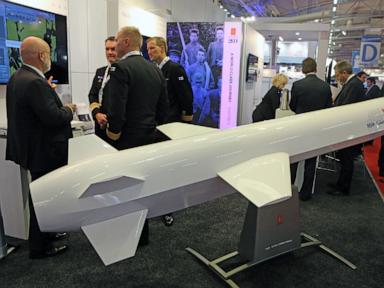
When Norway revoked the export permit for Kongsberg Defense & Aerospace’s Naval Strike Missile (NSM) system to Malaysia, it exposed a fundamental systemic risk in international defense procurement: the vulnerability of sovereign defense capabilities to unilateral regulatory shifts by foreign governments. Malaysia’s demand for $251 million (1 billion ringgit) in compensation highlights the financial and operational friction that occurs when geopolitical re-alignments collide with long-term capital defense programs.
This procurement failure is not merely a breach of contract. It serves as a clear case study in how sovereign export controls act as an unhedgeable variable for buying nations. By evaluating the direct capital losses, the structural integration penalties, and the geopolitical mechanisms driving Norway's policy shift, we can map the true cost function of interrupted defense supply chains.
The Bifurcated Cost Function of Procurement Interruption
Malaysia’s compensation claim follows a clear structural breakdown, dividing the consequences into immediate capital losses and broader operational recovery costs. Defense Minister Mohamed Khaled Nordin outlined a claim that separates into direct and indirect financial dimensions.
1. Direct Capital Sunk Costs
The direct cost component of the claim totals 126 million euros ($146 million). This represents capital outlays paid to Kongsberg since the contract's inception in 2018. Under standard defense procurement frameworks, these milestone payments are tied to production schedules, engineering reviews, and early-stage manufacturing of launcher components. Because the export ban blocks actual physical delivery, this cash outlay is stranded capital, yielding a net-zero return on defense capability.
2. Indirect Integration Penalties
The remaining $105 million of the claim covers indirect costs, which represent the engineering and logistical penalties of changing systems mid-stream. In naval architecture, a weapon system cannot simply be swapped out like modular software. The indirect cost function is driven by three physical and engineering realities:
- De-installation and Structural Remediation: Specialized missile mounting systems, deck reinforcements, and electrical interfaces optimized for the NSM geometry had already been integrated into Malaysia’s under-construction Maharaja Lela-class Littoral Combat Ships (LCS). Removing these components requires physical teardowns that threaten structural integrity and add significant labor hours.
- Combat Management System (CMS) Decoupling: Modern naval warfare relies on tightly integrated combat systems. The software pipelines, sensor-to-shooter data busses, and fire control architectures must be rewritten to purge the NSM code and accommodate an entirely different missile protocol.
- Re-procurement and Timeline Friction: Selecting, contracting, and adapting an alternative anti-ship missile system introduces a severe timeline penalty. This delay extends the operational vulnerability of the Royal Malaysian Navy and exposes the state to inflation in defense material costs.
Geopolitical Realignment and the Sovereign Export Variable
The collapse of this transaction stems from a structural shift in Norway’s defense export policy rather than a commercial failure by Kongsberg. The Norwegian Foreign Ministry confirmed that it has tightened oversight on sensitive defense technologies, restricting the sale of advanced systems exclusively to formal allies and closest partners.
This policy change illustrates how changing regional security dynamics alter export frameworks. The regulatory mechanism that scuttled the deal relies on a fundamental legal hierarchy:
$$\text{Sovereign Export License} > \text{Commercial Contract Validity}$$
A commercial entity’s obligation to deliver defense hardware is legally subordinate to its home government's export control regime. When a state invokes national security or shifts its foreign policy framework, the underlying commercial contract faces a condition of legal impossibility.
For non-aligned or out-of-theater buyers like Malaysia, this creates a distinct operational vulnerability. Malaysia managed its procurement through traditional commercial risk metrics—meeting its financial milestones and honoring contract terms since 2018. However, it remained exposed to the regulatory shifts of a foreign government reacting to changing security dynamics in Europe.
Strategic Implications for Non-Aligned Procurement Architecture
The friction between Malaysian Prime Minister Anwar Ibrahim and Oslo highlights a broader challenge for middle powers building out their defense infrastructure. When Anwar noted that signed agreements should not be treated as "confetti to be scattered in a capricious manner," he highlighted the core risk that non-aligned states face: the lack of reciprocal strategic leverage.
When a purchasing nation lacks a mutual defense treaty with a supplier state, it holds very little leverage if that supplier decides to withhold technology. This asymmetry creates distinct operational and strategic challenges:
- The Depreciation of European Reliability Metrics: Western defense hardware often comes with strict end-user monitoring and is vulnerable to sudden regulatory shifts. This vulnerability may push non-aligned nations toward suppliers in regions with different export philosophies, even if it means accepting less advanced technology.
- Operational Readiness Bottlenecks: The cancellation directly impacts Malaysia's LCS program, a modernization effort already slowed by governance challenges and delays. Lacking a primary anti-ship missile asset, these vessels cannot fulfill their intended sea-denial roles, creating a clear gap in maritime defense readiness.
- The Risk of Stranded Technology Subsystems: Because missile launchers, radars, and combat management systems must work in tandem, losing one critical component can diminish the value of the remaining, already-purchased subsystems.
The Path Forward for Capital Recovery and Risk Mitigation
Malaysia’s formal notice of demand to Kongsberg sets up a complex legal battle over contract liability, force majeure clauses, and sovereign immunity principles. Securing financial restitution remains difficult because international defense contracts typically include robust force majeure protections that insulate contractors when their home governments revoke export permits.
To minimize the impact of this disruption and prevent future procurement vulnerabilities, Malaysia's defense planners must execute a dual-track strategy:
Pivot to an Alternative Missile Architecture
Malaysia must immediately open evaluation pipelines for alternative anti-ship missile systems that do not rely on Norwegian export clearances. The replacement matrix must prioritize systems with physical profiles and data requirements that can use the existing deck space and combat management setups with minimal re-engineering. Potential options include the French Exocet MM40 Block 3—already used by the Royal Malaysian Navy—or Turkish alternatives like the Atmaca system, which come with fewer political restrictions on end-use.
Redesign Future Defense Procurement Contracts
To avoid similar vulnerabilities in future modernization programs, the Ministry of Defence must update its procurement guidelines to include strict financial protection clauses:
- Escrow-Based Milestone Disbursals: Move away from large advance payments, placing capital in third-party escrow accounts that release funds only upon physical delivery and successful integration of the hardware.
- Sovereign Indemnification Clauses: Require defense contractors to secure domestic insurance or state-backed guarantees that cover indirect integration costs if an export license is revoked mid-contract.
- Mandatory Technology Transfer and Local Production: Prioritize suppliers willing to share technology and manufacture components locally. This helps insulate the purchasing nation from sudden, unilateral export bans down the line.