History is usually whispered. It lives behind thick velvet ropes, inside climate-controlled glass cases, and across the yellowed pages of congressional archives. But on a scorching August weekend in the heart of the American capital, history refused to whisper. It roared at two hundred miles per hour.
Consider what happens when you drop the raw, unadulterated violence of an NTT IndyCar Series machine onto the historic asphalt of the National Mall. For decades, the streets flanking the U.S. Capitol and the towering needle of the Washington Monument have known the measured cadence of protest, celebration, and quiet reflection. They have never known the high-pitched shriek of a twin-turbocharged V6 engine bouncing off neoclassical marble.
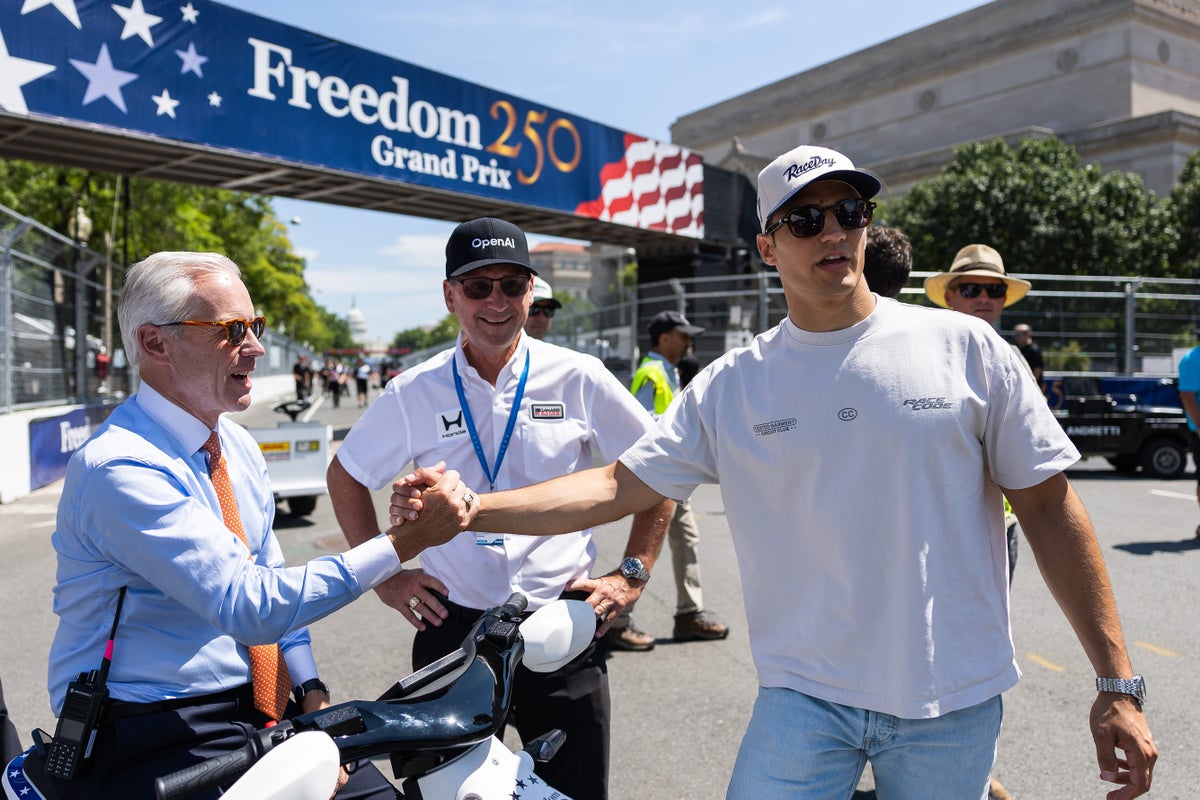
The inaugural Freedom 250 Grand Prix changed that silence forever.
Drivers like Alex Palou, Pato O'Ward, and Graham Rahal arrived in Washington carrying the weight of a monumental calendar shift. This was not just another stop on a grueling motorsport schedule. This was a temporary street circuit carved out of the nation’s front yard, designed to anchor celebrations for the United States' 250th anniversary.
Walking the paddock ahead of the practice sessions, the atmosphere felt charged with a strange, electric disbelief. Ask any driver what it takes to master a street course, and they will talk about concrete walls that do not forgive. They will talk about millimeters. They will tell you that street racing is an exercise in spatial claustrophobia, where the margin for error is roughly the thickness of a tear-off visor.
Now, imagine tightening those walls against the backdrop of American democracy itself.
"It's stuff that you dream of," drivers repeated like a shared mantra as they stared down the long stretches flanked by federal monuments. You could see it in their eyes—a mix of awe and a racer's predatory focus. They were acutely aware that they were driving past the very buildings where laws of the land were drafted, strapped into carbon-fiber rockets that cost more than a suburban home, wrestling steering wheels that fight back with fifty pounds of mechanical resistance in every tight turn.
The engineering challenge was immense. Street circuits are notoriously bumpy, slick with oil residue and painted lines, demanding a delicate mechanical compromise. Teams spent weeks simulating a layout they had never driven, trying to guess how the asphalt would grip under the brutal summer heat. Setup changes were made in frantic huddles behind temporary pit walls, engineers tapping furiously on laptops while mechanics sweated over suspension geometry.
Yet, beneath the telemetry data and tire degradation charts lay a deeper human current.
Motorsport is fundamentally about legacy. Drivers spend their entire lives chasing fractions of a second, trading physical safety and personal comfort for the fleeting immortality of a trophy lift. To win at Indianapolis is legendary. To win on the National Mall, under the gaze of history, is something entirely unmapped. It touches a nerve where national identity and personal ambition collide.
When the green flag dropped over the 1.7-mile circuit, the abstract concept of a commemorative race vanished behind a wall of sound. The roar bounced off the Smithsonian museums and rattled the windows of nearby offices. Fans packed every available vantage point, lining the fences four and five deep, their faces a blur of astonishment as open-wheel machines danced dangerously close to the concrete barriers.
There is a visceral truth to live racing that television can never quite capture. It is the smell of scorched rubber and high-octane fuel hanging heavy in the humid August air. It is the physical thump in your chest when twenty-five cars accelerate simultaneously out of a slow corner, a concussive wave of horsepower that rattles your teeth.
For the drivers, the landmarks blur into streaks of white and gray. At two hundred miles per hour, the Washington Monument is nothing more than a vertical reference point, a cue to brake fractions of a second later than your rival. But standing on the podium afterward, holding a trophy forged to honor a quarter-millennium of history, the speed gave way to a profound stillness.
The engines cooled. The crowds drifted away into the humid evening. And the marble monuments stood quietly once more, forever altered by the day the thunder came to town.