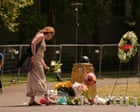
Summer in Seattle arrives like a collective exhale. The air turns sweet with pine and salt water, and the asphalt softens under a sun that refuses to set before nine. On a late July weekend, thousands of people poured into the Seattle Center for the Bite of Seattle. They came for the garlic shrimp, the local bands, the sheer comfort of standing shoulder-to-shoulder in a crowd without a winter coat.
Then came the sound that split the afternoon open.
It was not the sharp pop of a firecracker. Everyone in an American crowd knows the difference now. It was heavier, rhythmic, deliberate. Gunfire erupted near the heart of the festival grounds, turning the annual celebration of food and community into a chaotic scramble for cover behind vendor booths and concrete planters. When the smoke cleared, three people were dead, including a suspect, and four others were wounded, among them a two-year-old child.
What followed was a different kind of vacuum. A silence born of institutional confusion.
While parents clutched children and panicked festival-goers checked their phones for safety updates, the city's official response stalled. Hours ticked by. Social media feeds flickered with terrifying rumors, erroneous reports of suspects in custody, and a deafening absence of authoritative direction. The city did not activate its emergency notification system to warn the public or trace a potential active threat fleeing toward nearby theaters. For nearly five agonizing hours, the public was left guessing whether it was safe to walk down their own streets.
At the center of the storm was Police Chief Shon Barnes. He was not in the city.
Hundreds of miles away in Dallas, attending a law enforcement conference, Barnes received the news that every municipal leader dreads. The disconnect between a leader's physical location and the immediate, visceral grief of a city under siege creates an unbridgeable chasm. When Barnes returned to Seattle and stood beside Mayor Katie Wilson at a press conference, the tension was palpable. Confronted by reporters about his absence and the mounting questions regarding his frequent out-of-state travel—including time spent visiting family in Chicago—his defense felt brittle against the backdrop of empty chairs at dinner tables across the city.
Public trust is a fragile architecture. It takes years to mortar together through community policing initiatives, data-driven crime strategies, and neighborhood outreach programs. Yet it can be demolished in the five hours it takes an administration to figure out who is supposed to be talking to the public.
Support for Barnes did not vanish overnight. Civil rights advocates and local Black community leaders, including representatives from the NAACP and the Urban League, rallied to his defense, arguing that he was being unfairly pinned with systemic failures that stretched far beyond one man's itinerary. They pointed to his work in reducing gun violence and bridging historical divides between the badge and the neighborhoods they patrol. To cut him loose, they warned, was a reactionary move that would destabilize ongoing progress.
Politics is rarely clean. Mayor Katie Wilson, a progressive leader who inherited a fractured department, faced an impossible calculus. On one side stood community allies urging patience and structural continuity. On the other stood a traumatized public demanding accountability for a communication blackout during a mass casualty event.
The resolution arrived quietly, as resignations often do. Wilson accepted Barnes' letter of departure, installing Deputy Chief Andre Sayles—a veteran with over two decades on the force—to steady the helm.
Out at the Seattle Center, the food trucks are gone now. The pavement has been swept clean of confetti and spilled soda. But the shadow remains, lingering in the quiet spaces between heartbeats, reminding a major American city that safety is not merely a policy or a statistic on a dashboard, but a fragile promise that must never be left unattended.