The morning air in the eastern reaches of Ukraine does not smell of smoke anymore. It smells of damp earth, rotting vegetation, and the sharp, metallic tang of rusted iron left behind by months of absence.
Consider what happens when a map changes color. On a monitor in a command center hundreds of kilometers away, a digital boundary shifts by a millimeter. A thin line moves. A polygon expands. To an observer sitting in a quiet room with a cup of coffee, it looks like a tactical stroke on a whiteboard. For another perspective, consider: this related article.
It is not.
Step onto the black soil of the Donetsk or Zaporijia regions, and the digital line shatters into human reality. Related reporting on this matter has been provided by BBC News.
Since January, twenty-six villages across the Dnipropetrovsk, Donetsk, and Zaporijia oblasts have returned under the control of Kyiv. Twenty-six dots on a spreadsheet. Behind those numbers lie abandoned brick homes with blown-out windows, cellars where families lived by candlelight for winter after winter, and orchards shredded by shrapnel.
Silence. That is the first thing you notice when you walk into a liberated settlement.
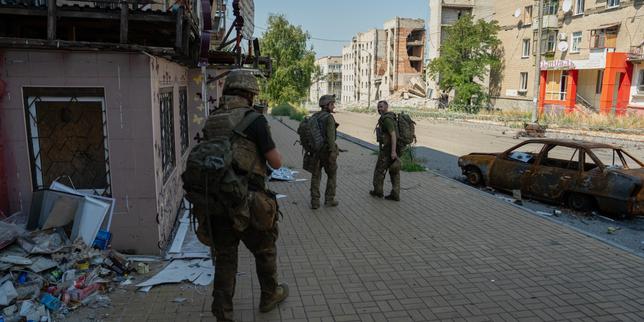
There are no engines roaring overhead every few minutes. There is no thunderous outgoing artillery shaking loose the remaining plaster from bedroom ceilings. There is only the wind rustling through power lines that hang like broken spiderwebs, and the distant, sickening crunch of boots on gravel—boots checking for tripwires and hidden metal eggs.
We talk about sovereignty as a legal principle. We debate it in air-conditioned halls in Geneva or Brussels. But out here, sovereignty smells like damp basements and looks like an old woman standing in the middle of a skeletal street, staring at the empty space where her neighbor's kitchen used to be.
The Weight of the Return
To understand what it means for twenty-six villages to change hands, you have to look at the geometry of survival.
Take a hypothetical resident—let us call him Mykola, though he represents a hundred men and women whose names are written in notebooks carried by local volunteers. Mykola spent eleven months listening to foreign accents outside his gate. He learned to read the rhythm of the shelling: the short, sharp pop of mortars meant run; the long, low whistle meant drop to the floor and pray the foundation holds.
When the frontline finally shifted—when the grey-green uniforms withdrew under pressure and the blue-and-yellow flags were hoisted over the skeletal remains of the village council building—Mykola did not cheer immediately.
He cried. And then he walked out into his overgrown garden with a shovel.
Because the return of a village is not an event; it is a marathon of clearance.
Every inch of soil is suspect. Anti-personnel mines, scattered like poisonous seeds by retreating forces, lie buried beneath the weeds where children used to play football. Sapper teams move with agonizing slowness, kneeling in the dirt, their metal detectors sweeping back and forth in a metronomic rhythm.
Beep. Stop. Kneel. Dig.
That is the soundtrack of reclamation.
The Logistics of Hope
Logistics is a cold word for a desperate human necessity.
When a settlement is brought back under government control, it is essentially a ghost town with a pulse. There is no electricity. The water mains were shattered by artillery strikes months ago. Gas lines are ruptured, leaking into the cold earth.
The state moves in waves behind the vanguard troops. First come the sappers, clearing the roads and public buildings. Then come the emergency services, stringing temporary power lines and setting up mobile heating stations.
And then come the people.
They trickle back in battered cars, trunks loaded with sacks of potatoes, blankets, and caged cats. They return because home is not a geographical coordinate; it is a gravitational pull. Even a house with no roof feels safer than a stranger's couch in a crowded western city where the language is the same, but the heart is heavy with exile.
Volodymyr Zelensky noted the recovery of these twenty-six villages in a routine address, framing it with the sober realism required of a wartime leader. He did not embellish the triumph. He knew, as everyone on the ground knows, that twenty-six villages recovered is a testament to resilience, but it is also a reminder of how many hundreds more remain under occupation, waiting behind iron curtains of steel and fire.
The Long Road Home
Walk down the main street of one of these reclaimed hamlets. You will see handwritten signs taped to gateposts. People live here. It is a warning to the soldiers passing through, and a beacon to neighbors who might still be wandering the roads. It is a declaration of existence against a backdrop designed to erase it.
The psychological weight of this transition is immense. For months, residents under occupation lived in a vacuum of information, cut off from loved ones, fed a diet of fear and falsehoods. When the radio frequencies finally switch back, when the local network reconnects and voices from the other side of the country pour through tinny phone speakers, the past year collapses into a single, overwhelming wave of grief and relief.
They ask questions about who survived, who didn't, which towns fell, which held.
There are no easy answers. Only the work.
The soil in this part of the world is famously rich, dark, and deep. For generations, it has fed empires and nourished families. Right now, that soil is scarred, torn open by trenches and contaminated by lead and explosive residue.
Yet, as the spring thaw gives way to the first real warmth of the year, green shoots are already pushing their way through the churned mud, ignoring the iron buried beneath them.
The village schoolhouse has no roof, but someone has propped a clean blue-and-yellow ribbon against its shattered doorway.
The line on the map has moved. But the real story is written in the dirt, where ordinary people are picking up shovels, clearing the wreckage, and daring to build tomorrow out of the ruins of yesterday.