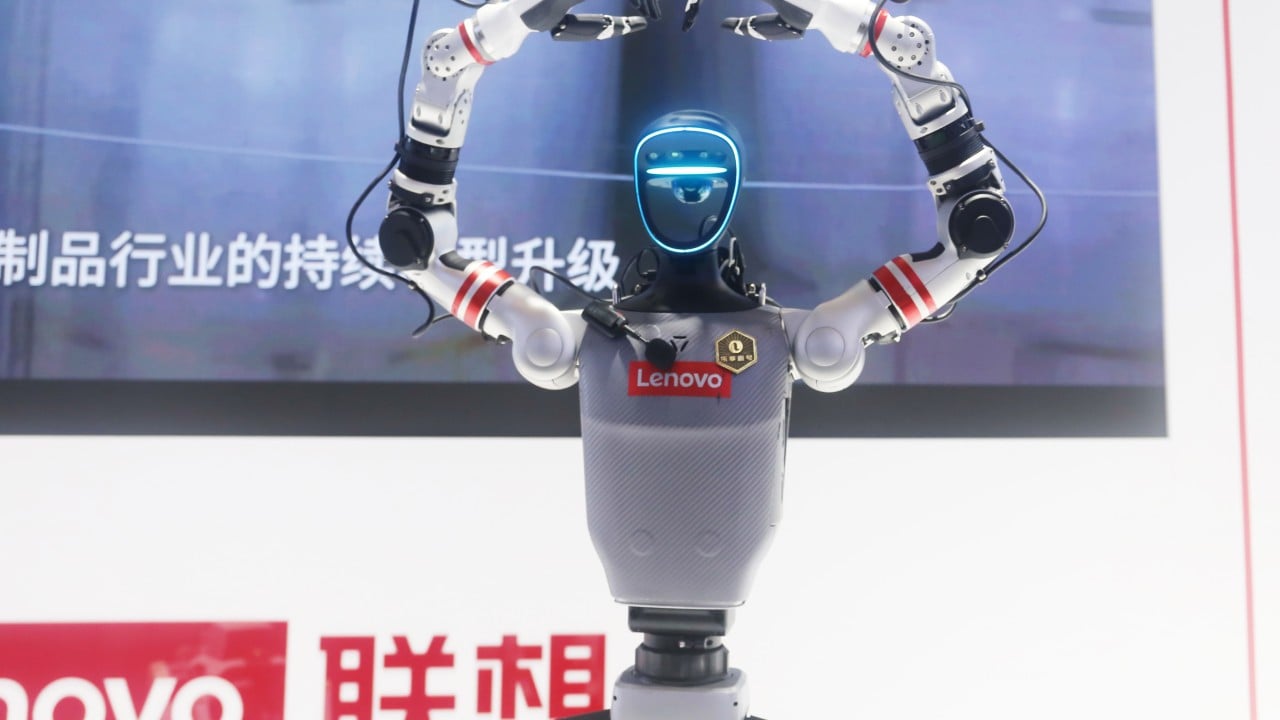
The desk of Elena Vance smells of cold coffee and soldered circuit boards. At 2:00 AM, the laboratory in Shenzhen feels less like a corporate office and more like the quiet belly of a sleeping beast. Elena is staring at a small screen, tracking lines of telemetry data from a robotic arm three rooms away. That arm is supposed to sort micro-components with human-like dexterity, but for six hours, it has been crushing every third ceramic chip into fine dust.
Precision in automation is an unforgiving tyrant.
For years, industrial technology operated on a shotgun principle. Companies threw massive pools of capital at broad, generalized artificial intelligence, hoping that infinite compute power would magically solve the friction of the physical world. They built sprawling models that consumed small towns' worth of electricity just to tell the difference between a bolt and a screw. It was loud. It was expensive. And mostly, it failed where it mattered most: execution inside messy, unpredictable human environments.
Money changes direction when patience runs out.
Enter the quiet pivot. Inside corporate boardrooms at Lenovo Capital, a different philosophy took root—one characterized not by sweeping declarations, but by the cold, calculated focus of a marksman. Instead of funding every speculative algorithm that crossed their desks, venture strategists began tightening their sights on specific operational bottlenecks. Robotics. Coding agents. The sharp, functional corners of automation where software meets tangible reality.
Consider what happens next when capital stops chasing ghosts and starts hunting specific problems.
The strategy relies on a simple premise: general intelligence is a luxury, but specialized agency is a necessity. Picture a coding agent assigned not to write an entire video game from scratch, but to autonomously comb through four million lines of legacy financial software, isolate a single memory leak, patch it, test it, and document the fix before dawn. That is not science fiction. That is the exact breed of targeted utility that modern venture arms are quietly backing.
It is about precision targeting.
In robotics, the challenge has always been the translation layer. Code is abstract; gravity is stubborn. When an autonomous system tries to navigate a crowded warehouse floor or assemble a delicate medical device, traditional software stumbles over variables it was never trained to compute. By backing localized artificial intelligence inferencing—running models directly on edge devices and physical hardware rather than distant cloud centers—investors are shortening the distance between thought and action.
Think of it as putting the brain right next to the hand.
Back in the lab, Elena types a single adjustment into her terminal, modifying the local inference weights of the robotic controller. She does not call a cloud server across the ocean. The workstation beneath her desk processes the feedback locally, instantly, shaving milliseconds off the feedback loop.
Across the room, the robotic arm hums. It reaches down. It picks up a fragile ceramic chip. It holds it for three seconds, tests the resistance, and places it gently into the tray without a single fracture.
Silence fills the room.
The shift toward sniper-style investments in robotics and autonomous agents is not merely a financial trend. It is a fundamental admission that the future belongs to tools that can solve exact, stubborn human problems without demanding an overhaul of the physical universe. The scattershot era of artificial intelligence is over. The marksman has arrived.
How Lenovo Turns AI Strategy Into Real Business Impact
This video provides an executive-level look at how major technology providers are moving past generic AI hype to solve specific enterprise challenges with targeted, measurable strategies.