The air in the Mediterranean does not just get hot; it turns thick. It carries the scent of roasted pine needles, dry earth, and salt water. For decades, millions of people have chased that exact smell every July and August, packing suitcases with linen shirts and sunscreen, seeking a temporary escape from northern skies. They look for paradise.
But paradise is growing fragile.
Picture a family. Let us call them the Martins—a schoolteacher and a graphic designer from Manchester, traveling with two kids. They saved for fourteen months for this fortnight on the Spanish coast. They are hypothetical, but their exact situation played out in reality for thousands of people when the hillsides above the holiday hotspots began to burn. They sat on a hotel balcony, sipping local wine, watching a faint haze blur the sunset. It looked like mist. It felt like summer.
Then the wind shifted.
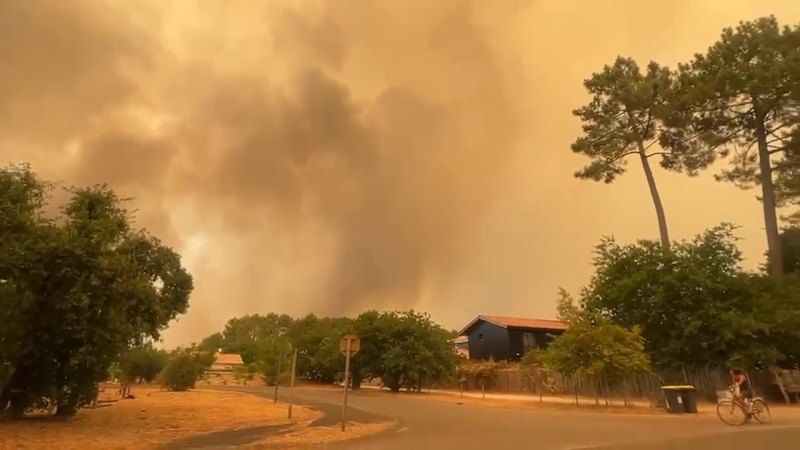
Within hours, that picturesque haze transformed into a towering wall of orange and black. The sky vanished.
When the Postcard Catches Fire
Wildfires are no longer isolated ecological events confined to deep wilderness. They have crashed the party of global tourism. When sixty-five-foot flames sprint down a Spanish hillside toward a crowded resort town, two entirely different worlds collide: the carefully curated infrastructure of leisure and the raw, unbothered fury of a changing climate.
The immediate reaction is not terror. It is confusion.
Holidaymakers accustomed to the predictability of modern travel often experience a strange cognitive dissonance when crisis strikes. You see it in the footage captured by fleeing tourists. People stand on beaches, towels over their shoulders, clutching inflatable pool rings while looking back at a horizon that resembles a war zone. They hesitate. Should they leave their luggage? Will the flight home be canceled? Surely, someone is in charge.
Then the power grid fails.
The air conditioning cuts out. The soft hum of the resort is replaced by the roar of approaching wind, a sound like a freight train barreling through dry brush. Sirens begin to wail across the valley, cutting through the heavy, smoke-choked air. At that precise moment, the vacation ends, and survival takes over.
The Mechanics of a Modern Inferno
To understand why these fires have become so ferocious, one must look past the immediate spark. A discarded cigarette, a spark from an agricultural tractor, or a lightning strike might ignite the first blade of grass. But the fuel has been preparing for months.
Southern Europe has faced unprecedented winter and spring droughts over the last decade. The soil dries to a crisp. The vegetation enters a state of permanent stress, turning forests into highly combustible tinderboxes. When a heatwave hits, drawing moisture out of every leaf and twig, the landscape becomes volatile.
Consider what happens when a fire gains momentum on a steep slope.
Fire travels upward much faster than it does across flat ground. The flames preheat the fuel above them, creating a chimney effect. By the time the fire reaches the crest of a ridge overlooking a coastal town, it is no longer a ground fire. It is a crown fire, leaping from treetop to treetop, throwing embers miles ahead of the main front. These embers land on canvas awnings, plastic sun loungers, and dry hotel lawns, igniting spot fires far behind the official evacuation lines.
The speed is what breaks people.
You expect to have time. You expect an orderly announcement at the hotel reception. Instead, you get a police officer banging on doors, shouting in a language you might not fully speak, pointing toward the sea.
The Human Caravan on the Promenade
When the order came to evacuate the Spanish coast during the height of the recent blazes, the scene on the ground defied the orderly protocols found in safety brochures.
Thousands of people poured onto the coastal promenades. It was a bizarre, heartbreaking procession. Locals who had lived in the region for generations walked side by side with British, German, and French tourists. The locals carried old photo albums and family pets; the tourists dragged rolling suitcases that clicked rhythmically against the cobblestones, a useless sound against the backdrop of crackling timber.
The psychological shift is brutal.
One hour, you are debating which restaurant to choose for dinner. The next, you are walking through ash that falls like gray snow, wondering if your rental car will explode in the parking lot. The sensory overload is overwhelming. The heat from a sixty-five-foot flame wall can be felt from hundreds of yards away, a radiating pressure that blisters paint and makes it painful to breathe. The smoke burns the throat, tasting of chemicals and burnt plastic as the fire consumes villas and vehicles.
For the locals, the tragedy is permanent. Their livelihoods, often entirely dependent on the summer tourist trade, burn alongside the pine trees. For the tourists, the trauma is a dark souvenir carried back to rainy northern cities—a reminder of how quickly the thin veneer of modern comfort can be stripped away.
The Illusion of Distance
We live with a comfortable illusion that disasters happen elsewhere, to other people, in places we only see on the evening news. Tourism relies on this illusion. We buy a ticket to a destination expecting that the climate, the safety, and the scenery have been guaranteed by the price of admission.
But nature does not honor a booking confirmation.
The reality of the modern Mediterranean summer demands a recalculation of risk. Travelers must now ask questions that used to be reserved for extreme adventurers. Where are the evacuation routes? What is the local emergency broadcast channel? Does the accommodation have an independent water supply?
This is not pessimism; it is adaptation. The landscapes we love are changing, and our relationship with them must change too. The romanticized idea of the endless, scorching summer loses its appeal when the heat becomes a hazard rather than an amenity.
The Morning After the Fire
When the winds finally die down and the water-bomber planes finish their deafening runs, a eerie quiet settles over a scorched resort town.
The fire leaves behind a monochromatic world. The vibrant greens and deep blues of the Mediterranean coast are replaced by a stark palette of charcoal, white ash, and melted aluminum. The skeleton of a burned-out car sits outside a luxury villa, its windows shattered, its tires melted into black puddles on the driveway.
A family stands on the tarmac of a local airport, waiting for a repatriation flight. Their clothes are stained with soot. They have no souvenirs, no tans, no photos of happy dinners by the marina. They look exhausted, staring blankly at the departure board.
Behind them, miles away on the blackened hillside, a single plume of white smoke rises from a smoldering stump, twisting lazily into the clear blue sky.