The coffee in Berlin cafes is still hot, the trains still run with that quiet, terrifying German efficiency, and the trees along the Tiergarten are heavy with the deep green of a quiet summer. On the surface, nothing has broken. Yet, walk into any secure briefing room in the capital, talk quietly to diplomats who have spent decades learning the gentle art of international compromise, and you will find an entirely different atmosphere. It smells of ozone and old anxiety.
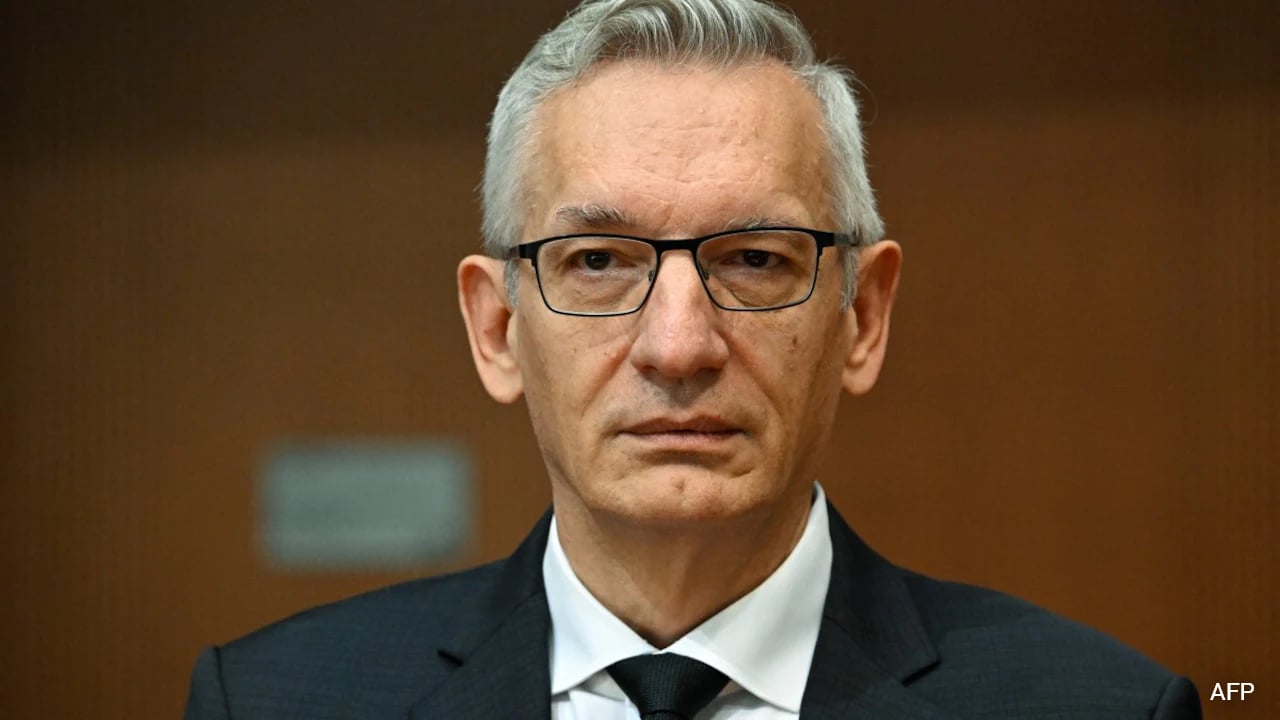
Bruno Kahl, the quiet man who steers Germany’s Federal Intelligence Service, did not use theatrical language when he delivered his recent assessment behind closed doors. He did not need to. When the head of the BND stands before lawmakers and warns that a direct military confrontation between Russia and NATO is no longer a distant theoretical nightmare—that Moscow's conventional and nuclear buildup makes such a clash a distinct, creeping possibility before the end of this decade—people stop rustling their papers.
We have lived so long in the architecture of peace that we treat it like the laws of physics. We assume it is permanent. It is not. It is a fragile scaffolding built by exhausted generations after the last great catastrophe, and right now, the bolts are rattling loose.
Consider what this looks like not from the soaring glass towers of political summits, but from the perspective of an ordinary family in a quiet town in Brandenburg.
Lena wakes up at six. Her husband, Thomas, works for a mid-sized automotive logistics firm that depends entirely on stable energy grids and open eastern transport corridors. To Lena, the news on the morning radio about intelligence assessments, hybrid warfare, cyber penetrations of municipal water supplies, and troop rotations in the Kaliningrad exclave sounds like a foreign film. It is dramatic, distant, and happening to other people.
Except it is not.
When a nation's intelligence chief warns that the Kremlin views the entire Western alliance as its primary existential adversary, it changes the weather. It means Thomas’s logistics company is already quietly vetting backup generators and encrypted communication protocols. It means the municipal government in Lena’s district is quietly reviewing old civil defense plans for underground shelters that haven't seen a broom since the Cold War. The friction is invisible until it touches everything.
For decades, Germany operated under a comfortable illusion. The bet—forged in the smoke of the 20th century and nurtured through decades of economic boom—was simple. Trade softens steel. If you sell a nation gas, cars, and industrial machinery, they will not send tanks across your border. It was a logical, humane, and deeply profitable thesis.
It was also entirely wrong.
When Vladimir Putin’s forces rolled across the Ukrainian frontier in early 2022, the sound didn't just echo in Kyiv; it shattered the foundation stone of modern European security. The Zeitenwende—Chancellor Olaf Scholz’s grand proclamation of a turning point—was spoken with gravity, but turning a massive, industrially sluggish democracy around is like trying to spin an oil tanker in a narrow canal.
Intelligence agencies operate in the currency of worst-case scenarios. Their job is to look past the polite smiles at diplomatic galas and peer directly into the dark machinery of state intent. What Kahl and his counterparts across Western Europe see when they look eastward is a Russian military machine that is learning, adapting, and bleeding, yet somehow expanding its industrial capacity at a rate that peacetime democracies find baffling. Moscow is shifting into a permanent garrison state.
And that brings us to the terrifying arithmetic of deterrence.
Deterrence is not a static wall. It is a tightrope walk in a hurricane. If you are too weak, the aggressor steps forward because the reward outweighs the risk. If you are too reckless, you trigger the very escalation you are trying to prevent. Right now, Berlin is stumbling along that wire with a blindfold on.
The warning from the BND is not a prediction of tomorrow’s invasion. It is something harder to digest: a timeline of vulnerability. By the late 2020s, Russian conventional forces are projected to reconstitute themselves to a degree that makes testing NATO’s eastern periphery—perhaps a quick, deniable grab of a sliver of the Baltic states to test Article 5—a tantalizing gamble for a Kremlin leadership convinced that the West lacks the stomach for a protracted fight.
If the alliance hesitates for even six hours in Narva or Riga, the whole edifice crumbles. That is the nightmare keeping strategists awake.
We must speak plainly about what this means for the continent's psychological landscape. Europe has spent thirty years indulging in the luxury of post-historical comfort. Defense budgets were cut to pay for social programs; conscription was abandoned; military service went from an expected civic duty to an eccentric career choice. The muscle memory of national defense withered away.
Rebuilding that muscle is painful. It requires money that could otherwise build schools, highways, and green energy grids. It requires an uncomfortable cultural pivot from pacifist idealism to hard-nosed realism. And most of all, it requires a public conversation that politicians are terrified of having.
No one wants to tell Lena and Thomas that their taxes are going up not for a new hospital wing, but for anti-drone batteries, artillery shells, and cyber-defense command centers. No one wants to admit that the peace dividend was a temporary loan, and the bill has finally arrived.
Yet, ignoring the bill does not make it disappear. In fact, it adds interest.
When intelligence chiefs sound the alarm, they are trying to buy time. They are trying to create a window wide enough for deterrence to hold. Because the only way a war between Russia and NATO does not happen is if the cost to Moscow is so catastrophically high that the gamble becomes unthinkable.
The alternative is what happens when warning signs are dismissed as alarmism. History is littered with the ruins of nations that listened to the comforting hum of their own prosperity right up until the sirens started wailing.
The coffee shops in Berlin are still full. The afternoon light still catches the glass of the Reichstag dome. But beneath the pavement, the foundations are shifting. The smoke is rising on the eastern horizon, thin and grey at first, but unmistakable to anyone willing to look up from the table.