The air in the Gobi Desert does not just carry heat; it carries a memory of violence. For decades, the towns scattered along the edges of China’s inland launch sites lived under a predictable, terrifying rhythm. Sirens would wail. Families would look to the heavens. Then, a thunderous roar would tear the sky open as a massive cylinder of steel and toxic fuel detached from a ascending rocket, tumbling blindly back to earth.
Imagine standing in a dusty courtyard, watching a discarded piece of machinery the size of a ten-story building hurtling toward your province. It was the price of progress. To reach the stars, we had to treat the earth as a junkyard.
Space travel was a game of beautiful, extravagant waste. You build a multi-million-dollar masterpiece of engineering, fire it once, and let it smash into the desert or sink to the dark bottom of the Pacific Ocean. It was like flying a Boeing 747 from New York to London and then pushing it off a cliff after the passengers safely disembarked.
But a few months ago, the rhythm changed.
The roar returned, but it wasn't the sound of something dying. It was the sound of a mechanical beast fighting its own weight, screaming against gravity, and slowing down to a gentle whisper before kissing the concrete pad.
China just proved it can catch its own falling skyscrapers.
The Gravity of the Graveyard
To understand why a team of engineers in Beijing would spend sleepless nights, crying over telemetry data, you have to understand the sheer madness of rocket science.
When a rocket leaves the pad, the first stage does almost all the heavy lifting. It burns through oceans of propellant in less than three minutes, pushing the payload past the thickest parts of the atmosphere. Once its job is done, it is dead weight.
For sixty years, the global space industry accepted a painful truth: the first stage was a disposable syringe.
When American private enterprise proved that a rocket could turn around, relight its engines, and land on its feet, the global reaction skipped from mockery to sheer panic. The old way of doing business was dead. The future belonged to those who could reuse their metal.
The pressure on China’s state-owned aerospace giants and its surging ecosystem of private space startups became unbearable. It wasn't just a matter of national pride; it was an economic existential crisis. If you cannot reuse your rockets, you are locked out of the next century of space commerce.
Consider the raw math. Building a rocket from scratch every single time means your launch costs remain stagnant, pinned to the sky-high prices of specialized alloys and manual labor. If you can fly the same booster ten, twenty, or fifty times, the cost of accessing orbit plummets by an order of magnitude. It turns a luxury reserved for superpowers into a utility accessible to anyone with a brilliant idea.
Fire, Steered by Feathers
The technical hurdle is almost impossible to visualize. A spent first stage is essentially an empty beer can with an incredibly heavy engine at the bottom. It falls from the edge of space at thousands of miles per hour. The atmosphere hits it like a brick wall, trying to tear it apart or send it into a violent, uncontrollable spin.
To guide it back, engineers use grid fins.
These look like heavy metal waffle irons attached to the top of the rocket. They seem far too small to matter. Yet, as the booster plummets through the thin upper air, these fins tilt and turn, catching the supersonic wind. They are mechanical feathers steering a metal monster.
Then comes the most terrifying moment of the entire flight profile: the entry burn.
The rocket must flip itself completely upside down while falling backward. It ignites its engines directly into the oncoming wind. The friction is immense. The heat turns the surrounding air into a glowing envelope of plasma. Inside the control rooms, the telemetry screens blink with warnings as temperatures soar past what normal sensors can endure.
If the engines ignite a millisecond too late, the rocket explodes upon impact. If they fire too early, it runs out of fuel twenty feet above the ground and drops like a stone.
During a recent test by a prominent Chinese aerospace firm, the tension in the room was thick enough to choke on. Engineers who hadn't slept in forty-eight hours stared at a live video feed from a drone hovering near the landing zone. The camera caught a speck in the clouds. The speck grew into a pillar of flame.
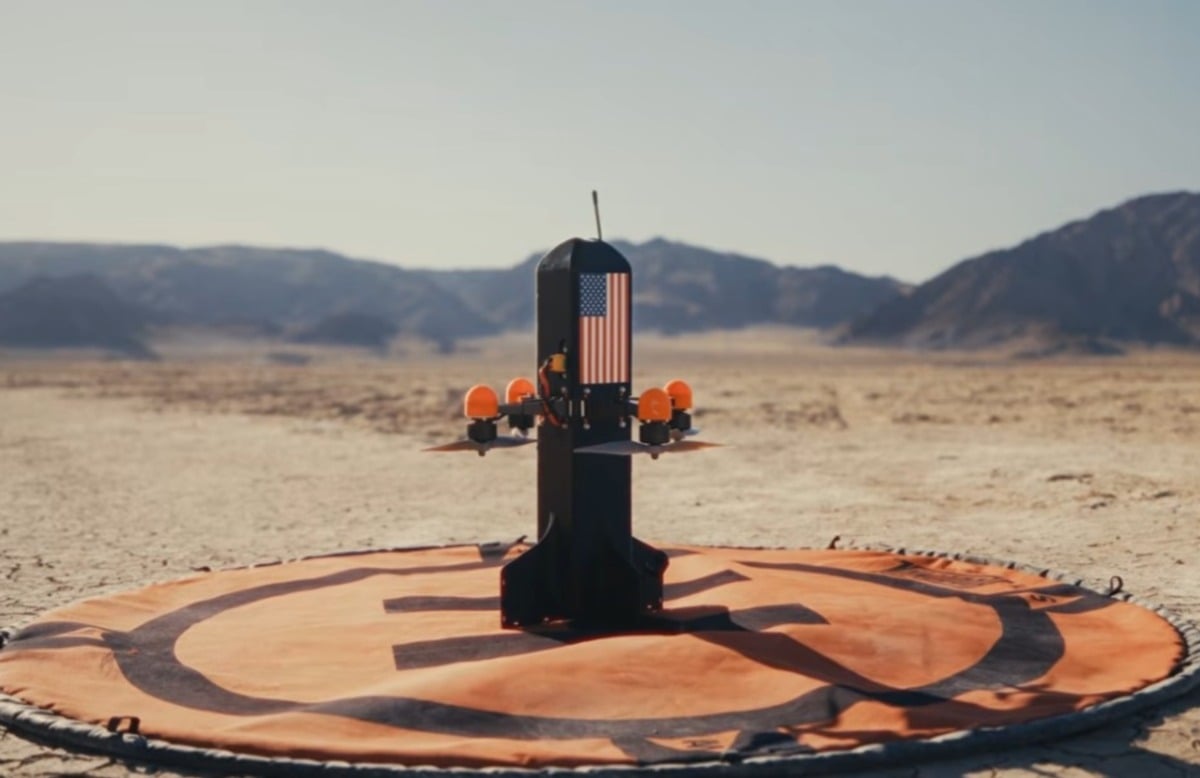
The sonic boom hit the cameras first, a sharp, double-crack that rattled the microphones. Then, the booster appeared, its engines throttled down to a low, guttural growl. It hovered. It adjusted its position by inches, fighting a sudden crosswind from the desert floor.
Landing legs deployed with a sharp hiss of pneumatic pressure.
Touchdown.
A cloud of dust enveloped the pad, hiding the vehicle from view. For three seconds, nobody breathed. The video cleared. The rocket stood perfectly vertical, venting a gentle plume of harmless white vapor into the blue sky.
The control room erupted. Grown men and women sobbed openly, throwing their arms around each other's shoulders. They weren't just celebrating a successful flight; they were celebrating the birth of a completely new era for their country's space ambitions.
The Human Cost of the Old Way
It is easy to get lost in the spectacle of fire and steel. But the real transformation is profoundly human.
For decades, the tracking teams tasked with locating fallen debris had one of the most depressing jobs in the industry. They would drive deep into the wilderness, following the radioactive traces of hypergolic fuels, only to find twisted, smoking wreckage strewn across a hillside. Sometimes, these pieces fell dangerously close to villages. The government had to evacuate thousands of citizens before every major launch, turning regular Tuesdays into chaotic mass migrations.
Now, those evacuation zones can slowly dissolve.
By steering the boosters back to designated, highly controlled landing pads, the danger to civilian populations drops to near zero. The engineers aren't just saving money; they are clearing the conscience of an entire industry.
But the challenge is far from over. Catching a rocket on a wide, stable concrete pad is merely step one. The true holy grail of modern rocketry—a feat currently being chased by teams on both sides of the Pacific—involves eliminating landing legs entirely.
Landing legs add dead weight. Every pound of structural steel used to support a rocket on the ground is a pound of satellite you cannot carry into orbit. The next phase, already being actively engineered and tested, involves giant mechanical arms mounted to the launch tower itself.
The rocket falls out of the sky, aims for the tower, and the tower catches it out of mid-air by its lifting pins.
It sounds like a cartoon. It sounds like trying to catch a falling needle with a pair of chopsticks during an earthquake. Yet, this is exactly where the trajectory of Chinese aerospace is heading, mimicking and adapting the wild architectures pioneered across the ocean.
A Crowded Sky
The implications stretch far beyond the borders of any single nation.
We are moving toward a world where orbital space is no longer a pristine vacuum visited by an elite few. It is becoming a bustling industrial zone. Mega-constellations of thousands of satellites will soon provide uninterrupted global internet, monitor climate change in real-time, and track supply chains across every ocean.
To build that infrastructure, we need a continuous conveyor belt to space.
China’s mastery of vertical landing technology means the conveyor belt just got a second engine. The monopoly on cheap orbital access is over. A fierce, relentless competition is unfolding, and competition breeds rapid, terrifyingly beautiful innovation.
The next time you look up at a clear night sky and see a steady pinpoint of light moving silently across the stars, remember the frantic, sweating engineers in the desert. Remember the terrifying roar that turned into a gentle whisper. The sky isn't just a place we look at anymore; it's a place we are actively learning to build in, one safely returned skyscraper at a time.