Ink stains do not usually change the trajectory of a pediatric ward.
Usually, the ink stays in the plastic tubs of Crayolas, forgotten beneath half-eaten graham crackers and sticky hospital wristbands. But in the autumn of a quiet year, a small hand gripped a blue marker with the fierce concentration of someone lifting a piano.
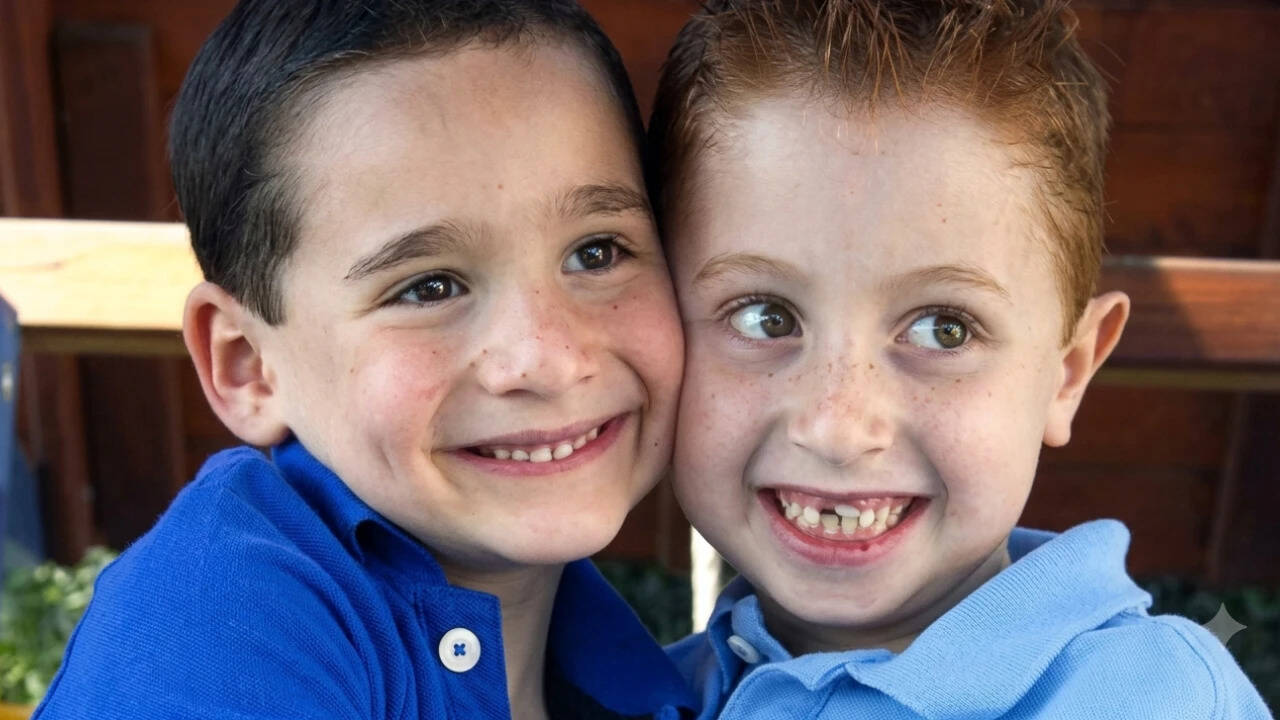
His name was Toby. He was six. His world was measured in the height of kitchen chairs, the texture of crushed graham crackers, and the terrifying, unpredictable rhythm of his best friend’s hospital visits.
His friend, Leo, had a liver that did not work the way livers are supposed to work. It was a rare, stubborn disorder that turned skin the color of old parchment and drained the laughter right out of an afternoon. To a six-year-old brain, illness is not a medical chart. It is an intruder. It is the reason your friend cannot run the full length of the playground without stopping to gasp for air. It is the reason for the cold smell of antiseptic that clings to clothes long after leaving the building.
Toby did not know about clinical trials. He did not know about venture philanthropy, venture capital, or the agonizing calculus of biotechnology funding for ultra-rare pediatric diseases.
He knew only one thing: Leo liked chocolate bars.
So Toby wrote a book.
It was a stapled mess of construction paper, illustrated with crayon drawings that defied every rule of perspective. The hero was a chocolate bar. The plot was simple, meandering, and entirely innocent. The chocolate bar went on a journey to find a sweeter world.
If you handed that paper to a literary agent, they would have handed it back. If you showed it to a venture capitalist, they would have blinked and looked for the pitch deck.
Instead, the community looked at it. And then, something broke open.
The Weight of the Invisible Price Tag
We talk about healthcare as a system of numbers. We quote survival rates, drug development timelines, and the staggering overhead of clinical research. We treat the business of saving lives like an accounting ledger.
We forget what it costs in human breath.
When a child is born with a rare genetic disorder, the medical establishment often shrugs. Not out of cruelty, but out of mathematics. Drug companies answer to shareholders. Developing a therapeutic for a condition that affects only a handful of children across an entire continent is economically irrational. The research costs hundreds of millions of dollars. The patient pool is microscopic.
The market calls this an orphan disease.
The word itself is cold. It strips the humanity away, reducing a child’s life to a cost-benefit analysis on a corporate spreadsheet. If the math does not close the gap, the research stops. The lab goes dark. The pipettes are washed and put away.
Leo’s disorder lived in that dark space. It was too rare to matter to the big machines of industry. It required bespoke science, targeted gene therapy, and obsessive academic focus—things that vanish the moment the grant money dries up.
Enter a six-year-old with a crayon.
When Art Becomes an Engine
Toby’s parents did not expect a movement. They printed a handful of copies of Chocolate Bar to raise a little pocket money for hospital snacks, maybe a few hundred dollars to make Leo smile through another round of blood draws.
They underestimated the power of radical, unvarnished empathy.
When people read the book, they did not just see a cute drawing by a kindergartener. They saw the indictment of a system that lets children slip through the cracks of profitability. They saw a quiet, devastating accusation: Why isn't anyone fixing this?
Sales trickled in. Then they rushed. Then they flooded.
Local bookstores sold out in hours. Online orders arrived from Tokyo, London, and Seattle. People who had never met Toby, people who had never heard of rare pediatric liver disorders, bought copies not because it was a masterpiece of children's literature, but because they wanted to cast a vote against despair.
The money piled up in a dedicated trust. Five dollars here. Twenty dollars there. A corporate match. A anonymous donor’s wire transfer.
One million dollars.
Think about that number for a moment. One million dollars generated by a story about a piece of candy written by a child who still lost his baby teeth.
It was enough to fund the next phase of the laboratory research. It was enough to buy the specialized reagents, pay the post-doc researchers for another year, and push a fragile molecule one step closer to human trials.
The Mechanics of Miracles
We are conditioned to believe that big problems require big institutions. We wait for governments to pass bills. We wait for conglomerates to announce breakthrough initiatives. We sit passively in our armchairs, scrolling through headlines about systemic failure, waiting for the cavalry.
The cavalry is a child with a blue marker.
What Toby’s story reveals is the startling potency of micro-philanthropy married to hyper-localized storytelling. In an era dominated by algorithmic noise and programmatic marketing, raw human sincerity cuts through the static like a flare in a pitch-black cave.
When you give people a human face to root for, the abstraction vanishes. Rare diseases stop being a statistic tucked away in the back pages of a medical journal. They become Leo. They become Toby sitting at the kitchen table, tongue pressed against his lip, painstakingly coloring the wrapper of a fictional candy bar.
The researchers at the university lab did not know what to do when the check arrived. They were used to scraping by, begging for scraps from federal agencies that prioritize volume over vulnerability. When they realized where the money came from—when they saw the crayon drawings included in the envelope from a family they had never met—the lab stood still.
Scientists are trained to be objective. They are trained to suppress emotion, to look only at the data points, the p-values, the Western blots.
For one afternoon, the data didn't matter. The only thing that mattered was the realization that an entire world was watching, waiting, and refusing to let go.
The Long Road Ahead
The million dollars is spent now. It bought pipettes, incubator time, and the salary of a brilliant young researcher who spent seventy hours a week staring at cellular cultures under a high-powered microscope.
Did it cure Leo’s liver? Not yet. Science does not move at the speed of a viral social media post. It moves slowly, painfully, with thousands of small failures for every single inch of ground gained.
There were setbacks. A compound failed toxicity screening in month eight. The team had to re-engineer the delivery vector. There were nights when the lead scientist sat in an empty office, staring at a blank wall, wondering if a million dollars was just a drop in an ocean of infinite need.
Yet the work continued. Because every time the momentum flagged, someone remembered the book. Someone remembered the clumsy lettering on the cover.
That is the hidden engine of human progress. It is not cold logic or market efficiency. It is stubborn, irrational love. It is the refusal to accept that a child’s future should be determined by the size of a target market or the profit margins of a pharmaceutical conglomerate.
Leo is older now. He still has bad days—days when the light leaves his eyes and the hospital room becomes his entire universe. But he also has something he didn't have when Toby first picked up that blue marker.
He has an army.
An army of strangers mobilized by a story about a chocolate bar. An army that proved, against every statistical odd and market rule, that when the system refuses to care, ordinary people will simply build a new one from scratch.
The crayon drawing hangs on the wall of the research lab now, framed in cheap plastic, right beside the electron micrographs and the genomic sequencing charts. It does not look like science.
It looks like the only thing keeping the lights on.