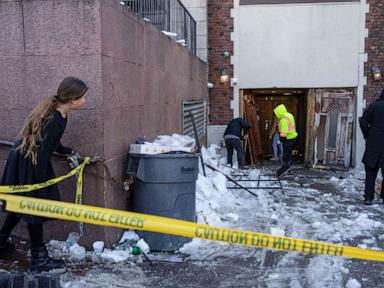
The headlines screamed about a man who rammed his car into a Jewish organization’s headquarters in Brooklyn. The sentencing came down: six months. The mainstream media treated this as a standard procedural outcome, a quiet footnote in the nightly news cycle. They missed the forest for the trees. By focusing on the specific act, they ignored the systemic decay that turns a brazen attack on a community institution into a short-term inconvenience for the perpetrator.
Six months for an act that targets a specific religious group at their global center isn't justice. It’s an invitation.
The Illusion of Proportionality
We are obsessed with the idea that our courts are balanced, that the punishment fits the crime with mathematical precision. This is a fairy tale. The legal system functions on plea bargains, overcrowded dockets, and a desperate need for efficient throughput. When a prosecutor secures a conviction—even a pathetic one—they mark it as a win. They move on.
I have spent years watching the gears of this machine grind. It cares about metrics, not morality. The "lazy consensus" here is that because a judge handed down a sentence, the law worked. That is a dangerous lie. The law worked for the bureaucrats. It failed the citizens who deserve to feel safe in their houses of worship.
The Deterrence Deficit
If you want to understand why crime feels like it is spinning out of control in major urban centers, stop looking at crime statistics and start looking at expected utility.
Imagine a scenario where a person harbors intense hatred for a specific group. They weigh their options. They consider the "risk" of an act of intimidation or violence. If the perceived consequence is a brief stint that barely interrupts their life, the cost-benefit analysis shifts dramatically.
Deterrence is not a moral argument. It is a mechanical one. If the cost of the action is lower than the psychological or social reward the offender derives from it, the crime will repeat. By delivering a slap on the wrist, the court signaled that the sanctity of community institutions is worth less than the cost of a long-term trial.
The Bureaucratic Failure of Intent
Proving intent is the holy grail of criminal prosecution. It is why we have hate crime legislation. Yet, we see a recurring pattern where violent actions against specific cultural or religious groups are stripped of their context to expedite sentencing.
When you categorize a targeted attack as mere property damage or a localized disturbance, you sanitize the violence. You pretend the motivation was incidental. This is a tactical error of the highest order. It ignores the reality that these attacks are rarely isolated incidents; they are signals sent to a population.
By failing to aggressively prosecute the underlying bigotry that fuels these events, the state effectively grants impunity to those who wish to destabilize communal harmony. I have seen countless attorneys attempt to bridge this gap, only to be shut down by judges more concerned with clearing their calendars than addressing the rot in the social fabric.
Redefining Security
We are currently trapped in a cycle of reactive security. We build walls, install cameras, and hire private guards. This is a tax on freedom. It assumes the state cannot or will not protect you, so you must assume the burden of self-preservation.
This model is broken. It creates a "fortress mentality" that erodes the very essence of open, vibrant communities. Instead of relying on the courts to provide genuine deterrence, we have outsourced our safety to technology and reinforced steel. We are building prisons around ourselves to keep the world out, rather than holding the perpetrators of violence accountable for the world we actually live in.
A System That Prioritizes Efficiency Over Justice
There is a visceral, ugly truth that nobody in the legal establishment wants to admit: they prefer the path of least resistance.
Taking a case to trial requires resources, time, and the risk of an unpredictable outcome. A plea deal for six months? That is a clean exit. It looks good on an annual report. It satisfies the requirement for a "closed case." But it creates a precedent that tells every other potential agitator that the system is soft, indifferent, and manageable.
The defense will argue that six months is sufficient because the offender is "rehabilitated" or "troubled." Do not buy it. Rehabilitation is a secondary concern. The primary function of the justice system is to uphold the social contract. When that contract is violated by targeting an institution based on identity, the penalty must be severe enough to make the very thought of repetition a nightmare for the offender.
We are watching the erosion of public safety in real-time. We are trading long-term security for short-term statistical convenience. The judge who signed off on that six-month sentence didn't just decide a case; they contributed to the normalization of political and religious intimidation.
Stop expecting the system to fix itself. It is performing exactly how it was designed: to move bodies through doors as cheaply as possible. Until we demand that the courts prioritize the protection of community integrity over the efficiency of the assembly line, we will continue to see these pathetic, toothless sentences.
The message is clear. It is just being received by the wrong people.