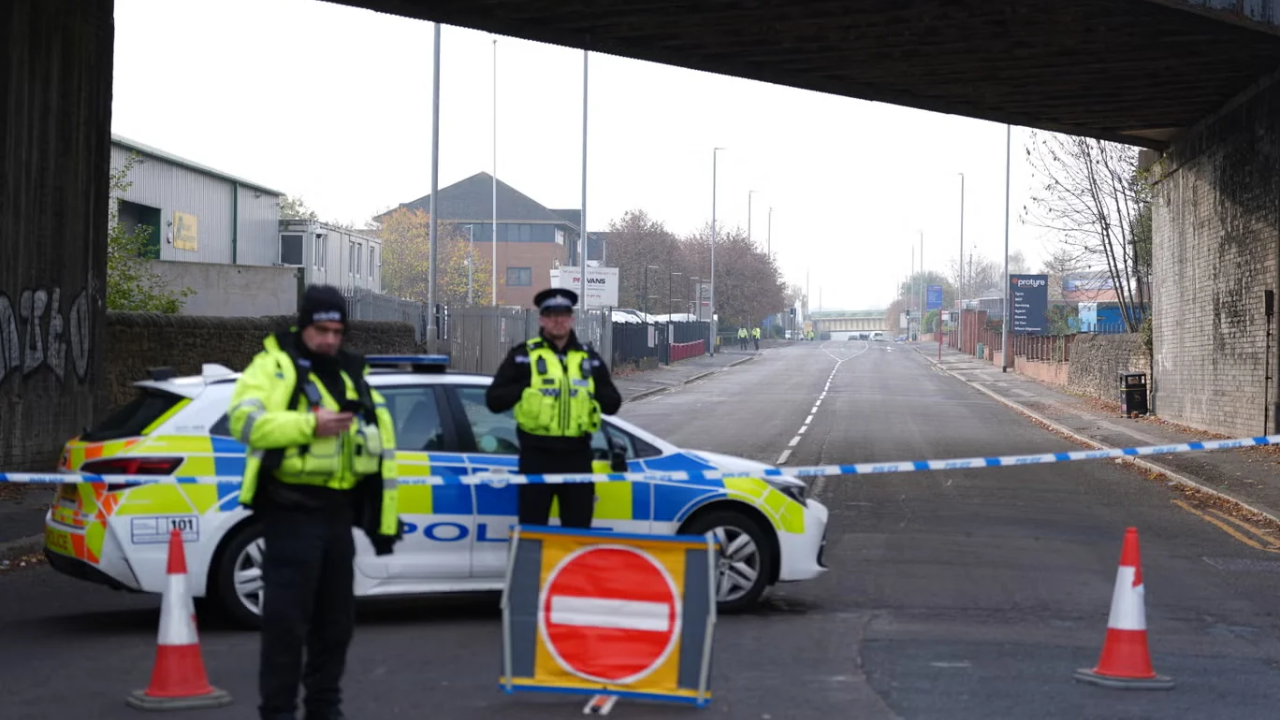
The siren does not just cut through traffic. It cuts through time.
If you have ever been trapped in gridlock on a standard weekday afternoon, your mind was likely somewhere mundane. Dinner options. A missed text. The dull, reliable rhythm of brake lights pulsing on the asphalt ahead. Then the air tears open. A low, guttural wail shakes the side mirrors, followed by the white-hot flash of emergency lights weaving through the lanes. In that split second, every driver on the highway becomes an unwitting witness to an unfolding crisis.
On a bright, clear afternoon, that exact scene played out across the asphalt artery of New York City. A white cargo van, heavy and dark-windowed, scrambled through traffic with the desperate, erratic motion of something trapped. Behind it flowed a procession of marked NYPD cruisers, their engines roaring against the hum of the city.
The report that set this pursuit in motion was the kind that turns a veteran officer’s stomach to ice: an alleged kidnapping involving a young child.
In law enforcement, certain calls carry a unique velocity. A robbery allows for tactical patience. A stolen vehicle permits containment strategies. But a child abduction call flattens the rulebook. It introduces a invisible clock ticking down in fractions of a second, driving heart rates into dangerous territory and narrowing a precinct's focus down to a single imperative—stop that vehicle.
The chase surged onto the expressway, transforming a routine commute into a high-stakes corridor. Drivers pulled to the shoulders, tires crunching over debris, watching the white van weave between lanes. Inside those responding patrol cars, officers were running through a gauntlet of mental calculations. High-speed pursuits are notoriously volatile. On a crowded highway, a two-ton vehicle becomes a unguided projectile. Every lane change is a gamble; every turn of the wheel balances public safety against the immediate need to rescue a vulnerable life.
Then came the collision.
Near an exit ramp, the white van ground to a halt, pinned or disabled against the barrier. What followed happened in a blur of adrenaline, metal, and drawn steel. Officers converged on the suspect’s vehicle, weapons raised, shouting commands over the deafening roar of highway traffic. According to preliminary police accounts, the suspect made a sudden, threatening movement—an action that officers on the scene interpreted as an immediate, lethal threat.
Shots echoed across the lanes.
When the smoke cleared and the shouting receded into the static of police radios, the suspect lay dead inside the cabin. The immediate danger of the vehicle had been neutralized. The suspect would run no further.
Then came the search.
Officers pulled open the rear doors of the van, expecting to find a terrified child huddled in the dark, waiting to be carried into the sunlight. They checked under the seats. They searched the storage bays. They scoured the interior.
Nothing.
The back of the van was empty.
The Anatomy of a Split Second Decision
To understand what happened on that stretch of road, one must look past the headline and examine the psychological pressure cooker of high-intensity policing.
When a call broadcast over the dispatch radio mentions a missing child, the human brain—even a trained one—undergoes an immediate physiological shift. Adrenaline floods the bloodstream. Visual perception narrows, a phenomenon known as tunnel time. Auditory exclusion sets in, where background noise fades and only the immediate threat registers.
Imagine standing on a highway shoulder with cars rushing past at sixty miles an hour, believing with absolute certainty that a helpless life is locked inside a moving box just feet away from you. The calculus changes completely. The luxury of waiting for additional backup or attempting prolonged negotiation evaporates.
This is the invisible burden carried into every high-risk vehicle stop. Officers are forced to make irreversible decisions based on the information they have at the exact moment of contact—information that is frequently incomplete, distorted, or flatly incorrect.
In this case, the initial intelligence suggested an ongoing abduction. That premise dictated every tactical choice made during the chase, from the speed of the pursuit to the aggression of the interception. When the suspect reportedly gestured or moved in a manner that signaled lethal intent, the response was swift and absolute. It was a sequence driven by the perceived necessity of saving a child.
The discovery that no child was in the vehicle does not retroactively change the fear or the perceived threat felt by the officers in that microsecond. But it profoundly alters the narrative left behind.
The Cascade of Misinformation in Modern Crises
How does a high-speed chase and a fatal shooting occur over a child who was never there?
The answer lies in the messy, chaotic pipeline of emergency communications. In the initial moments of a crisis, 911 dispatch centers receive a flood of frantic reports from bystanders, family members, or witnesses. A misheard phrase, a panicked observation, or an assumption made by a caller can easily become codified into official radio traffic as absolute fact.
Consider how a rumor hardens into a dispatch headline:
- A witness sees a chaotic argument near a vehicle and spots a child's car seat in the back.
- The caller reports a potential domestic dispute involving a kid.
- By the time the message passes through dispatchers and hits the patrol car speakers, it has simplified into a critical directive: Kidnapping in progress, suspect vehicle heading south.
Once that narrative takes root in the minds of responding units, every action by the suspect is viewed through that lens. A driver fleeing the police is no longer just a reckless motorist avoiding a traffic ticket; they are viewed as a desperate abductor who must be stopped at all costs to protect a human life.
This feedback loop creates an immense structural dilemma for modern urban law enforcement. Officers are expected to act with extreme urgency based on initial reports, yet those same reports are inherently fragile.
The Quiet Aftermath on the Highway
Hours after the gunshots, the highway remained closed. Flares burned red against the cooling pavement, casting long, eerie shadows across the crime scene investigators moving methodically around the white van.
Traffic was backed up for miles. Thousands of commuters sat idling in their cars, complaining about the delay, checking their phones for news updates, oblivious to the complex tragedy that had just unfolded at the front of the line.
A man was dead. A suspect, certainly—someone whose actions triggered a dangerous, chaotic chase through the heart of the city. But the core justification that propelled the urgency of that chase—the rescue of an innocent child—had vanished into thin air.
There is no simple villain or neat resolution in a story like this. There is only a sequence of rapid-fire choices made under extreme duress, fueled by incomplete information, culminating in a permanent loss of life.
As the tow truck finally hauled the shattered white van away from the highway barrier, the lanes slowly reopened. Cars rolled past the dark marks left on the pavement. The city swallowed the noise, the sirens faded into the distance, and the rhythm of the afternoon traffic returned, leaving behind only questions ringing in the quiet.



