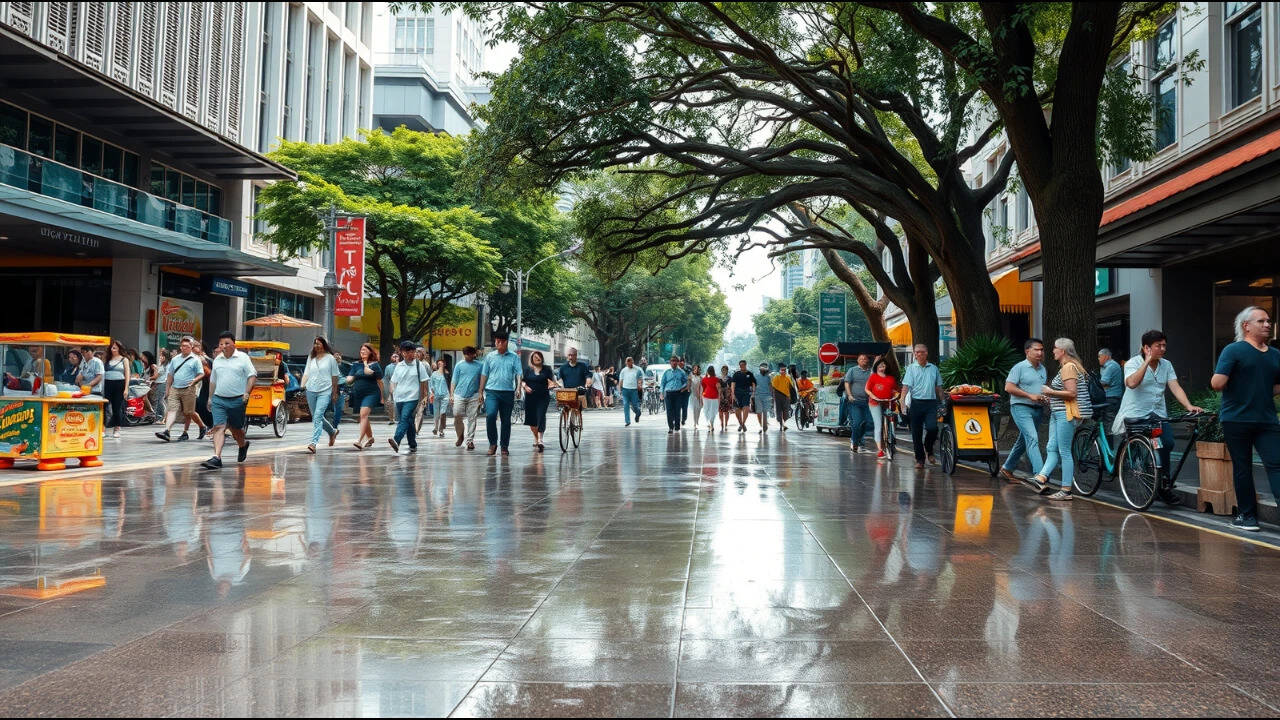
Concrete absorbs heat. Then it traps that heat. After that, it bakes the city around it. Asphalt roads and glass skyscrapers transform urban spaces into giant ovens. You walk outside during an afternoon in the tropics and you feel it immediately. The air sticks. The pavement radiates. Urban heat islands are a massive public health crisis hiding in plain sight.
Singapore decided to fight back with brute force and chlorophyll.
The government launched an ambitious campaign to plant one million trees across the island by 2030. They didn't just want a greener aesthetic. They needed a functional cooling system. When you look at how modern cities handle climate change, most rely on air conditioning units pumping hot exhaust onto public sidewalks. Singapore is doing the exact opposite. They are turning the whole country into a managed forest.
The Science Behind Urban Canopy Cooling
Trees do heavy lifting that air conditioners can't match. They shade surfaces. They block direct sunlight from hitting dark asphalt. When the sun doesn't hit the ground, the ground doesn't store thermal energy. Simple physics.
Then comes transpiration. Trees pull water from deep underground through their roots. They release that water vapor through tiny pores in their leaves. This process cools the surrounding air naturally. It's nature's air conditioner.
Research from the National Parks Board in Singapore shows that mature tree canopies can drop local ambient temperatures by up to two degrees Celsius. Two degrees sounds small on paper. In reality, it separates a comfortable walk from heat exhaustion.
Most cities fail at urban forestry because they plant trees and walk away. Saplings die. Roots hit buried utility lines. Soil compaction chokes the growth. Singapore avoids these traps through aggressive planning. They map out underground infrastructure before digging a single hole. They select species built for urban stress. Angsana trees, rain trees, and yellow flame trees get deployed where shade coverage matters most.
Beyond Parks and Gardens
You won't just find these trees tucked away in quiet nature reserves. They line major expressways. They fill housing estates. They grow on multi-story car park rooftops.
Take the Park Connector Network. It weaves green pathways through dense residential zones. You can commute across town under a continuous tunnel of green. This isn't accidental. Urban planners integrated greenery into zoning laws decades ago. Developers must replace the greenery they displace during construction. No exceptions.
Common mistakes plague similar greening projects worldwide. Cities often pick invasive species that disrupt local ecosystems. Or they plant monocultures vulnerable to a single disease wiping out half the urban forest. Singapore diversifies its plantings. They mix native palms, shrubs, and canopy trees. Biodiversity keeps the ecosystem stable. Pests can't take over a forest built on variety.
What You Can Learn From Singapore
You don't need a national budget to use these lessons in your own neighborhood. Urban heat islands affect local microclimates down to the single block.
- Plant shade trees on the western side of buildings to block harsh afternoon sunlight.
- Swap out heat-trapping artificial turf or dark concrete in yards for light-colored pavers or ground cover plants.
- Support local community gardens that expand the collective green footprint.
Cities need structural changes to survive rising global temperatures. Slapping solar panels on roofs helps. Painting roofs white helps. But living plants do something mechanical systems never will. They breathe. They adapt. They grow stronger over time instead of breaking down.
Singapore is proving that high-density urban living and heavy nature integration can coexist. You can build skyscrapers and plant forests at the same time. The strategy requires strict laws, careful engineering, and zero tolerance for neglect.
Stop treating urban nature as decoration. Treat it as critical infrastructure. The temperature drop is worth every seed.