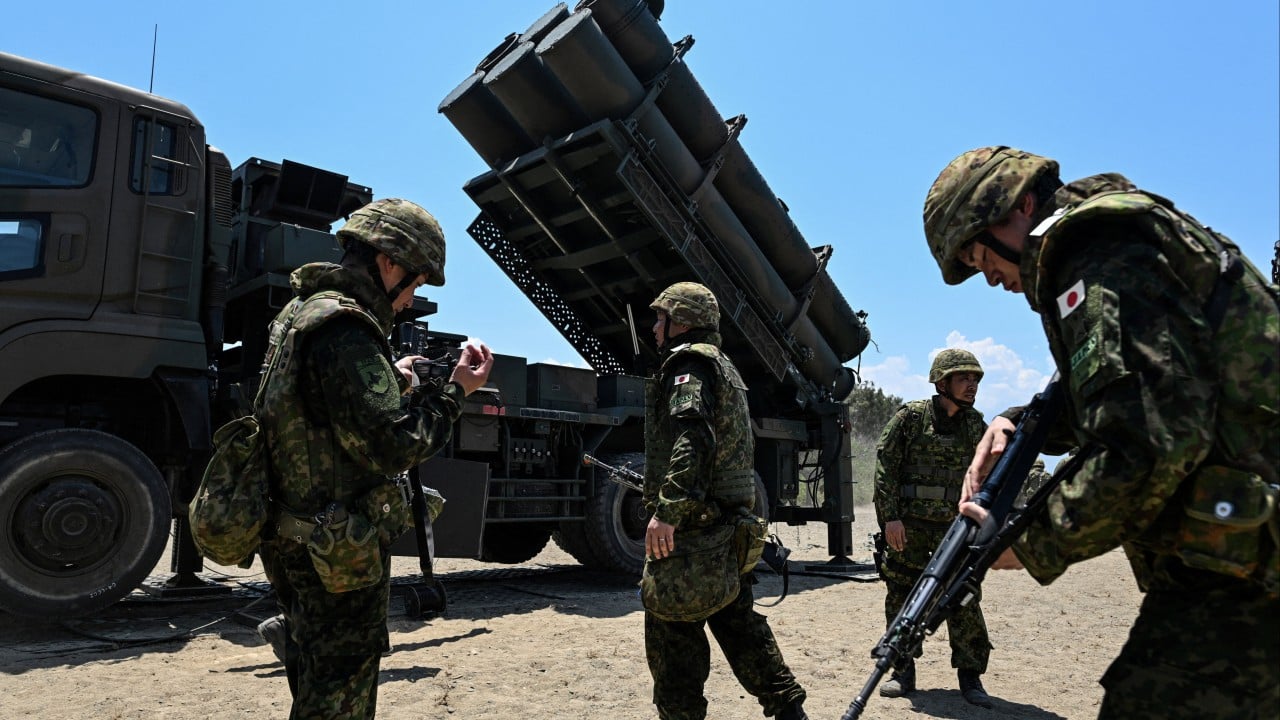
Tokyo is rewriting its postwar identity without changing a single word of its pacifist constitution. For decades, international observers predicted that if Japan ever rearmed, it would happen through a dramatic, right-wing political crusade to repeal Article 9—the famous clause renouncing war. That prediction was wrong. Instead, a quiet bureaucratic overhaul has effectively neutralized the constitutional restriction, turning Japan into one of the most potent military powers in Asia while the world was looking the other way.
This transformation is driven not by ideological fervor, but by a cold, spreadsheet-driven calculation of survival in a rapidly deteriorating regional security environment.
The Myth of the Sudden Right Wing Shift
Western commentary frequently attributes Japan defensive pivot to a rising tide of nationalist politics. This narrative misinterprets the domestic reality. The Liberal Democratic Party (LDP), which has governed Japan for most of the postwar era, does house hawkish factions. However, the driving force behind the country's recent defense upgrades is a pragmatic civil service and a deeply pragmatic public, not right-wing radicalism.
The shift is visible in Tokyo's defense budgets. By pledging to raise defense spending to two percent of gross domestic product, Japan is abandoning a decades-old informal cap of one percent. This represents a massive influx of capital into the Ministry of Defense.
Yet, public polling consistently shows that the Japanese electorate remains deeply wary of militarism. The population is aging, shrinking, and deeply concerned with economic stability. Political leaders are not winning votes by beating war drums. They are securing quiet acquiescence because the regional threats have become too large to ignore. Tokyo is adjusting its posture because it feels it has no other choice.
Counterstrike Capabilities and the Death of Pure Defense
For generations, the Japan Self-Defense Forces (JSDF) operated under a policy known as exclusively defense-oriented defense. The doctrine was simple. Japan would act as the shield, absorbing blows, while the United States military acted as the spear, striking back at adversaries.
That division of labor is officially dead.
The Procurement Shift
Tokyo is actively acquiring long-range cruise missiles, including American-made Tomahawks and upgraded domestic Type-12 anti-ship missiles. These weapons serve a specific purpose. They allow Japan to strike military targets deep inside enemy territory, including launch sites in North Korea or command centers along the Chinese coastline.
The government legal justification for this is a masterclass in bureaucratic gymnastics. The official line states that striking an enemy base before a missile launch is technically a defensive measure if an attack is deemed imminent. By redefining the timeline of self-defense, Japan has acquired offensive capabilities without needing to alter its legal framework.
The Flat-Top Transformation
Consider the Izumo-class helicopter destroyers. When first constructed, government officials insisted these vessels were purely defensive platforms incapable of launching fixed-wing combat aircraft. Today, those same ships are undergoing structural modifications to carry F-35B stealth fighters.
The flight decks are being heat-treated to withstand the exhaust of vertical-landing jets. In practice, Japan now possesses aircraft carriers for the first time since 1945. The terminology changed, but the hardware did not lie.
The Washington Pressure and the Broken Umbrella
A major catalyst for this shift sits across the Pacific. The reliability of the American security umbrella is no longer taken for granted in Tokyo. Decades of shifting political winds in Washington have forced Japanese strategists to plan for a scenario where the United States is either unwilling or unable to defend its allies in East Asia.
During the Cold War, the US-Japan alliance was an asymmetric bargain. The United States got bases near the Asian mainland, and Japan got a cheap security guarantee that allowed it to focus exclusively on economic reconstruction. That bargain has expired. Washington now demands that Tokyo bear a proportional share of the deterrence burden.
This pressure coincided with a dramatic escalation in regional threats. China's naval expansion has fundamentally altered the balance of power in the East China Sea, particularly around the disputed Senkaku Islands. Concurrently, North Korea's missile testing has progressed from sporadic provocations to routine salvos that cross into Japanese airspace. Tokyo realized that relying entirely on a distant superpower was a structural vulnerability.
The Economic Bottleneck
While the political will to spend money on hardware exists, Japan faces a structural crisis that money cannot easily solve. The country is running out of people.
The JSDF has missed its recruitment targets for years. The pool of eligible youth between the ages of 18 and 26 is shrinking rapidly due to the country's demographic collapse. Young Japanese citizens are choosing corporate careers over military service, viewing the JSDF as an outdated institution with demanding conditions and low pay.
JSDF Recruitment Challenges:
├── Demographic Shift: Shrinking youth population pool
├── Private Sector Competition: Better pay and corporate benefits
└── Strategic Pivot: Heavy investment in automation, uncrewed systems, and AI
To compensate for the lack of personnel, the military is forced to invest heavily in automation. The Maritime Self-Defense Force is building new Mogami-class frigates that require a crew of just 90 sailors, compared to the 200 required by older destroyers of a similar size. Japan is betting that superior technology can substitute for raw manpower. It is a risky gamble. In a prolonged conflict, attrition wins, and automation cannot replace a depleted workforce indefinitely.
A Fragile Legal Equilibrium
The current strategy relies on maintaining a delicate balance between aggressive defense procurement and pacifist rhetoric. This compromise satisfies no one completely, but it prevents a domestic political crisis.
Left-leaning political parties and civil liberty groups argue that the acquisition of counterstrike weapons violates the spirit of Article 9. They contend that the government is hollowed out the constitution through creative interpretation rather than democratic debate. Conversely, hardline nationalists argue that the refusal to formally amend the constitution leaves the military in a legal gray zone, potentially restricting its effectiveness during an actual crisis.
This ambiguity is intentional. By avoiding a divisive constitutional referendum, the ruling coalition avoids a bruising public debate that could paralyze the government. The bureaucracy prefers quiet executive actions and budget reallocations over public ideological battles.
The Integration of Supply Chains
The defense overhaul extends beyond the military branches and into the domestic industrial base. For decades, Japan self-imposed a ban on arms exports, which stifled its domestic defense sector. Companies like Mitsubishi Heavy Industries and Kawasaki Heavy Industries produced advanced equipment, but because they could only sell to the JSDF, they lacked the economies of scale enjoyed by Western defense contractors.
That isolation is ending. Tokyo has relaxed its defense export guidelines, allowing for the co-development of next-generation fighter jets with the United Kingdom and Italy under the Global Combat Air Programme.
This move is designed to inject capital into a stagnant domestic industry and integrate Japan directly into global defense supply chains. It is no longer just about buying American hardware; it is about building an independent industrial ecosystem capable of sustaining a long-term defense effort.
The result is a military apparatus that looks less like a self-defense force and more like a standard, highly lethal regional military power. The pacifist mask didn't slip because of a political shift to the right. It was systematically dismantled by pragmatists who decided that a piece of paper written in 1947 was no longer sufficient protection against the realities of modern East Asia.