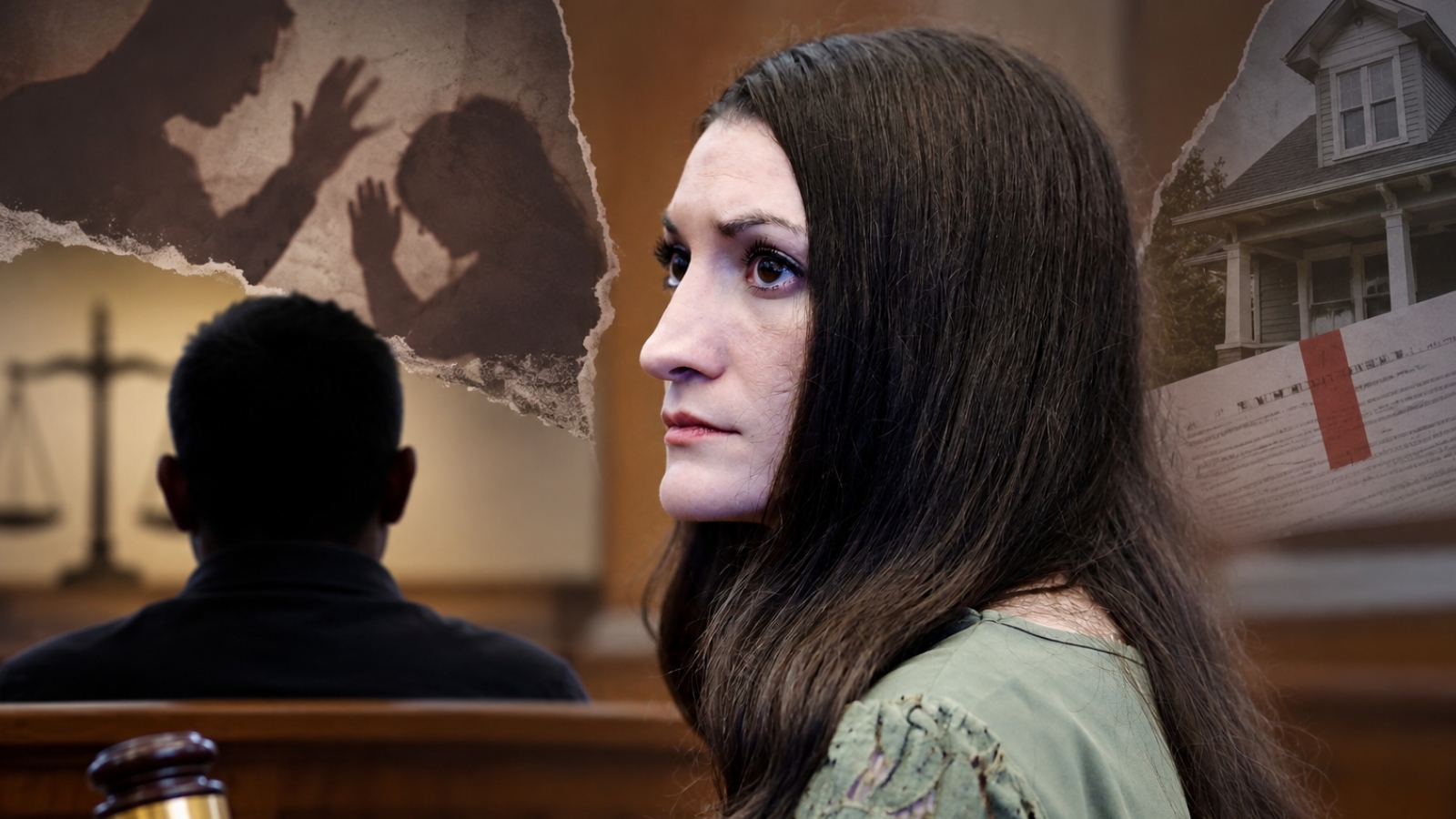
The lock clicks.
Not a metaphorical click, but the heavy, mechanical slide of deadbolts engaging on a heavy wooden door. Outside that door lies a corridor of polished linoleum, the muted murmur of reporters clutching lukewarm coffee cups, and the quiet judgment of a public desperate for closure. Inside that door lies twelve people trapped in the suffocating weight of history. Don't forget to check out our recent post on this related article.
They are strangers plucked from grocery stores, cubicles, and quiet suburban kitchens. They were told this would take a few weeks. Weeks bled into months. Now, the air in the room is thick with the scent of cold takeout, damp wool coats, and exhaustion so profound it feels physical. Eleven of them see a path forward. They have reached across the long table, nodded in tired consensus, and settled on a narrative they can live with.
Then there is the twelfth. If you want more about the history here, The Guardian offers an in-depth breakdown.
The holdout.
To understand the ferocious public fascination with a lone juror in the high-profile trials of our time—such as the legal agonizing surrounding the Lindsay Clancy murder case in Massachusetts—we have to look past the statutory definitions of reasonable doubt. We have to look at human terror.
When the news cycle shrieks about a hung jury, it frames the lone holdout as a villain. An obstructionist. A wrench jammed violently into the gears of justice. Commentators on cable news shake their heads, running digital graphics of deliberation room layouts, dissecting past social media posts, digging into employment histories, and wondering what kind of person dares to stand against the avalanche of societal outrage.
Let us step backward for a moment. Imagine sitting at that table.
Imagine looking at the physical evidence of an unimaginable tragedy. A mother in severe psychiatric crisis. Three children lost. A defense rooted in postpartum psychosis, a medical phenomenon where the mind shatters so completely under hormonal and neurological collapse that reality itself dissolves. The prosecution argues calculated actions, a premeditated design executed in cold blood. The defense points to a broken brain, a brain stripped of free will by a catastrophic failure of the nervous system.
The eleven want to vote guilty. They look at the tragic outcome and demand accountability. They feel the righteous anger of a community that needs someone to pay for the empty beds, the small shoes left in the hallway, the unbearable quiet of a home destroyed.
The twelfth looks at the same evidence, but sees something else entirely. The twelfth sees the terrifying margin of error in human biology.
This is where the invisible stakes of a trial reveal themselves. A trial is never just about the individual in the defendant's chair. It is a mirror held up to how a society treats the darkest corners of human suffering. When a juror holds out, they are rarely playing a game of stubborn ego. More often, they are paralyzed by a terrifying realization: If I sign this verdict, I am sealing a truth that my conscience knows is incomplete.
We live in a culture that hungers for binaries. Guilty or not guilty. Monster or victim. Hero or villain. We want our moral universe neatly partitioned so we can sleep at night, comforted by the belief that bad things only happen to bad people, and that the system always catches the guilty with mathematical precision.
Postpartum psychosis disrupts that comforting illusion. It forces ordinary citizens—mothers, fathers, sisters, brothers—to confront the terrifying fragility of the human mind. It asks a jury of peers to determine where illness ends and criminality begins, a line that even the world's leading neuroscientists struggle to draw with absolute certainty.
Consider what happens inside the mind of that holdout juror.
At first, there is conversation. Arguments are laid out like game pieces on a stained table. Voices are elevated. Coffee cups are refilled. Someone cries out of frustration, longing to see their children, longing for the normalcy of a Tuesday night where they aren't staring into the abyss of human misery.
Then the tone shifts. The persuasion turns heavy. It becomes pressure.
"Look at the evidence," the foreman says, his voice flat with fatigue. "Everyone else is here. Why aren't you?"
That is the lonely heart of the American jury system. The Constitution guarantees a unanimous verdict, which sounds noble and protective on parchment. In practice, unanimity is a psychological crucible. It requires one person to withstand the collective gravitational pull of eleven other human beings who desperately want to go home.
To hold out is to endure a very specific brand of isolation. It means looking your peers in the eye and saying, I cannot cross that line with you. It means accepting the silent resentment of people who viewed you as an equal twenty-four hours ago, but now see you as a barrier to their freedom.
And then, the spotlight finds you.
In high-stakes cases, the identity of a holdout becomes a morbid parlor game for the internet. Pried open by reporters, past lives are scrutinized. Neighbors are interviewed on their front lawns. Every digital footprint, every old tweet, every minor parking ticket from ten years ago is dragged into the daylight to find a motive. Is this person eccentric? Are they seeking attention? Do they have an agenda?
Almost never does the public pause to consider the simplest, most agonizing explanation: The holdout is simply doing the job the law asked them to do.
Doubt is not a comfortable state of mind. Certainty, even horrifying certainty, is much easier to bear. To harbor a reasonable doubt requires a person to sit in the dark and admit that they do not know everything. It requires resisting the peer pressure of a room full of outraged citizens. It requires the courage to say, My conscience will not let me cross this threshold, no matter how much easier it would make everyone's life.
We praise historical figures who stood alone against the crowd, imagining we would have been the brave ones to join them. Yet when we see a modern holdout disrupting a verdict in a harrowing case, our instinct is to hiss. We want the machinery of justice to move fast. We want the wound cauterized.
But justice was never meant to be fast, and it was certainly never meant to be comfortable.
When a jury hangs, it is not always a failure of the system. Sometimes, it is the system working exactly as designed—a jagged safety valve built to prevent a rush to judgment when the facts of human existence are too complex for a clean, painless stamp of approval.
The deliberation door remains closed. The low hum of voices continues on the other side. Somewhere in that room, a hand is gripping a pen, refusing to sign away a doubt that refuses to die. The clock ticks on, indifferent to the weight of what is happening in the dark.