The Fifth Amendment is rarely understood for what it actually is. Most people watch a television drama, hear a defendant refuse to answer questions, and assume guilt. Pop culture has trained society to view the invocation of constitutional rights as a neon sign pointing toward criminal culpability. Decades of cop shows and courtroom thrillers cemented this false equivalence.
The reality sitting inside actual courtrooms is entirely different. Pleading the Fifth is a foundational legal protection designed to shield the innocent from government overreach, yet it remains one of the most misunderstood and socially penalized mechanisms in the United States legal system.
When a witness or defendant refuses to testify by stating they decline to answer on the grounds that it might incriminate them, they are utilizing a right forged in centuries of resistance against authoritarian interrogation tactics. To look at how this mechanism operates today, one must strip away Hollywood fiction and examine the hard mechanics of constitutional law, the psychological cost to defendants, and the shifting boundaries of how courts treat silence.
The Historical Crucible That Forged the Right
Rights do not appear out of thin air. They are extracted through suffering, political upheaval, and resistance against tyranny.
Long before the United States Constitution was drafted, English courts utilized the Star Chamber and ecclesiastical courts to compel confessions through torture and forced oaths. Prisoners were routinely put on the oath ex officio, a legal trap where they were sworn to answer all questions truthfully before even knowing what crimes they were accused of committing. Refusal to take the oath meant imprisonment or worse. If a defendant spoke, they risked hanging; if they stayed silent, they were tortured for contempt.
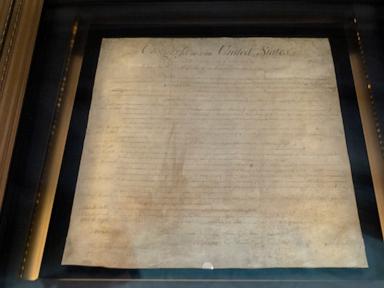
[Image of ancient parchment document]
The abolition of the Star Chamber in the seventeenth century marked a turning point. Jurists and philosophers began articulating a radical concept: the government bears the burden of proof. An individual should never be forced to supply the instruments of their own destruction.
When the Founding Fathers codified this principle into the Fifth Amendment of the Bill of Rights, they did not invent a loophole for criminals. They built a structural wall between the citizen and the state. The state possesses infinite resources, police power, and prosecutorial machinery. The individual possesses only their voice and their liberty. Forcing the state to prove its case without extracting forced confessions from the accused was meant to level an inherently uneven playing field.
The Mechanics of Invocation in Criminal and Civil Settings
Invoking the Fifth Amendment is not as simple as uttering a magic phrase on television. The context dictates the legal fallout entirely.
In a criminal trial, the mechanics are absolute. The Fifth Amendment states that no person shall be compelled in any criminal case to be a witness against themselves. If a defendant chooses not to take the stand, prosecutors are strictly forbidden from commenting on that silence to the jury. Judges instruct juries that silence cannot be used as evidence of guilt.
Civil courtrooms operate under a starkly different set of rules. This is where the protection grows complicated and dangerous for litigants.
If a defendant in a civil lawsuit—perhaps facing massive fraud allegations or a wrongful death claim—invokes the Fifth Amendment during a deposition, the civil court is legally permitted to allow the jury or judge to draw an adverse inference.
In a civil proceeding, silence can be interpreted as a concession of liability. The law reasons that because the stakes are financial rather than penal, a private litigant should not be completely insulated from accountability just because their answers might expose them to criminal trouble down the line.
This creates a brutal dilemma. A business executive facing a federal investigation alongside a civil shareholder lawsuit must choose between defending themselves in the civil matter and risking criminal self-incrimination. Protecting the criminal flank often means losing the civil lawsuit by default.
The High Cost of the Court of Public Opinion
Legal protections do not shield reputation. The moment a high-profile figure, corporate executive, or public official refuses to answer questions by pleading the Fifth, the public tribunal renders an immediate verdict.
The optics are devastating. News outlets flash headlines declaring that a witness took the Fifth dozens or hundreds of times during a congressional hearing. Viewers translate that repetition into guilt.
This public reaction creates a profound strategic nightmare for defense attorneys. Legally, the invocation is sound advice. Prosecutors are aggressive, and memory is fallible. A witness who misremembers a minor detail under oath can be prosecuted for perjury, even if they had no involvement in the underlying crime. Taking the stand is often a high-stakes gamble where the truth matters less than how a hostile prosecutor can twist a statement.
Yet, telling a jury or the public that an innocent person needs protection from a prosecutor sounds counterintuitive. Society loves simple narratives. Guilt or innocence makes for a clean story. The reality of a complex legal system where innocent people must protect themselves from predatory charging practices is messy, unsatisfying, and difficult to market on an evening news broadcast.
Recent Shifts and Modern Pressures
The digital age introduced unprecedented surveillance and data collection, altering how prosecutors build cases and how defendants experience the Fifth Amendment.
Historically, self-incrimination involved spoken testimony or physical documents handed over to investigators. Today, it involves encrypted devices, smartphone passcodes, and biometric locks.
Courts across the United States have wrestled with whether compelling a suspect to unlock a smartphone using a fingerprint or facial recognition software violates the Fifth Amendment. The logic splits along a fascinating technical divide. Is a passcode a memory residing inside a person's head, protected by the privilege against self-incrimination? Or is a fingerprint a physical characteristic, no different than a DNA sample or a key found in a pocket?
Judicial opinions vary wildly by jurisdiction. Some state supreme courts rule that forcing a suspect to hand over a numerical passcode is compelled testimony because it requires recalling information from the mind. Other jurisdictions draw distinctions between physical biometrics and mental passwords, leaving individuals in a gray zone where their digital lives can be unlocked by state force while their spoken words remain protected.
The Persistent Misunderstanding of Innocence
The core tension surrounding the Fifth Amendment boils down to a fundamental clash between legal theory and human psychology.
Human beings are hardwired to look for signs of deception. Evasion looks like lying. Silence looks like hiding. The legal system, at its best, recognizes this human weakness and erects formal barriers to prevent emotional reactions from destroying objective justice.
When a witness exercises their right to remain silent, they are engaging in a constitutional exercise designed to preserve the balance of power between the individual and the state. It is not an admission of wrongdoing. It is a refusal to play a rigged game where the rules favor the interrogator.
As long as courts grapple with new technologies and public opinion remains hostile to nuance, the Fifth Amendment will remain a battleground. It stands as a stubborn reminder that protecting the guilty from forced confessions is the only way to ensure the innocent retain a fighting chance against the vast machinery of the state.