Cold. That is the first thing you notice when the grid dies. Not the dramatic crash of a movie explosion, just the sudden, flat silence of a refrigerator hum stopping in the hallway, followed ten minutes later by the slow retreat of warmth from the floorboards.
In late autumn, darkness arrives early over the Dnipro River. By four in the afternoon, gray clouds press against the apartment blocks like wet wool. Inside a fourth-floor flat in Kyiv—let us call the residents Olena and her ten-year-old son, Maksym, in a hypothetical scene built around what thousands of families actually face each winter—a single battery lantern throws a yellow circle onto a stack of math workbooks. Outside, somewhere beyond the city limits, a transformer station sits quiet after a night of drones and missiles.
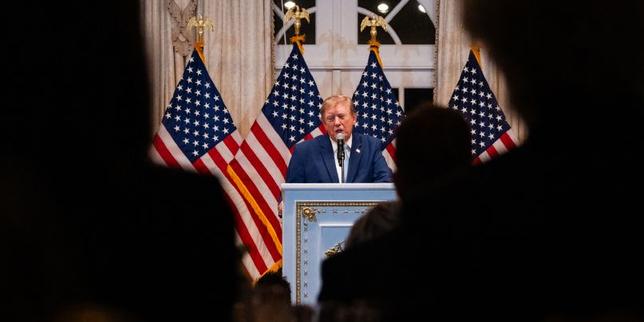
News alerts travel fast. A headline flashes across a phone screen: Donald Trump has exempted Russia from a new round of sanctions. In Kyiv, officials condemn the move as a green light to keep attacking.
To anyone reading a wire dispatch thousands of miles away, a sanctions exemption looks like a line item on a policy memo. A waiver. A stroke of a pen in Washington. A bargaining chip held back for a negotiation that may or may not happen next month.
Yet policy language has a way of hiding the weight of what it moves. Sanctions are rarely just numbers on a ledger or restrictions on bank transfers and shipping lanes. When governments tighten them, they are trying to raise the cost of war—to make it harder to buy microchips for guidance systems, harder to move oil at full price, harder to keep factories running around the clock. When a major power carves out an exemption, the people on the receiving end of a drone strike do not read it as a clever diplomatic maneuver. They read it as permission.
I have stood in rooms where the power went out at dusk and watched how quickly ordinary life shrinks to a single room. You hang blankets over the windows to keep heat from leaking into the frost. You boil water on a small camping stove while the kettle on the electric range sits useless. You listen to the sky not out of paranoia, but out of habit—because habit keeps you alive when sirens sound at three in the morning.
That lived reality is what gets flattened in "live updates." A live blog moves at the speed of a ticker. One item replaces another before the shock of the first has settled into your chest. One moment there is a diplomatic statement from Kyiv; the next, a market reaction or a quote from a capital far from the front line. Speed creates distance. Distance makes cruelty look abstract.
What an Exemption Actually Buys
Why would a leader exempt Russia from fresh sanctions in the middle of an active war?
Statescraft is messy, often opaque, and rarely driven by a single motive. Sometimes leaders hold sanctions in reserve as leverage, hoping the threat of future pain will force someone to the table. Sometimes they worry about blowback on global energy prices, trade alliances, or domestic politics. Sometimes they simply believe pressure alone has failed to end a conflict and want a different path—even if critics argue that easing pressure rewards aggression.
Consider what happens next when Moscow is spared new penalties while missile production and artillery shells still matter on the battlefield.
If a sanction is meant to act like a tourniquet—slowing the flow of money, parts, and revenue that sustain a war machine—an exemption loosens the grip. Even if existing measures remain on paper, skipping a new wave signals restraint on one side and relief on the other. For Kyiv, that distinction is everything. Ukrainian officials have argued repeatedly that half-measures invite escalation. If the cost of another strike does not rise—or if the diplomatic penalty feels lighter than expected—what stops the next barrage from aiming at another substation, another rail hub, another residential block?
You do not need a degree in international relations to see why Kyiv calls that an encouragement. Think of a neighborhood where a bully keeps breaking streetlights after dark. If the town council debates a new fine and decides not to pass it, the person holding the wrench does not hear nuance. They hear that the coast is clear.
To be clear, that analogy is a simple comparison, not a complete picture of geopolitics. Wars between states involve nuclear deterrence, alliance politics, supply chains, and domestic voters in ways a street dispute never could. Still, human behavior under pressure has a stubborn pattern: when consequences shrink, risky actions look cheaper.
I will admit something honest here. Watching great-power politics from afar can leave you feeling dizzy and cynical. One week brings talk of tougher measures; the next brings a carve-out, a delay, or a surprise pivot. Even seasoned observers sometimes struggle to tell whether a decision is a calculated trap, a genuine attempt at a deal, or a shift in priorities that leaves allies scrambling. Uncertainty is exhausting. It wears people down almost as reliably as artillery.
The Invisible Stakes Behind Every Siren
When Kyiv denounces a decision like this, the reaction is rarely just about diplomatic pride. It is about survival arithmetic.
Air defense interceptors are expensive and finite. Every missile fired at a Shahed drone or a ballistic threat is one fewer missile available tomorrow night. Repair crews working on damaged energy infrastructure face freezing temperatures, exhaustion, and the constant risk of "double-tap" strikes—follow-up hits meant to punish first responders and technicians.
In our hypothetical flat in Kyiv, Maksym asks his mother whether school will be open tomorrow. She checks her phone, sees a message from the teacher about remote classes if the power drops again, and forces a calm smile. She does not explain sanctions waivers or White House calculations to a ten-year-old. She just sets out two flashlights and charges the power bank while the outlet still works.
That is the invisible stake. A diplomatic choice in Washington or Brussels lands months later—or hours later—inside a kitchen where someone is rationing battery life.
People outside the war zone often ask practical questions that sound simple on the surface:
- Can Ukraine hold out if Western pressure wavers?
- Do sanctions even work if countries find workarounds?
- What happens to civilians if winter strikes hit harder?
Each question points to a real fault line.
Sanctions are imperfect tools. History shows that sanctioned economies adapt: they reroute oil tankers, use shell companies, buy dual-use components through third countries, and lean on partners willing to trade. Anyone claiming sanctions are a magic wand is selling a fantasy. Yet imperfect does not mean useless. Friction slows things down. Friction raises prices. Friction forces choices between buying a part for a weapon and funding something else. When a major economy decides not to add new friction, the breathing room grows.
As for civilians, winter turns infrastructure into a weapon. Without steady electricity, district heating falters, water pumps lose pressure, and elevators stop working—trapping older residents on upper floors. A city can endure a lot, but cold seeping into concrete walls tests endurance in a quieter, grinding way.
Memory, Leverage, and the Cost of Hesitation
History does not repeat on cue, yet it rhymes in ways that make experienced diplomats flinch.
Over the past century, crises in Europe have repeatedly turned on a central question: how to respond to territorial force without triggering a wider catastrophe. Too much recklessness risks an uncontrolled spiral. Too little resolve can convince an aggressor that time, fatigue, and division are on their side.
There is no easy formula. Every leader weighs risks differently. A president in Washington looks at global commitments, economic ripples at home, and how to bring a bloody war to a close. A leader in Kyiv looks at maps of damaged power lines, casualty lists, and families spending another night in underground metro stations. Both feel real pressures, though the cost of getting it wrong is wildly unequal.
When Kyiv warns that exempting Russia encourages further attacks, it is pushing back against a specific kind of optimism—the belief that showing leniency now will buy restraint later. Ukrainian officials have lived through years of truces broken, pledges ignored, and warnings dismissed until too late. Their skepticism is not abstract theory; it is scar tissue.
And yet, even in moments of sharp friction between Kyiv and Washington, neither side can afford to ignore the other completely. Ukraine relies heavily on outside backing—weapons, air defense, intelligence, financial aid—to keep its lines from buckling. Meanwhile, the United States shapes the rules of security and deterrence far beyond Eastern Europe. A policy shift does not happen in a vacuum; every move alters expectations among allies and rivals alike.
But the real problem lies elsewhere: in how easily human lives become background noise while politicians argue over strategy.
When headlines treat a sanctions exemption as a tactical twist, it is easy to forget who pays if the gamble backfires. It is not the commentators debating cable segments. It is not the diplomats flying between capitals. It is the line worker climbing an icy pylon before dawn. It is the doctor running an operating room on backup generators. It is the child doing homework by a single flickering bulb.
Why Distance Makes Us Look Away
Living far from a war makes detachment effortless. You scroll past a photo of a blackened building, tap a reaction or close the app, and move on to dinner. That is human nature; our minds protect themselves from constant grief.
Still, there is a difference between protecting your peace and mistaking distance for irrelevance. Decisions made by powerful governments ripple outward. Whether sanctions tighten, loosen, or stall shapes how long a war lasts, how much it costs, and who survives the next winter.
When a headline announces that Russia is exempt from new sanctions and Kyiv calls it an encouragement to attack, you are watching a collision between two different clocks. One clock ticks in diplomatic cycles, negotiations, and political calculus. The other ticks in dark rooms, cold radiators, and air-raid alerts echoing off empty streets.
The light goes out in an instant, and in the dark, every choice casts a longer shadow.