Asphalt. Heat shimmer. A fiberglass cowboy waving a forty-foot arm over a stretch of prairie where the wind has nothing else to push against.
You know that feeling when you are driving a thousand miles across open country and your eyes start to blur into the white line? Nothing changes for forty minutes. Then suddenly, out of the scrub and gravel, rises a giant coffee pot, a concrete dinosaur, or a smiling muffler man holding a tire. Your kids sit up in the back seat. You tap the brake. For three minutes, the trip stops being a race against the clock and becomes a story you will tell at dinner.
Now picture a quiet room in Kansas holding nearly two hundred tiny replicas of those exact roadside giants.
Scale. That is what hits you first. A monument built to make a tired driver feel small has been folded down until it fits beside a coffee mug. Looking at them, you start wondering what we lose when a giant statue rusts in a weed patch or gets bulldozed to widen a lane. A dry news report might simply tell you that an American artist built nearly two hundred miniature replicas of roadside giants for a Kansas museum. Facts matter. They anchor us. Yet facts alone do not explain why a four-inch version of a thirty-foot statue can make a stranger's throat tighten.
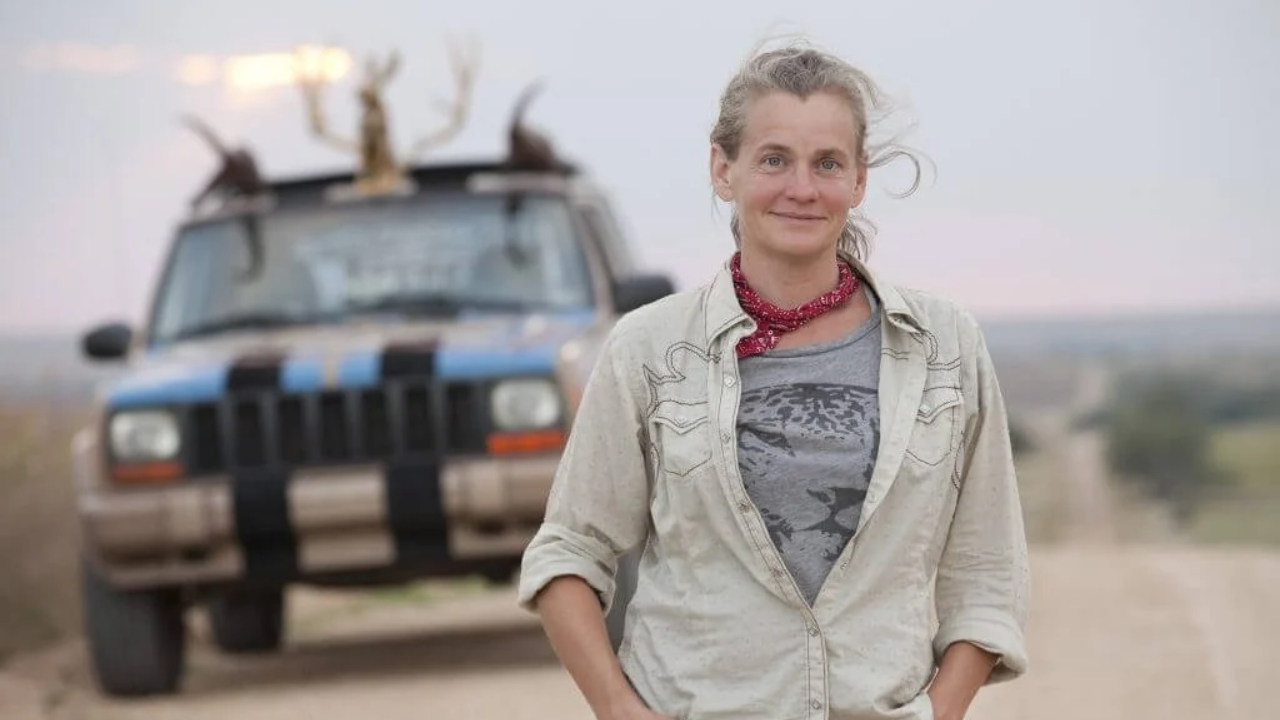
Look at the figure standing beside the pavement in that photograph. Giants along the road were never built for art critics in climate-controlled galleries. They were built for speed and fatigue. In the mid-twentieth century, as family car travel surged after the spread of paved highways and the federal interstate system, small-town builders and sign painters faced a simple survival problem: how do you make a driver look up when they are going sixty-five miles an hour?
You go big. You exaggerate. You turn a fiberglass mold or a frame of welded steel and chicken wire into a beacon. If a town has a diner, put a giant cup of coffee on the roof. If a repair shop wants to be remembered between two counties of cornfields, erect a towering figure with a grin wide enough to read from a quarter-mile back.
Here is a metaphor to make the stakes easier to see: think of roadside giants like lighthouses along a rocky coast, except the sea is boredom and the rocks are missed exits. When the interstate bypasses a town, the traffic moves faster, but the small businesses along the old route often go dark. A giant statue on the edge of town is a flare sent up into the heat. It says, Stop here. Someone made this for you.
When one of those giants disappears, the loss is rarely just physical. A missing statue often signals a closing cafe, a faded paint job, a family business that ran out of steam, or a memory that no longer has a physical marker on the map.
The Quiet Vanishing Act Along the Blacktop
Let's be honest: most of us drive right past the warning signs until they are gone.
I have spent enough hours behind a steering wheel with a lukewarm thermos and a GPS voice counting down miles to know how easy it is to treat old highways as flyover space. You tell yourself you will stop on the way back. You never do. Years later, you hear a place closed and feel a sudden, sharp regret that surprises you—not because you visited every week, but because you assumed it would always be there.
That assumption is fragile. Weather chews through fiberglass and paint. Sun bleaches red down to chalky pink. Storms snap steel anchors. Land gets sold, bypasses reroute traffic away from old main streets, and aging owners retire without a buyer willing to take on a thirty-foot headache.
To ground this in a concrete, everyday situation—and to be completely clear, this is a hypothetical scenario built from real highway patterns—imagine a retired mechanic named Arthur living outside a small Kansas town. For thirty years, the giant statue outside his shop drew families off the highway. Kids climbed onto the concrete base for photos while Arthur checked tire pressure or handed out paper maps. When the highway shifted and the shop closed, the statue stayed behind, peeling in the wind. Arthur didn't mourn a piece of commercial signage. He mourned the proof that his corner of the world once made people pull over and say hello.
What happens next? Usually, silence. Nobody writes a front-page obituary when a roadside oddity gets hauled away piece by piece.
If you are asking whether miniature replicas can really save something that big, that is a fair question—and I don't pretend to have a neat, tidy answer. A small model cannot pump money back into a struggling rural economy or stop a hailstorm from cracking real fiberglass. Anyone claiming a shelf full of miniatures solves rural preservation is overselling the craft.
Still, shrinking a giant does something remarkable to human attention. When something is massive, we treat it like part of the scenery—like a water tower or a billboard. When you shrink it down to human scale, you see the human hands behind it. You notice the curves, the paint lines, the awkward proportions of a sculptor working without a blueprint, the sheer stubbornness of someone trying to stand out on an empty plain.
Why Smallness Makes the Big Picture Sharp
Consider what happens next when a visitor stands in front of a museum display of nearly two hundred miniature roadside attractions in Kansas: the eye slows down.
Out on the open road, a giant flashes past in four seconds. You catch the silhouette, maybe a joke on a sign, and the wind pulls you forward. Inside a quiet museum space, those nearly two hundred tiny works sit close enough to compare. You can trace how one builder's idea echoed another's. You see the humor, the local pride, the regional quirks, and the long, winding story of American car culture packed into one room.
That shift in scale works like a lens. A wide-angle shot shows everything at once until nothing stands out. A close-up shows the grain of the wood, the brush stroke, the dent in the fender. By gathering nearly two hundred small replicas in one place, the artist builds a map of memory that you cannot see while staring through a windshield at seventy miles an hour.
Think about the craft required just to reach that number. Nearly two hundred pieces is not a weekend novelty. It is years of measuring, shaping, painting, fixing mistakes, and refusing to quit when a tiny part snaps in your fingers. Every single replica asks a quiet question: If the original is gone, or miles away, how do we keep its spirit alive?
A museum collection in Kansas also does something unexpected for people who never set foot on that stretch of road. It turns scattered, vulnerable landmarks into a shared conversation. A visitor from two states away might recognize a replica from a childhood trip with grandparents. Suddenly, a personal memory connects with a wider history of roadside architecture, folk art, and small-town ambition.
Look closely at the level of detail in miniature model work like the scene shown above. Every tiny window frame, street line, and scale structure takes patience that rushes past modern speed. When an artist applies that same care to roadside giants—turning towering icons into nearly two hundred small replicas for a Kansas museum—the contrast becomes part of the magic. Big things command space; small things command closeness.
What We Carry When We Pull Off the Road
There is a reason people still argue about the best way to cross the country: take the fast interstate and make good time, or take the slower two-lane road and see what you find.
Fast roads get us there. Slower roads—and the stories saved along them—remind us why we travel in the first place. We don't travel just to move our bodies from point A to point B. We travel to feel surprise, to step outside our own routines, and to find reminders of human imagination in places we didn't expect.
Roadside giants were always a little eccentric. They stood outside the rules of polite architecture. They were loud, playful, slightly strange, and deeply personal. Shrinking nearly two hundred of them into a Kansas museum doesn't turn them into sterile museum relics; it gives them a second life where people can lean in, look closely, and remember what it felt like to spot a giant on the horizon.
Next time you are out on a long stretch of road and see something odd rising above the scrub or the treeline, don't just keep your foot on the gas. Slow down. Look at the paint. Think about the person who put it there, and the ones who might miss it when it's gone.
A four-inch statue cannot cast a shadow across a highway, yet in the quiet of a Kansas room, nearly two hundred tiny giants are holding up a very big piece of history.