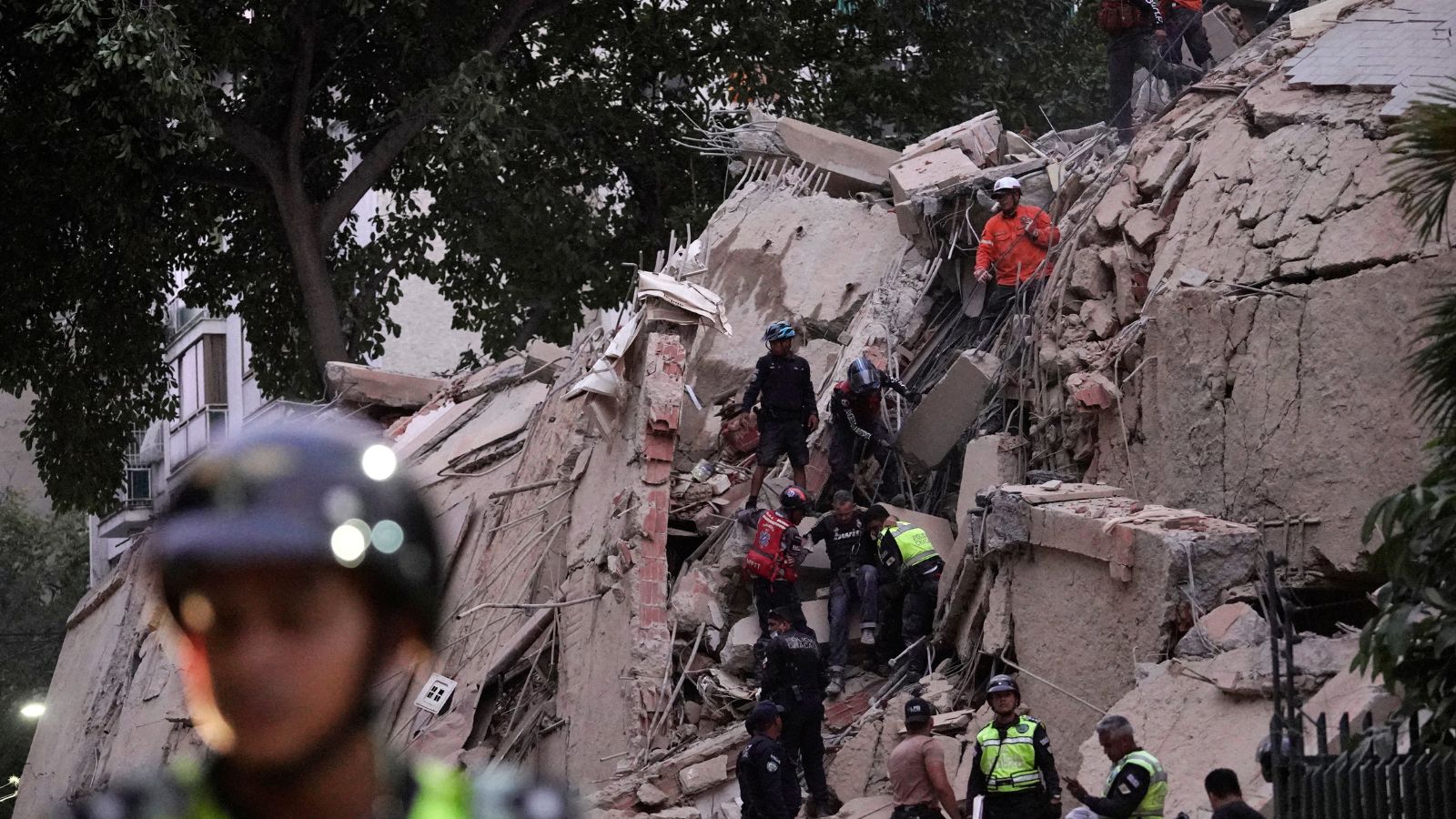
The dust settles with a sound like broken glass. It is a specific kind of quiet that follows a disaster—not peaceful, but heavy, thick with the smell of ruptured gas lines and pulverized drywall. In the early hours after the ground stopped shaking, the numbers trickling out of the capital were modest. Dispatches spoke of minor structural failures. They noted a handful of casualties.
Then came the second tremor, not of the earth, but of the data.
The official death count did not just rise. It more than doubled, violently leaping to 589 lives cut short. Alongside that number sits another, equally staggering reality: over 2,900 people are currently nursing injuries in overwhelmed, under-resourced medical wards. To read these figures on a glowing screen is to experience a strange, clinical detachment. We see the digits 589 and 2,900 and our brains catalog them as statistics, mere metrics of a tragedy happening somewhere else, to someone else.
But statistics are just human beings with the tears wiped away.
The Anatomy of an Awakening
To understand what happens when a country fractures, look at a hypothetical citizen named Alejandro. He lives in a modest brick apartment on the slopes overlooking Caracas. When the main 6.8-magnitude quake struck, Alejandro wasn’t thinking about tectonic plates or geological fault lines. He was thinking about his daughter’s shoes. He was reaching for them near the front door when the world tilted sideways.
The sound was the worst part. It was a low, subterranean growl that vibrated through the soles of his feet before it ever reached his ears.
When the tremor stopped, his building was still standing, though mapping a spiderweb of new cracks across the plaster. He thought they had been lucky. The initial media reports corroborated his optimism, suggesting the damage was localized, contained, manageable.
But the true scale of an earthquake is an onion. You peel it back layer by layer, and every layer makes you weep.
As rescue workers pushed past the main thoroughfares and into the dense, tightly packed hillside communities, the narrative shifted. Buildings that appeared stable from a distance were revealed to be hollowed-out shells. The sudden, terrifying jump in the death toll from a few hundred to nearly six hundred isn't a sign that more people died days after the event. It means the living finally reached the dead.
The Geometry of Collapse
Why do some structures survive while others become concrete tombs? The answer lies in the invisible architecture of economics and engineering.
Consider a simple deck of cards. If you stack them perfectly, they can bear a surprising amount of downward weight. But nudge the table even slightly from the side, and the entire structure shears, sliding into a flat heap. This is lateral force. Buildings are inherently designed to withstand gravity—the downward pull. They are not always prepared for the horizontal whip-sawing of a major seismic event.
In rapidly growing urban environments, construction often outpaces oversight. A bag of concrete mixed with too much sand to stretch a budget behaves exactly like brittle chalk under pressure. When the earth moves, these compromised structures undergo what engineers call a pancake collapse. Roofs drop squarely onto floors, leaving zero void spaces for survival.
This geometry explains the sudden influx of 2,900 injured citizens into local clinics. These are not people with minor cuts and bruises. They are survivors of crushing forces, individuals pulled from the rubble with compound fractures, severe dehydration, and internal trauma.
The pressure on the healthcare system is a secondary disaster. Bandages run low. Clean water becomes a currency. Surgeons work by the flickering light of auxiliary generators, knowing that a single power failure could add another digit to the growing casualty list.
Beyond the Epicenter
The ripples of a disaster extend far beyond the physical zone of destruction. The psychological footprint of a massive earthquake alters a population's relationship with the very ground they walk on.
For weeks after the main shock, the human body remains on high alert. Every passing heavy truck, every slamming door, sends an electric jolt of adrenaline through the nervous system. People refuse to sleep indoors. Parks and public squares transform into tent cities, not because the homes are completely destroyed, but because the trust between the citizen and the ceiling has been broken.
It is an uncertain, fragile existence. The country must now pivot from the frantic energy of search and rescue to the slow, grueling marathon of reconstruction. Families are left to redefine what normal looks means when their neighborhoods have been fundamentally rewritten.
The true measure of this crisis will not be captured in the final, audited numbers, whenever they arrive. It is found in the quiet moments between the aftershocks, in the hands digging through gray dust, looking for a familiar face, a keepsakes, or a pair of child's shoes left behind near a doorway.


