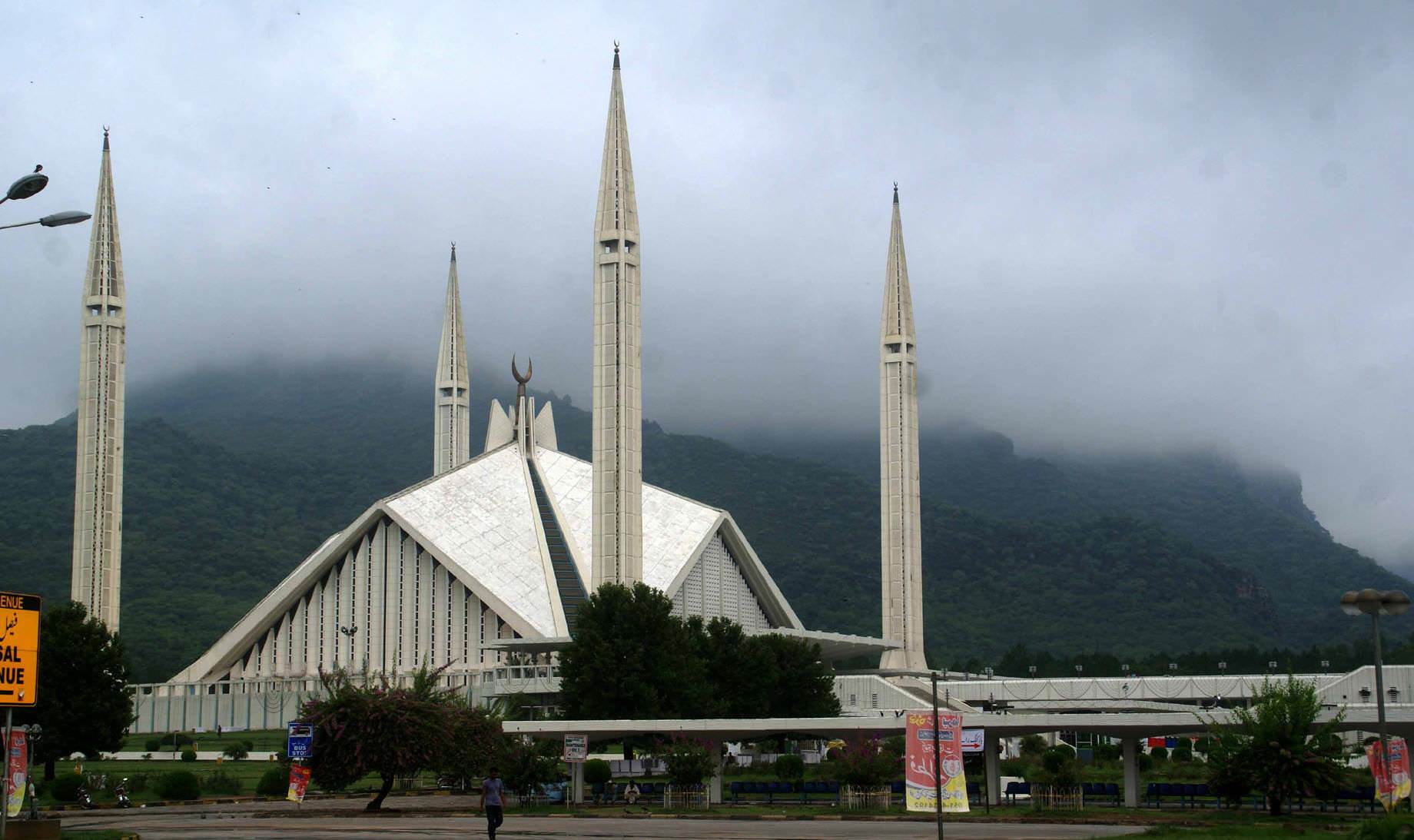
The heavy air of Islamabad does not just hang; it clings. In the high-security enclaves of Pakistan’s capital, the scent of jasmine often competes with the sharp, metallic tang of jet fuel from arriving diplomatic transports. This week, the tarmac at Nur Khan Airbase cooled under the weight of a delegation that carries more than just briefing binders. Steven Witkoff and Jared Kushner have landed.
They are not career diplomats in the traditional sense. They do not carry the weathered, cynical gait of State Department lifers who have spent decades trading polite barbs over porcelain tea sets. Instead, they bring the frantic, results-oriented energy of the New York boardroom to a region where time is usually measured in centuries, not quarterly cycles. The White House has sent them with a singular, staggering directive: talk about Iran.
To understand why two real estate moguls turned envoys are sitting in a fortified room in Pakistan, you have to look past the maps. You have to look at the people living in the borderlands.
The Geography of Anxiety
Imagine a merchant in Quetta. For him, the border between Pakistan and Iran is not a line on a map; it is a lifeline or a noose. When tensions between Washington and Tehran tighten, the flow of goods stutters. Prices for fuel and cooking oil creep upward. Life becomes a series of calculations about what can be afforded and what must be sacrificed.
This is the human cost of the "maximum pressure" campaign. It isn't just about centrifuges or heavy water reactors. It is about the friction of survival.
Pakistan finds itself in a punishing squeeze. To its west lies Iran, a neighbor with whom it shares a porous, 560-mile border and a complicated history of energy needs. To its east lies India, its eternal rival. Above it sits the Taliban’s Afghanistan. And through the middle runs the desperate need for American investment and Chinese infrastructure.
Witkoff and Kushner arrived in this pressure cooker not to offer platitudes, but to move the needle. Their presence suggests that the administration believes the traditional channels of diplomacy have become clogged with the silt of old grudges. They are looking for a breakthrough that bypasses the bureaucratic maze.
The Art of the Backchannel
Traditional diplomacy is a slow-motion dance. It requires sub-committees, working groups, and a thousand "non-papers" that eventually lead to a communique that says very little.
The Kushner-Witkoff approach is different. It relies on personal rapport and the blunt language of transaction. Kushner, having pioneered the Abraham Accords, views the Middle East—and by extension, South Asia—as a series of solvable problems if the right incentives are placed on the table.
During these meetings in Islamabad, the discussions likely veered away from the ideological and toward the concrete. What does Pakistan need to keep its economy from flatlining? What can Pakistan do to ensure that its territory isn't used as a pressure valve for Iranian interests?
There is a specific kind of tension in these high-level sit-downs. The air conditioners hum. The Pakistani officials, often military or intelligence figures with decades of local experience, eye these newcomers from the West. There is a silent question hanging over the table: Do you actually know where you are?
The Iranian Shadow
The elephant in the room isn't actually in the room. It’s 400 miles away in Tehran.
Iran is watching this visit with a mixture of suspicion and calculated interest. For years, Tehran has viewed Pakistan as a potential bridge to the West—or at least a neighbor that won't join a blockade. If Kushner and Witkoff succeed in pulling Islamabad closer to the U.S. orbit regarding Iranian sanctions, the walls close in further on the Islamic Republic.
But the stakes go beyond sanctions. There is the matter of regional stability. A misstep in these talks doesn't just mean a failed memo. It means increased insurgent activity in Balochistan. It means more blackouts in Karachi. It means the thin thread of regional peace stretches until it snaps.
Witkoff, a man who built a career on identifying the value of a property before the foundation was even poured, is now trying to value the cost of a war that hasn't happened yet. He is looking for the "hidden equity" in a diplomatic deal.
The Invisible Stakes
Why does this matter to someone sitting in a coffee shop in London or a suburb in Ohio?
Because the world is a closed system. The talks in Islamabad dictate the price of a gallon of gas three months from now. They determine whether the next generation of American soldiers will find themselves pulled into a conflict in the Strait of Hormuz. They decide if the global economy remains a functioning machine or a collection of broken parts.
The skepticism surrounding this duo is palpable. Critics argue that foreign policy shouldn't be treated like a commercial real estate flip. They worry that the nuance of Persian history or the intricacies of Pakistani domestic politics will be bulldozed in favor of a "win."
Yet, there is a counter-argument that is harder to dismiss. The "experts" have been managing this specific crisis for forty years, and the result has been a stalemate that teeters on the edge of catastrophe. Perhaps the boardroom mentality is the only thing left that hasn't been tried.
The Long Flight Home
As the delegation prepares to leave, the sun sets over the Margalla Hills, casting long, distorted shadows across the city. The results of these meetings won't be visible tomorrow. There will be no grand signing ceremony on the lawn of the Prime Minister’s house.
The real work happens in the silence that follows. It happens in the redirected shipments of fuel, the quiet cooling of rhetoric, and the backchannel messages sent from Islamabad to Tehran.
Witkoff and Kushner will board their plane and ascend into the thin air of the upper atmosphere, leaving the heavy heat of Pakistan behind. They leave behind a nation that is perpetually waiting for the other shoe to drop.
Deep in the bazaar, the merchant in Quetta doesn't care about the Abraham Accords or the intricacies of the New York real estate market. He only cares if the border stays open. He only cares if the giants in the room remembered that he exists.
The jet engines roar, drowning out the sound of the evening call to prayer, and the world holds its breath to see if the deal actually closed.


