The passport stamp smells like dry ink and bureaucratic indifference. When you pass through customs in a foreign city, you carry your history in a blue or red booklet, hoping the man behind the glass will not look too closely at the turbulence written across your face. But some travelers do not just carry personal history. They carry an architecture of ideology, an apparatus of power that stretches thousands of miles across oceans, landing quietly on foreign tarmac while ordinary people look the other way.
Imagine, for a moment, an immigrant family sitting in a modest living room in New Jersey. Sunlight cuts through the blinds, striping the carpet. Outside, American cars hum past on asphalt. Inside, the television murmurs in a native tongue, broadcasting images from a homeland half a world away. On the screen, a charismatic leader steps off a diplomatic jet on American soil. He wears a pressed tunic, smiles with practiced serenity, and waves to a cheering diaspora.
To the casual observer, it is just another state visit. Handshakes. Motorcades. The quiet clinking of glasses at closed-door geopolitical summits.
But the father in that living room stops breathing for a second. He remembers 2002. He remembers smoke curling over the streets of Gujarat. He remembers the name written on the ideological banners of the men who marched through his neighborhood, leaving shattered storefronts and silent grief in their wake. That leader stepping off the plane today is the same man who once presided over that very state while the ashes cooled.
And now, he has arrived in the United States.
Across Washington, D.C., away from the cameras and the diplomatic pageantry, another kind of paperwork is rustling. The United States Commission on International Religious Freedom, an independent watchdog body tasked with keeping watch over the soul of the world, has just issued a sharp, unyielding demand. They are urging the federal government to impose targeted sanctions. Not against the nation as a whole, mind you, but against a specific entity. The Rashtriya Swayamsevak Sangh.
The RSS.
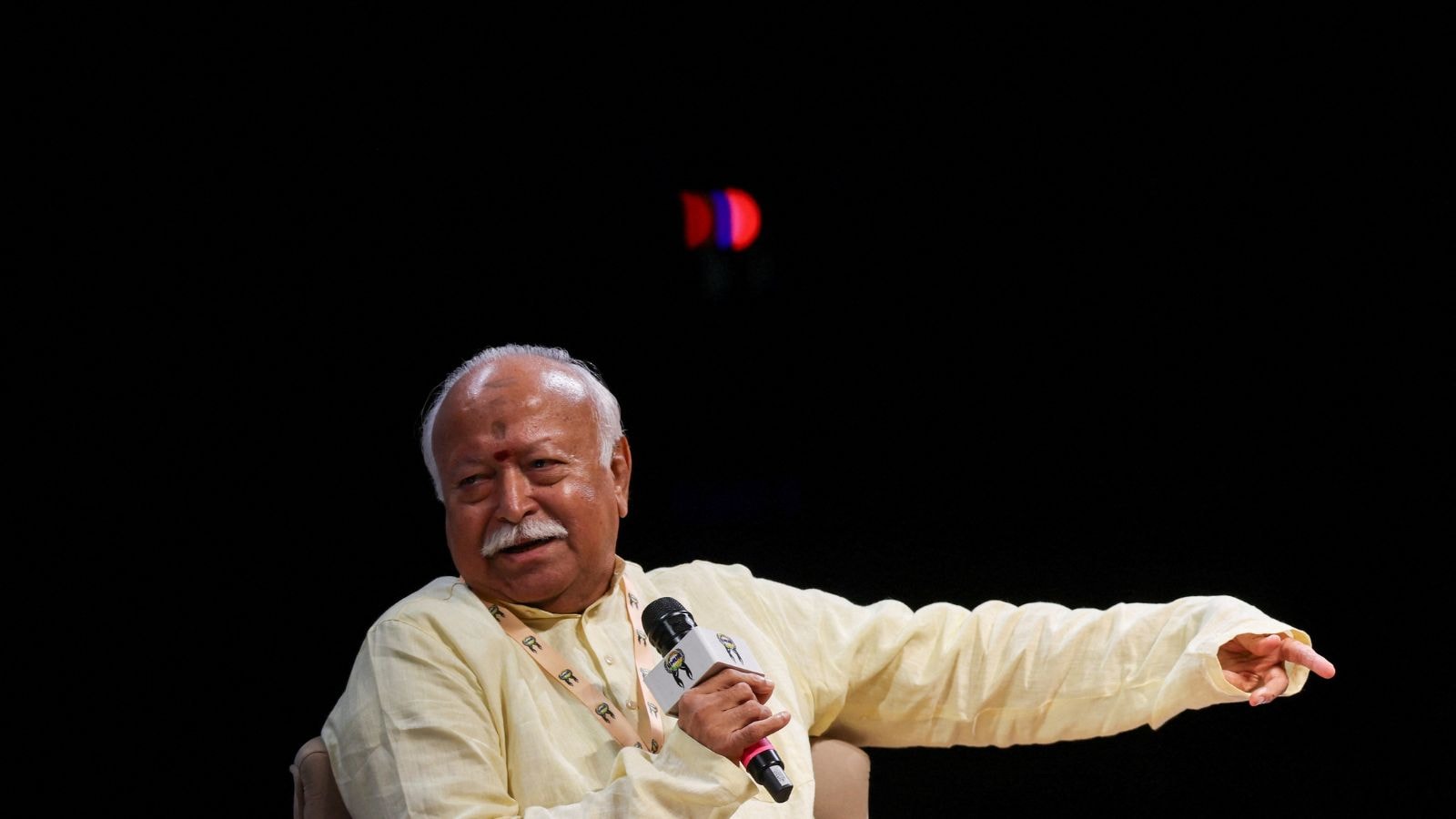
To many Westerners, the acronym sounds like alphabet soup. To millions across the globe, it is the heartbeat of a massive cultural and political movement that has steadily reshaped the largest democracy on Earth. Founded a century ago, modeled in part after European nationalist movements of the interwar period, the RSS operates as a vast cadre of disciplined volunteers. They run schools, organize community camps, and preach a doctrine of cultural revivalism.
Critics, however, see a darker machinery at work. They point to a core philosophy that defines Indian identity primarily through the lens of the majority Hindu faith, casting religious minorities—particularly Muslims and Christians—as perpetual outsiders in their own ancestral land.
When the US religious freedom panel looks at the RSS, it does not see a harmless civic club. It sees an ideological engine driving a steady rise in discriminatory rhetoric, cowed state machinery, and unchecked mob violence against vulnerable communities. It sees a pressure cooker heating up beneath the surface of a strategic geopolitical ally.
Diplomacy is a game of mirrors. Governments must weigh moral clarity against military alliances, economic trade deals, and the cold calculus of regional containment. India is a vital counterweight in Asia, a massive market, a democratic partner against rising authoritarianism elsewhere. Because of this, human rights concerns are often folded up neatly and tucked away into the bottom drawer of a diplomat's briefcase.
The federal commission is trying to pry that drawer open.
Sanctions are rarely just economic tools; they are moral declarations. They say to the world that certain behaviors, certain forms of systemic exclusion and organized intimidation, carry a cost. When a watchdog agency urges the White House to penalize the ideological parent of India's ruling political establishment, it creates a diplomatic tremor. It forces a collision between human rights advocacy and realpolitik.
Consider what happens next in the quiet corridors of the State Department. Officials sigh, run calculations on trade deficits, and balance the optics of looking weak on human rights against the risk of alienating a crucial partner in the Global South. Every policy memo is vetted, softened, and qualified.
Meanwhile, back in that New Jersey living room, the father turns off the television.
The visitor has flown home. The motorcades have cleared. The red-carpet photographs have faded from the front pages of the newspapers. But the atmosphere in the room has shifted. The invisible lines of global politics have tightened just a fraction more around the lives of people who simply want to live without looking over their shoulders.
Borders are porous to ideology. Hatred and hope both travel remarkably well, slipping past customs agents without ever needing a passport. The real test of a global power is not how it treats its friends when the cameras are rolling, but whether it finds the courage to look at the shadows those friends cast behind them.
The ink on the commission's report dries. The paperwork sits on a mahogany desk. And the world keeps spinning, weighted down by the quiet, heavy things we choose to ignore until the ground beneath us begins to shift.