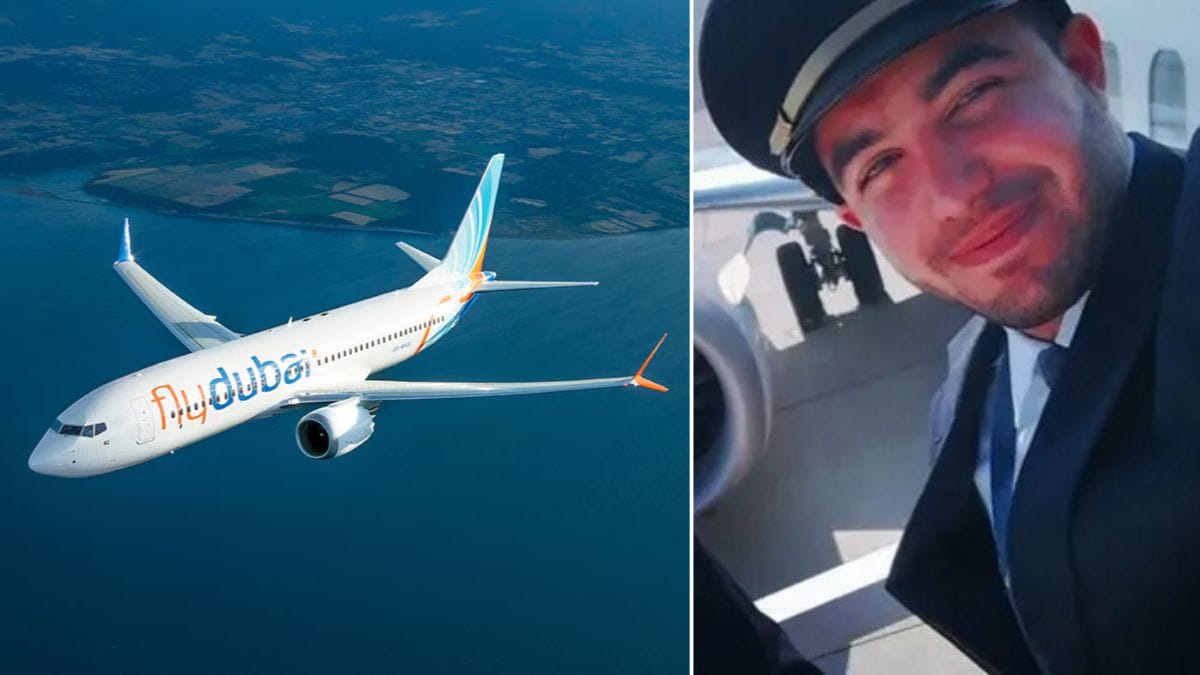
The desk in the government office in Wellington was cluttered with manila folders, printed logs, and the cold, unyielding transcripts of a disaster that happened years ago, yet still casts a long shadow across the international skies. Outside, the New Zealand wind rattled the panes. Inside, investigators leaned over documents that trace the private steps of a man who once sat in a training simulator, practicing emergency procedures for a flight he would eventually help steer into a devastating encounter with fate.
Hamam al-Hammami. The name is etched into the painful history books of aviation following the catastrophic flydubai crash. Now, authorities in New Zealand are formally probing his life, his days, and his hours during flight training with a United Kingdom firm.
Why look backward when the wreckage has long been cleared from the runway? Because aviation safety is written in blood and forensic patience. Every crash is a puzzle box with pieces scattered across time zones. To understand why a crew reacted the way they did in those terrifying final seconds in the dark over Rostov-on-Don, you have to go back to where the reflexes were built. You have to look at the classroom. You have to look at the instructor's notes. You have to look at the quiet moments between simulator sessions when a future pilot is forming the mental models that will either save them or fail them.
The Anatomy of a Hundred-Millisecond Decision
Imagine sitting in a fixed-base flight simulator. The hydraulic jacks are locked. The room smells of warm electronics and stale coffee. The instructor stands behind the console, tapping a keyboard to inject a sudden, catastrophic wind shear or an instrument failure into the artificial horizon.
In that box, you do not think. You react. Muscle memory takes the wheel long before logic can catch up.
When investigators examine a pilot's training history, they are searching for the origin point of those reflexes. Was a specific warning sign glossed over? Did an instructor note a hesitation during spatial disorientation drills months before the tragedy? Training records are rarely glowing profiles of perfection; they are maps of human limitation. Every trainee struggles with something. Every pilot has a blind spot. The inquiry launched by New Zealand officials into al-Hammami’s tenure at a British training facility is not an exercise in assigning blame to an institution that taught him. It is an epidemiological dig. It is about tracking how human cognition behaves under extreme duress, and whether the systems designed to prepare pilots for the worst actually equipped them for the impossible.
The flydubai flight 981 disaster remains one of modern aviation's most haunting modern enigmas. A Boeing 737-800, descending through heavy winds and poor visibility, executing a botched go-around. The airplane pitched up violently, stalled, and plunged into the earth at near-supersonic speed. In the cockpit, two human beings wrestled with conflicting instrument readings, fatigue, and the sensory illusions that trick the inner ear when the sky and the ground lose their boundary.
You cannot understand how those pilots fought that yoke without understanding how they were taught to interpret a falling horizon. And that teaching happened years earlier, thousands of miles away, in quiet training rooms where instructors watched young men and women trace flight paths with their fingers.
The Bureaucracy of Memory
Investigating the past is a slow, agonizing process of administrative archaeology. Cross-border inquiries take months, sometimes years, navigating diplomatic channels, privacy laws, and corporate hesitancy. The UK firm that trained al-Hammami holds files that are subject to strict legal frameworks. New Zealand's involvement stems from jurisdictional threads and international aviation oversight protocols under the International Civil Aviation Organization, where states linked to crew certification, training providers, or operator registries often pool resources to ensure no stone is left unturned.
Yet, behind the dry legal terminology and the diplomatic cables lies a deeply human story.
Al-Hammami was once just another face in a briefing room, clutching a heavy pilot's manual, worrying about check rides, and dreaming of the line. He was learning how to master machines that weigh tens of tons and carry hundreds of souls. The transition from student pilot to commercial first officer is paved with intense pressure. It is a grueling gauntlet of exams, simulator checks, and psychological screenings designed to weed out those who crack under stress.
Did the system miss something? Or did the system function precisely as designed, only to collide with a set of environmental and atmospheric conditions that no simulator could fully replicate?
That is the question haunting the investigators in Wellington. It is a question that keeps safety board members awake at night across the globe. Because if training pipelines are flawed, the fix must be global. If evaluation metrics fail to capture how a pilot handles cumulative fatigue or sudden spatial disorientation in pitch-black night skies, then every airline ticket sold tomorrow carries an invisible asterisk.
The Long Tail of Aviation Safety
Aviation does not evolve through inspiration. It evolves through post-mortems.
Every rule in the international rulebook—every mandatory rest period, every redesign of a primary flight display, every shift in crew resource management training—is a scar left behind by a catastrophe. When New Zealand probes a historical training record, they are not just looking at one man's career. They are stress-testing the entire philosophy of how we license human beings to command winged tubes of aluminum through the stratosphere.
We put immense trust in pilots. We strap ourselves into their care, surrender our phones, lean back against the headrest, and fall asleep thousands of feet above the earth, trusting that the stranger up front has the steady hands and clear mind to bring us home. When that trust is shattered, the shockwave ripples outward through families, companies, and nations.
The investigation will conclude. Reports will be filed, heavy with technical jargon, probability matrices, and recommendations for regulatory bodies. But the fundamental truth of the cockpit will remain unchanged. At the edge of disaster, software cannot save you, manuals cannot argue for you, and regulators cannot pull the nose up.
It always comes down to two human beings in the dark, staring at glowing dials, trying to make the right choice before the ground comes up to meet them. And somewhere in a file cabinet in Wellington, the paper trail of how one of those pilots learned to fly serves as a solemn reminder of how heavy that responsibility truly is.