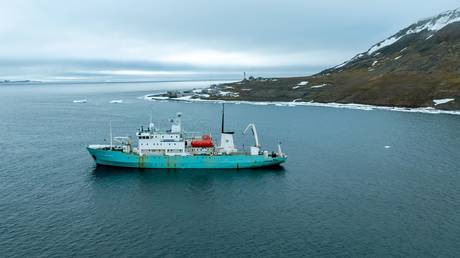
Shadow War on the Water The Strait of Hormuz Crisis and the Tanker Sidr Attack
Blockades do not always begin with a formal declaration of war. Sometimes they start with a flash in the dark, a localized explosion on a steel hull, and the quiet realization that the vital arteries of global commerce are entirely undefended against asymmetric violence.
Riyadh recently pointed a direct finger at Tehran, holding the Iranian state responsible for a devastating strike on the oil tanker Sidr while it transited the heavily contested Strait of Hormuz. The incident left multiple seafarers dead and sent shockwaves through international energy markets. This was not a random accident of navigation. It was a calculated escalation in a long-simmering maritime shadow war.
Anatomy of a Maritime Choke Point
Geography is an unforgiving jailer. Roughly a fifth of the world's petroleum supply squeezes through the Strait of Hormuz every single day. At its narrowest point, the shipping lane narrows to just two miles of inbound traffic and two miles of outbound traffic, separated by a two-mile buffer zone. That geography makes the passage an irresistible target for state actors seeking to exert geopolitical leverage without triggering an all-out conventional war.
Tankers like the Sidr represent massive, lumbering targets. They move slowly, carry volatile cargo worth hundreds of millions of dollars, and operate with skeleton crews of international mariners who possess zero combat training. When an explosive projectile or drone hits a vessel of this scale, the physical damage is severe, but the psychological impact on global shipping lanes is catastrophic. Insurance underwriters instantly recalibrate their risk models. Freight rates spike by double-digit percentages within hours. Crews begin to refuse contracts that involve Persian Gulf routes.
The Attribution Problem and Deniable Warfare
Modern maritime sabotage thrives in the gray zone between peace and open conflict. Governments that sponsor attacks on commercial shipping rarely leave a signed receipt. They rely on plausible deniability, utilizing proxy militias, modified fast-attack craft, or uncrewed surface vessels launched from remote coastal hideouts.
Riyadh's accusation against Tehran regarding the Sidr disaster relies on intercepted communications, radar telemetry, and forensic analysis of the shrapnel recovered from the blast site. Yet, international jurisprudence offers little recourse when an attack occurs in disputed international waters under the cover of night. The United Nations Security Council issues statements of concern. Maritime coalitions issue advisory notices urging extreme caution. Meanwhile, shipowners are left holding the financial bag, facing impossible choices between abandoning profitable trade routes or risking the lives of their crews.
Economic Shockwaves Beyond the Gulf
The fallout from the Sidr incident extends far beyond the immediate waters of the Middle East. Energy markets operate on pure psychology as much as physical supply and demand. When traders see blood on the deck of a crude carrier in the Strait of Hormuz, they immediately price in the risk of total closure.
Refineries in Asia and Europe depend on the uninterrupted flow of Gulf crude. Alternative pipelines exist, such as Saudi Arabia's East-West pipeline terminating at Yanbu on the Red Sea, but they possess finite capacity and cannot fully compensate for a total shutdown of maritime tanker traffic. Every time a vessel is targeted, the cost of manufacturing, transportation, and daily consumer goods ticks upward globally. The seafarers pay the ultimate price with their lives, while the global economy pays a hidden tax in persistent inflation.
The Failure of Conventional Deterrence
For decades, the Western-led security architecture in the Persian Gulf relied on massive naval deployments to keep the shipping lanes open. Aircraft carriers, guided-missile destroyers, and maritime patrol aircraft have patrolled these waters continuously. Yet, a multibillion-dollar destroyer is poorly optimized for stopping a low-cost, explosive-laden drone or a swift assault boat piloted by irregular combatants.
Deterrence has broken down because the cost-benefit analysis for the aggressor heavily favors cheap disruption over expensive defense. Building and launching a kamikaze drone costs a fraction of what it takes to repair a damaged supertanker or deploy a specialized counter-drone system to every commercial vessel at sea. Until the international community develops a viable framework for holding rogue state actors accountable for maritime terrorism, the waters of the Strait of Hormuz will remain a lethal gauntlet for the merchant mariners who keep the world running.