Commercial aviation relies on a fragile architecture of absolute trust. Passengers strap themselves into aluminum tubes pressurized at high altitudes, placing their lives entirely in the hands of two strangers sitting behind a locked reinforced door. When that trust fractures, the repercussions extend far beyond a single airline or a isolated tragedy.
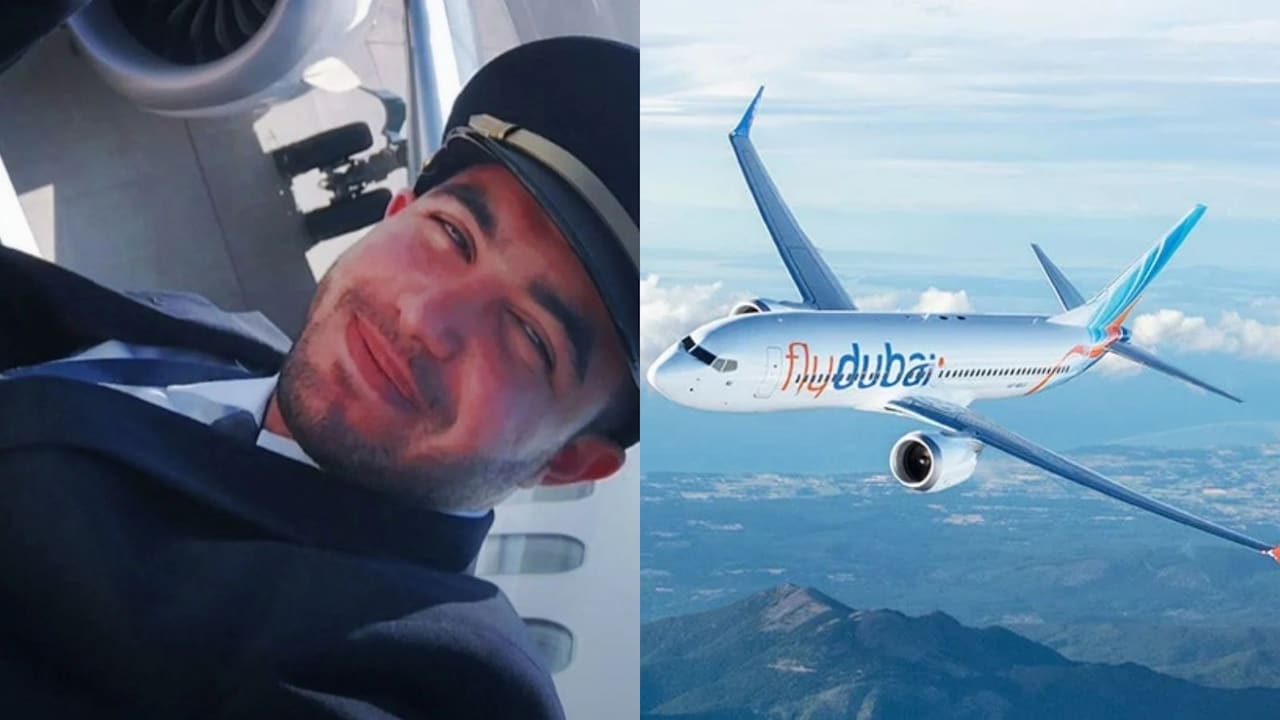
The aviation world recently turned its collective gaze toward a quiet yet alarming investigation surrounding a flydubai copilot whose background featured a stark juxtaposition. Born in the United Arab Emirates, this commercial aviator possessed a professional history that intersected with a period in war-torn Syria. For investigators, intelligence analysts, and industry insiders, this revelation is not merely a curious biographical footnote. It exposes deep vulnerabilities in global pilot vetting procedures, background screening inconsistencies across international jurisdictions, and the complex challenge of tracking personnel who transit through geopolitical conflict zones.
Commercial aviation recruitment is supposed to be the gold standard of vetting. Pilots undergo medical evaluations, psychological assessments, simulator checks, and background investigations that stretch back ten years. Yet, modern conflict zones present unique blind spots. Syria has spent over a decade fractured by civil war, foreign interventions, and the fragmentation of civil registries. When an individual spends formative or professional years operating within or adjacent to such an environment, standard employment verification breaks down entirely. Local paper trails vanish. Electronic databases do not synchronize. Diplomatic friction prevents friendly intelligence sharing with authorities governing those territories.
This structural blind spot allows individuals with complex or obscured histories to slip through the cracks of international carriers. Flydubai, like many rapidly expanding carriers in the Middle East, recruits from a global talent pool. Pilots arrive from Europe, North Africa, South Asia, and various regional hubs. The sheer velocity of pilot hiring required to meet booming post-pandemic travel demand has occasionally strained the administrative capacity of human resources and security departments. When a resume lists ambiguous periods or entities operating in grey-zone jurisdictions, background screening agencies often face a brick wall. They rely on self-reporting, local police certificates that may be easily manipulated, and whatever digital footprint remains accessible.
The aviation industry operates on regulatory frameworks established by the International Civil Aviation Organization, known as ICAO. Annex 17 of the Chicago Convention mandates security controls for personnel, but implementation remains decentralized. National aviation authorities retain sovereign control over how background checks are executed. The United States Federal Aviation Administration and the European Union Aviation Safety Agency maintain rigorous vetting protocols, often tied to intelligence networks that can flag individuals associated with conflict zones or extremist elements. However, carriers operating outside these specific regulatory umbrellas may rely on less integrated security architectures.
A pilot operating a Boeing 737 or an Airbus A350 holds the ultimate key to a high-consequence weapon. The Germanwings Flight 9525 tragedy in 2015 brutally demonstrated what happens when psychological screening fails. While that incident involved mental health rather than geopolitical risk, the underlying vulnerability is identical. Security protocols are reactive rather than proactive. Regulators tend to rewrite the rulebook only after a catastrophe occurs.
Investigating the background of the flydubai copilot brings to light the uncomfortable reality of grey-market aviation personnel. During times of intense regional conflict, various non-state actors, shadow airlines, and cargo operations run flights into restricted airspace using altered tail numbers, falsified manifests, and crews operating under opaque employment contracts. Pilots who fly in these environments often acquire valuable turbine hours under high-stress conditions, making them attractive candidates for commercial airlines desperate for experienced flight deck crew. Yet, the provenance of those flight hours is rarely scrutinized with the intensity it demands. Did a pilot merely fly cargo over a conflict zone, or did they interact with sanctioned entities? Did they undergo radicalization, or were they simply seeking a paycheck in a chaotic market?
The distinction matters. Modern security is built on threat vectors. A pilot with unvetted exposure to conflict zones represents a potential insider threat. Intelligence agencies worry about coercion, ideological alignment, or compromise by foreign intelligence services operating in destabilized regions. When an airline's security department fails to unpack a complicated biographical chapter, the risk migrates directly to the flight deck.
Carriers insist that their internal security measures are robust. They point to Interpol checks, embassy verifications, and continuous monitoring programs. Critics argue these measures are largely superficial, designed for regulatory compliance rather than genuine risk mitigation. If a state authority in a country of origin does not digitize or share its criminal and security records, international checks return a clean slate by default. Absence of evidence is routinely misinterpreted as evidence of absence.
The geopolitical landscape further complicates matters. The UAE maintains complex diplomatic relationships across the Middle East. Balancing economic growth, aviation dominance, and regional security requires a delicate dance between open commerce and strict intelligence oversight. When a pilot with a Syrian chapter in their dossier secures employment in a premier Emirati airline, it highlights the friction between regional mobility and national security.
Reform in this sector is long overdue, yet fiercely resisted by airlines concerned with hiring bottlenecks. Introducing mandatory centralized global security clearance databases for commercial pilots would eliminate many current loopholes. Such a system would require international cooperation across geopolitical divides, an unlikely prospect in the current global climate. Alternatively, airlines could be held legally liable for failing to thoroughly investigate anomalous gaps or high-risk locations in an applicant's work history.
Until structural changes occur, the industry will continue to rely on a patchwork of administrative checks that struggle to keep pace with modern geopolitical instability. Passengers boarding their next flight assume that every name on the flight deck roster has been vetted by counterintelligence standards. The reality is far more mundane, bureaucratic, and vulnerable.
The flydubai copilot story is not an isolated anomaly. It is a symptom of an industry expanding faster than its security apparatus can secure. Every unexamined resume and every unverified geographic chapter represents a calculated risk taken by corporate boards prioritizing operational capacity over absolute safety. As long as the skies remain profitable, those risks will persist, hidden behind locked cockpit doors and routine pre-flight announcements.