Silence.
That is the first thing you notice inside a pediatric retina clinic when a doctor turns off the overhead fluorescent lights and clicks on a handheld slit lamp, projecting a narrow beam of blue light straight into a toddler’s dilated pupil while the parent holds their breath in the corner.
You hear the hum of the ventilation system, the faint rustle of paper on the examination table, and the rhythmic tap of a clinician’s shoe against linoleum as they peer through magnifying lenses at a landscape of microscopic blood vessels that look, to an untrained eye, like delicate red coral pressed against orange glass. When you sit in that darkened room as a parent, time loses its standard geometry, stretching single seconds into suffocating hours while you wait for someone in a white coat to name the thief stealing your child's sight.
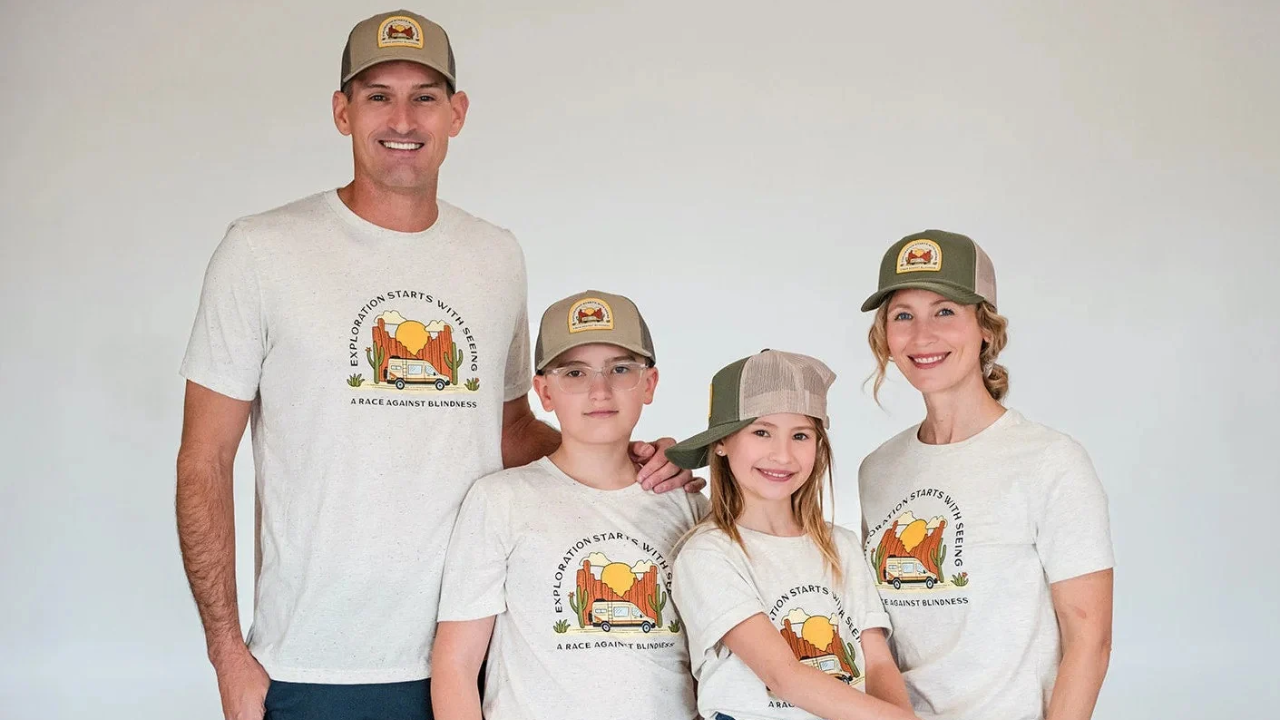
For one Arizona family, that name arrived not as a thunderclap, but as a quiet, devastating whisper that changes the architecture of every morning afterward. Their young son was diagnosed with a rare, degenerative eye disease—one of those brutal genetic anomalies that affects so few children worldwide that pharmaceutical giants routinely leave it off their quarterly balance sheets.
Most parents, handed a diagnosis with no approved cure and a ticking biological clock, are forced into a posture of agonizing helplessness, refreshing medical journals at three in the morning and praying for a clinical trial to materialize out of thin air. This family did something radically different. They looked at the empty shelves of modern medicine, looked at their son’s face, and committed $7.1 million of their own capital to build the cure themselves.
The Architecture of an Invisible Theft
To understand why a family in Arizona would write a check large enough to fund a small biotech startup, you first have to understand how rare retinal diseases actually dismantle a child's world.
Imagine your eye as an extraordinarily sensitive, self-cleaning digital camera that never turns off. The lens at the front focuses light onto the retina at the back—a paper-thin layer of neural tissue lined with millions of microscopic light-sensing cells called photoreceptors. Rods handle your night vision and peripheral awareness; cones process sharp detail and vibrant color. Every single second you are awake, these cells convert incoming photons into electrical signals, firing them down the optic nerve to the brain like fiber-optic cables transmitting high-definition video.
In a healthy eye, an army of support cells sits directly behind those photoreceptors, sweeping away cellular debris and delivering fresh nutrients so the camera never overheats or blurs.
Now, picture a single typographical error buried deep inside one specific gene—a microscopic misspelling in the instruction manual that tells those support cells how to do their jobs.
Because of that single genetic typo, the cellular trash stops getting collected. Toxic byproducts begin to accumulate like rust inside a precision watch, slowly choking the photoreceptors until they starve, wither, and die. Once a human photoreceptor dies, it does not grow back. The brain receives fewer and fewer signals, beginning at the edges of vision or in dim light, slowly closing the aperture of the world until only a pinhole—or nothing at all—remains.
When I first sat across from a genetic counselor years ago, trying to decode a dense, three-page sequencing report full of alphanumeric mutations, the sheer mathematical cruelty of it made my hands shake. You realize that your child’s DNA—the very code you passed down—contains a silent countdown clock that you cannot hear ticking, yet every sunrise brings it closer to zero.
Why Modern Medicine Leaves Rare Diseases Behind
If you have never navigated the rare-disease ecosystem, you might assume that once scientists identify a broken gene, an army of researchers immediately rushes to fix it.
That is not how the economics of drug development work.
Bringing a single new therapy through preclinical testing, animal models, toxicology studies, and three phases of human clinical trials routinely costs hundreds of millions of dollars and takes over a decade. When a condition affects millions of people—like macular degeneration, glaucoma, or diabetes—venture capitalists and major pharmaceutical companies line up to invest, knowing the eventual market will easily recoup their risk.
When a disease affects only a few hundred or a few thousand children globally, the math collapses.
Scientists call this the "valley of death." Academic researchers in university laboratories often discover the exact biological mechanism behind a rare retinal disorder and even design a promising fix on paper. Yet that discovery sits frozen in a freezer or buried in a peer-reviewed journal because there is no financial bridge to carry it from a petri dish into an actual human eye. Without millions of dollars in upfront funding to manufacture clinical-grade viral vectors, run safety trials, and satisfy federal regulators, promising science simply dies on the vine.
Consider what happens next when a parent realizes nobody is coming to the rescue.
You stop being a bystander and become a project manager, a fundraiser, and an amateur molecular biologist overnight. You learn the vocabulary of adeno-associated viruses, gene augmentation, and retinal pigment epithelium while driving carpool or waiting in line at the grocery store. And if you happen to possess the financial means—or the sheer will to mobilize a fortune—you realize that money, in this hyper-specific arena, is not currency.
Money is time.
Buying Time at $7.1 Million
The $7.1 million commitment made by these Arizona parents is not a passive donation dropped into a generic hospital endowment fund where it might sit for years paying for administrative overhead or new lobby furniture. In the world of translational rare-disease research, a targeted multi-million-dollar infusion acts like rocket fuel strapped directly to a specific laboratory bench.
Let us look closely at what $7.1 million actually buys when deployed with surgical precision toward a rare pediatric eye disease:
- The Preclinical Sprint: Before any experimental gene therapy or molecular treatment can touch a human child, researchers must prove it works safely in cellular models and animal studies. Funding a dedicated team of post-doctoral fellows, lab technicians, and specialized breeding colonies costs well over a million dollars a year. Direct funding eliminates the eighteen-month wait for federal grant cycles.
- Manufacturing the Delivery Vehicle: Modern ocular gene therapy typically uses a harmless, hollowed-out virus—most commonly an adeno-associated virus, or AAV—to carry a healthy copy of the missing or broken gene directly beneath the retina. Producing clinical-grade batches of this vector under strict federal manufacturing standards is extraordinarily expensive, often consuming three to four million dollars before a single patient is dosed.
- Natural History Studies: Regulators at the Food and Drug Administration cannot approve a treatment unless doctors know exactly how fast the disease progresses without intervention. Funding a multi-site natural history study tracks patients over months and years, establishing the precise clinical benchmarks needed to prove a new drug actually halted vision loss.
To put this in perspective, consider a hypothetical scenario involving two identical laboratories studying the exact same rare retinal mutation. Laboratory A relies on traditional government grants, submitting thirty-page applications twice a year, waiting nine months for peer review, and receiving just enough funding to run one small experiment at a time. At that pace, a viable treatment takes twelve years to reach a clinic—by which time a five-year-old child diagnosed today is seventeen, and the photoreceptors capable of being saved are already gone.
Laboratory B receives a direct, multi-million-dollar parent-funded commitment on a Tuesday morning. By Friday, they have ordered the custom viral vectors, hired two additional molecular biologists, and contracted a specialized toxicology facility to run parallel safety studies. Twelve years compresses into three.
That compression is the entire ballgame.
The Emotional Toll of Racing a Biological Clock
Numbers on a press release look clean, heroic, and decisive. Seven point one million dollars. A bold headline. A triumph of parental devotion.
What the headlines never capture is the suffocating weight carried between the lines.
When you fund medical research to save your own child, you live inside a constant, grinding tension between hope and terror. Every delay in a manufacturing facility, every contaminated cell culture, every ambiguous data point from a mouse model feels like a personal physical blow. You are acutely aware that science does not care about your calendar, and cellular biology cannot be bullied into moving faster just because you signed a wire transfer.
I remember standing in the kitchen late one evening after putting my own child to bed, staring at a stack of clinical trial protocols while rain tapped against the windowpane, overwhelmed by the terrifying realization that even if you do everything right—even if you raise every dollar, hire the brightest minds at the best institutions, and clear every regulatory hurdle—you are still betting against biological uncertainty.
There is no guarantee in experimental medicine. A vector that restores sight in a laboratory model might trigger an unexpected immune response in a human eye. A dosage that works brilliantly in older patients might behave differently in a developing child. You pour your life’s resources into a scientific moonshot knowing full well that the rocket might still stall on the launchpad.
Yet doing nothing is an unbearable alternative.
For parents staring down progressive blindness, the hardest moment is not the day of diagnosis; it is the quiet, ordinary Tuesday six months later when your child trips over a toy sitting in plain sight in a dimly lit hallway, or tilts their head at an unfamiliar angle just to catch the shape of your face in their remaining field of clear vision. Those tiny, almost imperceptible adaptations break your heart in ways no medical textbook can describe. They remind you that the clock is not an abstraction. It is happening right now, in real time, inside your living room.
How One Family’s Bet Ripples Across the Entire Field
History shows us that some of the greatest breakthroughs in modern ophthalmology did not begin in the boardrooms of Fortune 500 pharmaceutical companies. They began at kitchen tables.
In the early 2000s, parents of children born with Leber congenital amaurosis—a devastating inherited retinal blindness—refused to accept that their children were destined to live in permanent darkness. They formed foundations, mortgaged homes, lobbied Congress, and funded early-stage gene therapy trials at the University of Pennsylvania and Children’s Hospital of Philadelphia. In 2017, those efforts culminated in Luxturna, the first FDA-approved gene therapy for an inherited disease in the United States, restoring functional vision to children who previously could not see stars in the night sky or navigate a dimly lit room without assistance.
When an Arizona family commits $7.1 million today, they are walking directly in those footsteps, and their investment reaches far beyond their own front door.
First, every clinical trial approved by federal regulators requires multiple participants. A therapy built to rescue one boy’s sight inevitably opens a doorway for dozens—and eventually hundreds—of other children around the world carrying the exact same genetic mutation, families who could never afford to fund a laboratory on their own.
Second, rare-disease research acts as a high-speed proving ground for broader medicine. The delivery systems, surgical techniques, and gene-editing tools refined to treat an ultra-rare pediatric retinal disorder routinely spill over into treatments for far more common conditions like age-related macular degeneration and diabetic retinopathy, which affect tens of millions of adults globally. The eye is uniquely suited for these pioneering therapies: it is small, easily accessible to microsurgeons, and partially isolated from the body's systemic immune response, meaning a tiny dose of medicine stays exactly where doctors place it.
What starts as one family’s desperate fight to preserve their son’s ability to read a book or catch a baseball ends up teaching the entire scientific community how to rewrite broken human code.
What Every Parent Needs to Know About Early Vision Clues
Most people assume that if a child had a serious degenerative eye disease, someone would notice immediately. In reality, young children are extraordinarily adaptable, and because they have never experienced normal vision, they have no baseline to tell you something is missing. A child who sees only blurry shapes or suffers from severe night blindness assumes that is simply how the world looks to everyone else.
If you are a parent, grandparent, or caregiver, paying attention to subtle behavioral cues can shave years off the road to an accurate diagnosis—years that can determine whether a child qualifies for emerging clinical trials before photoreceptors are permanently lost:
- Hesitation in Dim Light: Watch how a toddler moves from a brightly lit room into a darkened hallway or outdoors at dusk. Freezing in place, clinging to furniture, or becoming unusually fearful in low light is often the earliest sign of rod photoreceptor dysfunction.
- Unusual Eye Movements or Light Sensitivity: Rapid, involuntary flickering of the eyes (nystagmus), persistent eye-poking or pressing on the eyeballs with knuckles, or extreme squinting in normal daylight warrant immediate evaluation by a pediatric ophthalmologist—not just a routine vision screening at a pediatrician’s office.
- The Case for Genetic Testing: If a specialist suspects an inherited retinal condition, insist on comprehensive genetic sequencing. Today, sponsored testing programs often cover the cost of genetic panels, giving families the exact molecular address of the mutation—the indispensable ticket required to unlock targeted research and clinical trials.
The Light at the Edge of the Frame
Think back to that darkened examination room, the hum of the ventilation system, and the narrow beam of blue light cutting through the gloom.
For decades, the story of rare pediatric eye diseases ended right there in the dark, with a sympathetic doctor handing a devastated family a brochure for low-vision resources and telling them to prepare for the inevitable. The narrative was written before the parents even walked out to their car.
By committing $7.1 million to rewrite that script, this Arizona family has done something profound. They have turned grief into infrastructure, fear into laboratory hours, and love into a tangible, measurable force capable of altering human biology. Somewhere in a research facility right now, a scientist is pipetting clear liquid into a microscopic vial under bright fluorescent lights, racing against a clock that no longer ticks quite as fast as it did yesterday.
And somewhere in Arizona, a little boy is looking out a window, taking in the sharp edges of the desert mountains, the brilliant glare of the afternoon sun, and the faces of the people who refused to let his world go dark without a fight.