The mahogany table is long enough to swallow the sound of shifting feet.
Crystal glasses catch the sharp white glare of chandeliers that have witnessed empires tilt on their axes. Outside, Washington sleeps beneath a damp, indifferent autumn fog. Inside, the air smells faintly of expensive dry-aged beef, silver polish, and the quiet, crushing weight of three trillion dollars in combined market capitalization.
This is not a dinner party. It is a seismic fault line disguised as hospitality.
Across the white tablecloth sit men who can launch a satellite or halt a container ship with a single signed purchase order. On one side, the towering architecture of American enterprise—silicon titans, hardware architects, and venture capitalists whose algorithms dictate what billions of human beings see, buy, and believe before they even finish their morning coffee. On the other side, or hovering just beyond the immediate perimeter of statecraft, the quiet, disciplined emissaries of Beijing, anchored by the towering economic gravity of Xi Jinping and the strategic industrial ambitions of the East.
When Donald Trump sits down to break bread with these tech CEOs and corporate powerhouses, history does not knock politely at the door. It kicks it off its hinges.
We forget, in our comfortable suburban living rooms, how fragile the machinery of modern life actually is. We flip a light switch; electricity floods the wall. We tap a glass screen; a car arrives at our curb in four minutes. We type a desperate question into a search bar; an answer materializes in milliseconds. We treat these luxuries like natural laws, immutable and eternal.
They are not. They are glass castles built on a razor-thin supply chain of raw polysilicon, rare earth metals, and fragile political truces.
Consider the silicon wafer. It starts as a chunk of dull grey rock, pulled from the dirt by miners who will never touch an iPhone. That rock is purified, melted down into a flawless single crystal cylinder worth more than its weight in platinum, sliced into wafers thinner than a human red blood cell, and etched with circuits so microscopic that a single speck of dust is a boulder crashing through a city. That entire process spans seven countries, twelve distinct regulatory bodies, and a fragile web of cross-border trust that could be shredded by a single angry post on a social network or an export restriction signed in a windowless Pentagon office.
Now, imagine holding that supply chain in your hands while two global superpowers stare each other down across a banquet table.
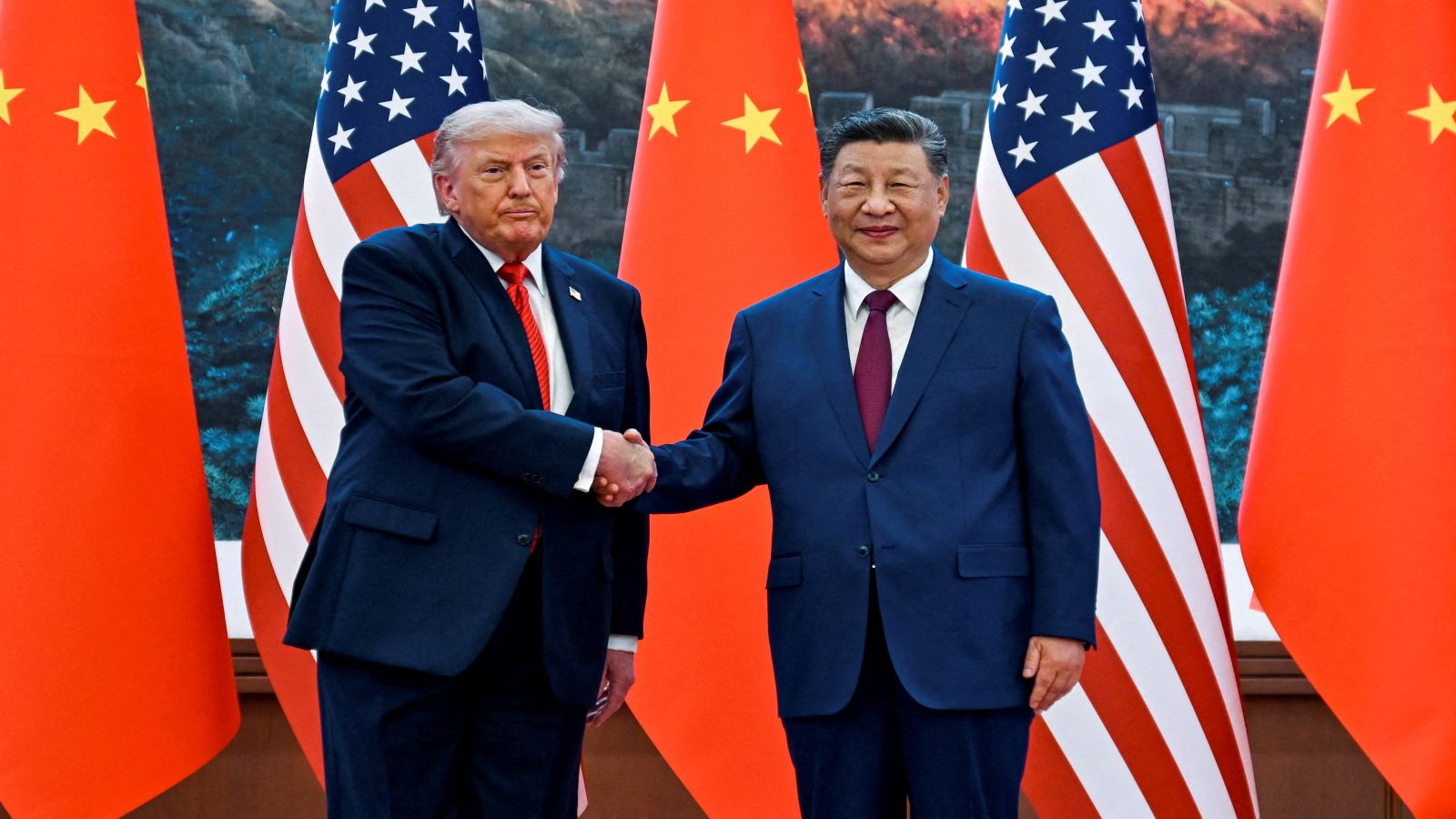
That is what this White House dinner is really about. The cameras outside focus on the handshakes, the forced smiles, the tailored Brioni suits, and the predictable flashbulbs of the political press corps. They talk about tariffs, about intellectual property theft, about rare-earth export quotas, and domestic manufacturing subsidies.
They are missing the human story.
Step back for a moment and look at the faces around that table. These are not emotionless corporate automatons. They are mortals trapped inside machinery of their own invention.
Imagine a founder—let us call him David, though he could be any one of a dozen graying visionaries whose names fill the financial pages. Twenty years ago, David started a company in a drafty garage with a borrowed server and a dream of writing cleaner code. He worked seventy-hour weeks, missed his daughter's first steps, and watched his hair turn silver under the fluorescent hum of office parks. He did not build his empire to conquer a foreign nation. He built it because he wanted to solve a complex math puzzle and leave a dent in the universe.
Now, David sits fifty feet away from the most powerful political figures on the planet. His stock price is a living, breathing creature that fluctuates by billions of dollars depending on whether a trade negotiator in Geneva smiles or scowls. If trade relations sour tomorrow morning, his factories in Shenzhen go dark. If he complies with domestic pressure to decouple entirely from Asian markets, his profit margins vanish, his investors riot, and the price of the microchips that power medical ventilators in Chicago triples overnight.
He is caught in the gears. We all are.
We have outsourced our collective destiny to glass and code. The dinner at the White House is a symptom of a profound, gnawing anxiety: the realization that the modern world has grown too complex for any single government to control, yet too interconnected for any single corporation to ignore.
The tech executives arriving in black SUVs aren't there merely to lobby for tax breaks. They are there to bargain for survival. They are modern-day cartographers trying to map a new continent while the earth is still shifting beneath their feet. On one hand sits the vast, insatiable consumer market of China—hundreds of millions of newly middle-class citizens buying electric vehicles, downloading software, and generating oceans of data. On the other hand sits national security—a brooding, watchful apparatus that sees every microchip as a potential weapon and every code repository as a possible vector for espionage.
You cannot split that baby in half without killing it.
When capital flows freely across borders, innovation accelerates at a dizzying, terrifying pace. Entire diseases are cured in months instead of decades. Clean energy solutions scale to millions of homes. But when those borders slam shut—when suspicion replaces cooperation—the machinery seizes. Prices spike. Innovation stutters. The global village fractures back into walled fortresses, each hoarding its own digital gold.
This is the invisible tension that seasons the beef and chills the wine at these high-level summits.
Every word spoken across that White House table carries a multi-billion-dollar price tag. A concession on semiconductor manufacturing here means a lost competitive edge there. A pledge to invest in domestic foundries sounds patriotic on the evening news, but it translates to five years of staggering capital expenditure and logistical nightmares on the ground.
And what of the rest of us?
We sit downstream from these titans, drinking our morning coffee, scrolling through headlines about trade wars and tech boycotts, treating them like sports scores. Team America versus Team China. Innovation versus regulation. Freedom versus control.
We forget that when elephants fight, the grass gets trampled.
The digital infrastructure that unites families across oceans, powers global financial markets, and preserves the collective knowledge of humanity is remarkably fragile. It relies on trust. It relies on communication. It relies on the simple, radical notion that despite our deep ideological differences, we are tethered to the same fragile rock hurtling through the dark.
When the dinner ends, the press corps will dissect every facial expression. Analysts will parse the phrasing of the joint communiqués for hidden signals. Stock futures will twitch up or down before the Asian markets open.
But the real work—the messy, unglamorous, high-stakes negotiation between human beings trying to manage a world they have made too big to fail—will continue in the shadows, far from the cameras.
The mahogany table will be cleared. The crystal glasses will be washed. The powerful men will board their private jets and fly back to their respective capitals, leaving behind a world that is spinning just a little bit faster, and a little bit more dangerously, than it was yesterday.
The question is not whether the tech titans and the statesmen can reach an agreement over dinner.
The question is whether we, as a species, can survive the brilliant, terrifying architecture we have built.
Consider that the next time you tap your screen.
The silence that follows is deafening.


