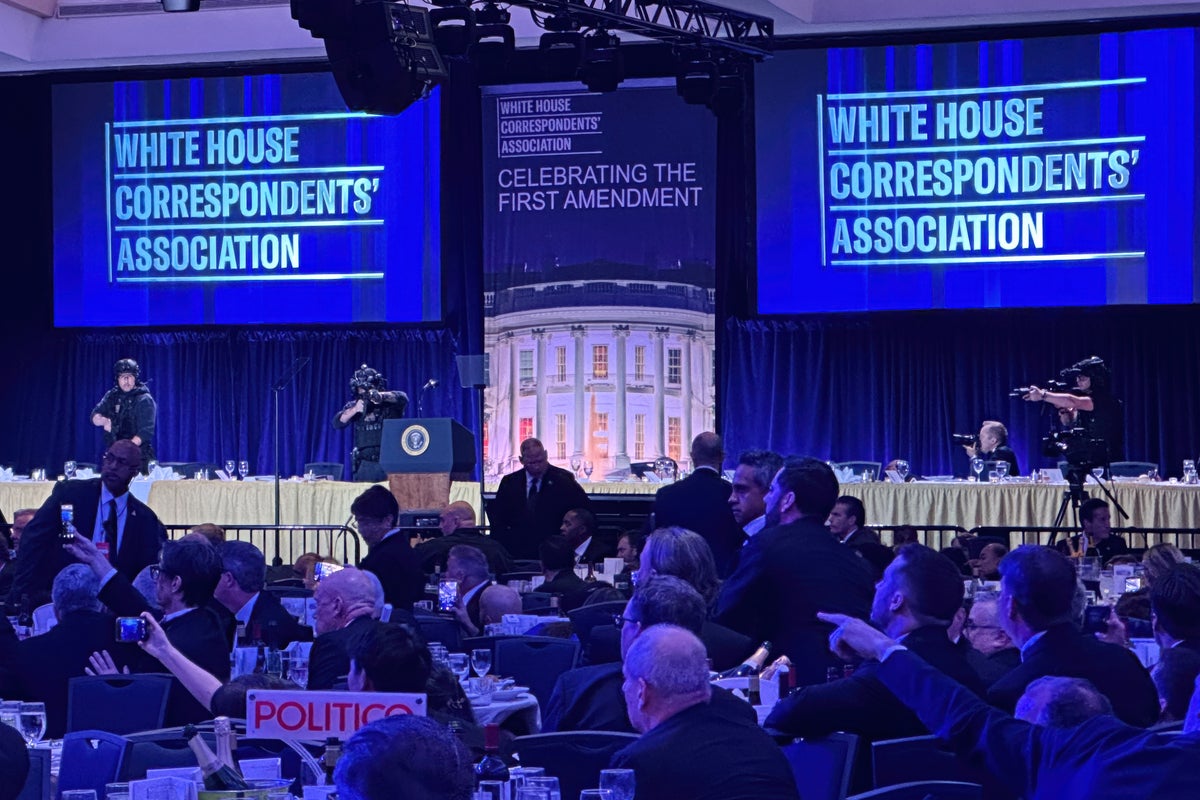
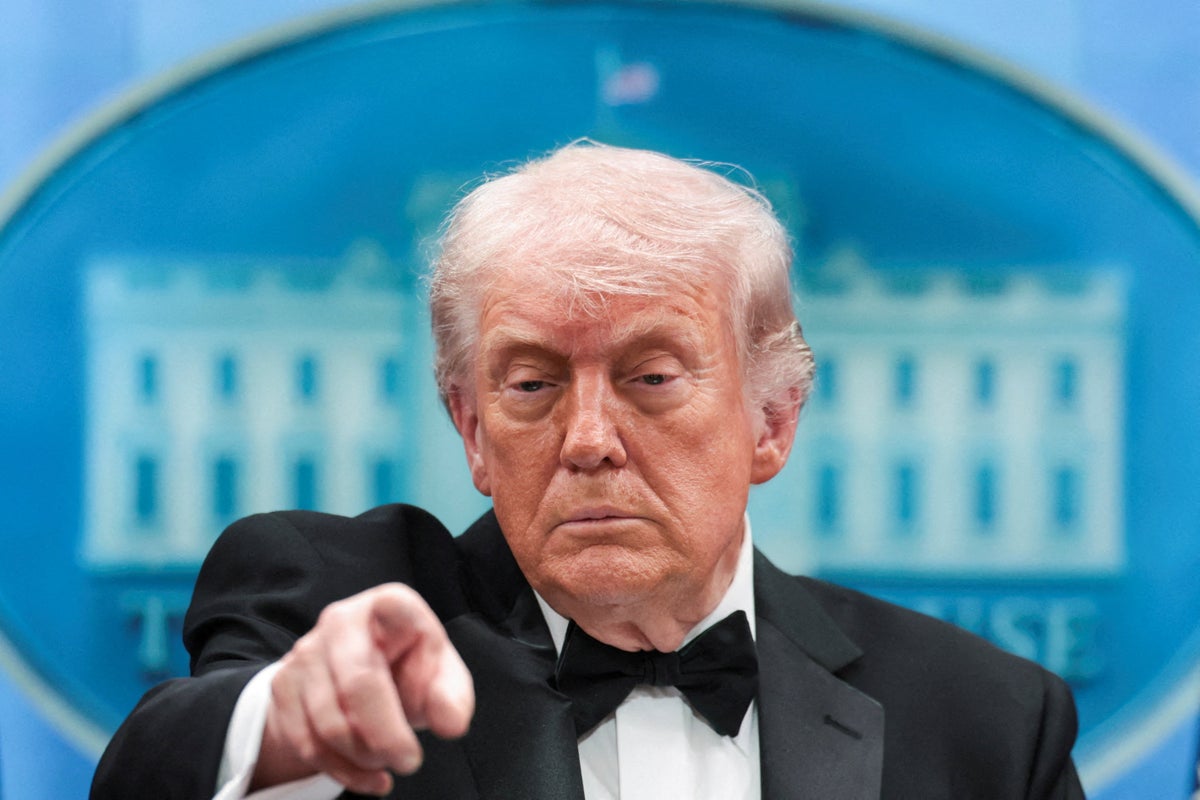
The physical security of high-profile political figures relies on a binary state: total containment or total vulnerability. When a private citizen, reportedly a teacher, bypasses the multi-layered security apparatus of the Secret Service to disrupt a private event involving a former President, the failure is not merely a lapse in judgment by on-site personnel. It is a systemic breakdown in the predictive intelligence and perimeter management protocols designed to prevent "lone wolf" interruptions. The subsequent FBI raid on the individual’s residence serves as a post-incident forensic recovery operation, attempting to bridge the gap between a tactical security failure and a larger potential conspiracy or psychological profile that the intelligence community missed in the pre-incident phase.
The Three Pillars of Executive Protection Failure
The breach at the Mar-a-Lago event can be categorized through three distinct failure points in the security lifecycle.
Information Asymmetry and Pre-incident Indicators: The effectiveness of the Secret Service depends on "protective intelligence"—the ability to identify and neutralize threats before they reach the kinetic stage. If an individual with a public profile or detectable intent can approach a high-value target (HVT) without triggering a watchlist or secondary screening, the intelligence filter has failed. The FBI’s involvement post-event indicates that the data required to flag this individual either did not exist in accessible databases or, more likely, was not synthesized across agencies in real-time.
The Perimeter Permeability Coefficient: Security perimeters are designed as concentric circles of increasing friction. The outer perimeter (local law enforcement), the middle perimeter (event staff and technical surveillance), and the inner perimeter (Secret Service detail) must act as a series of filters. A "storming" incident implies a high permeability coefficient where the transition from "invited guest" or "bystander" to "active threat" happened faster than the response time of the inner detail.
Cognitive Saturation of Security Personnel: During high-density social events like a dinner, agents face cognitive overload. They must distinguish between eccentric but harmless high-net-worth individuals and legitimate threats. The "coward trying to create a national tragedy," as described by security officials, utilized this social camouflage to bypass traditional threat-assessment heuristics.
The Mechanics of the Raid and Forensic Necessity
The FBI's decision to raid the suspect's home is a standard application of the "Digital and Physical Footprint Reconstruction" framework. This is not merely a punitive measure; it is an evidentiary necessity to determine if the breach was a trial run for a more sophisticated attack.
The search focuses on three specific data sets:
- Planning Logs: Hard drives and physical notebooks are analyzed for "attack geometry"—sketches of the venue, notes on Secret Service shift changes, or logs of previous attempts to access restricted areas.
- Network Affiliation: The agency is looking for evidence of decentralized radicalization. In the modern threat landscape, an individual does not need a formal command structure to be part of a coordinated effort; they only need a shared ideological goal and access to open-source intelligence (OSINT) regarding the target’s movements.
- Weaponization of Mundane Objects: Investigators look for evidence that the suspect was testing ways to smuggle non-traditional weapons through magnetometers, such as ceramic blades or 3D-printed components.
The Cost Function of Security Breaches
Every successful breach, regardless of whether physical harm occurs, imposes a massive "Security Tax" on future operations. This tax manifests in two ways:
Resource Reallocation
The Secret Service must now divert technical and human capital toward re-evaluating the Mar-a-Lago footprint. This creates a bottleneck in the protection of other HVTs, as the agency's budget is finite. The "National Tragedy" mentioned by the Secret Service refers to the potential destabilization of the political process, but the immediate cost is the degradation of the protective shield across the entire executive branch due to emergency audit requirements.
Trust Erosion and Protocol Rigidification
A breach leads to "protocol hardening," which often results in less efficient political engagement. As perimeters become more rigid and less permeable, the ability for political figures to interact with the public or donors decreases. This creates an isolated "green zone" effect, where security requirements dictate the pace of political discourse, rather than the other way around.
The Psychology of Social Camouflage
The suspect in this case, identified as a teacher, represents a "low-probability, high-impact" threat actor. Unlike a known extremist with a criminal record, a professional with no prior history utilizes social capital to remain beneath the threshold of suspicion. This is "Social Camouflage."
In tactical terms, the suspect likely leveraged the "Normalcy Bias" of the security staff. Agents are trained to look for outliers—people who look out of place, move too quickly, or show signs of extreme nervousness. A person who matches the expected demographic of a high-end dinner guest can move through a crowd with significantly less friction. The Secret Service's characterization of the suspect as a "coward" is an attempt to de-legitimize the tactic, but from a strategic standpoint, the tactic was effective enough to reach the inner sanctum.
Structural Bottlenecks in Multi-Agency Coordination
The friction between the FBI and the Secret Service often arises in the "hand-off" between protection and investigation. The Secret Service is a reactive body focused on the immediate preservation of life; the FBI is a proactive body focused on the prosecution of crime.
The breakdown occurs in the Data Latency Gap. If the FBI has a file on a person of interest, that data must be pushed to the Secret Service's field teams in a format that is actionable during a fast-moving event. If the data remains siloed in an investigative database, the field agent at the door has no way of knowing that the person in the tuxedo has been flagged for erratic behavior on social media.
The Evolution of the "Lone Wolf" Threat Model
The transition from the traditional threat (coordinated groups) to the modern threat (isolated individuals) has rendered many cold-war era security models obsolete. The "Lone Wolf" model is characterized by:
- Zero Communication Overhead: There are no intercepted phone calls or encrypted messages because there is no one to talk to.
- Rapid Escalation: The time from "ideation" to "action" can be days rather than months.
- High Resource Efficiency: The actor uses their own funds and standard commercial tools, leaving no financial paper trail for the Treasury Department or the FBI to track.
The raid on the teacher's home is a desperate search for a "signal" in a sea of "noise." If no clear evidence of a plan is found, the security apparatus must face the reality that their current filters are incapable of catching a threat that originates within the "normal" population.
Strategic Recommendation for Executive Protection Hardening
To prevent a recurrence, the security framework must move from a Point-of-Entry model to a Continuous Behavioral Analysis model.
First, the integration of AI-driven sentiment analysis on public data must be piped directly into event-access lists. If an attendee's digital footprint shows a sudden shift toward radicalized rhetoric in the 72 hours preceding an event, their access must be revoked or their screening elevated to a Tier-1 physical search.
Second, the Secret Service must implement "Red Team" protocols where undercover agents attempt to use social camouflage to breach their own perimeters. The current failure highlights a lack of imagination regarding how a non-traditional threat actor behaves.
Finally, the legal system must define "Security Interference with a Protected Person" with higher sentencing guidelines to increase the "Price of Entry" for individuals seeking notoriety through disruption. If the legal cost of a breach is perceived as low, the frequency of these incidents will increase as a form of "political performance art," eventually leading to a failure that results in kinetic harm rather than just a national embarrassment.
The immediate action for security directors is to conduct a "Vulnerability Audit" of all private residences currently serving as political hubs. The assumption that a private club or home provides inherent security is a fallacy that was definitively dismantled by this breach. Security must be asset-based, not location-based. Every guest must be treated as a potential breach point until proven otherwise through a multi-factor verification process that extends beyond a simple ticket or invitation.