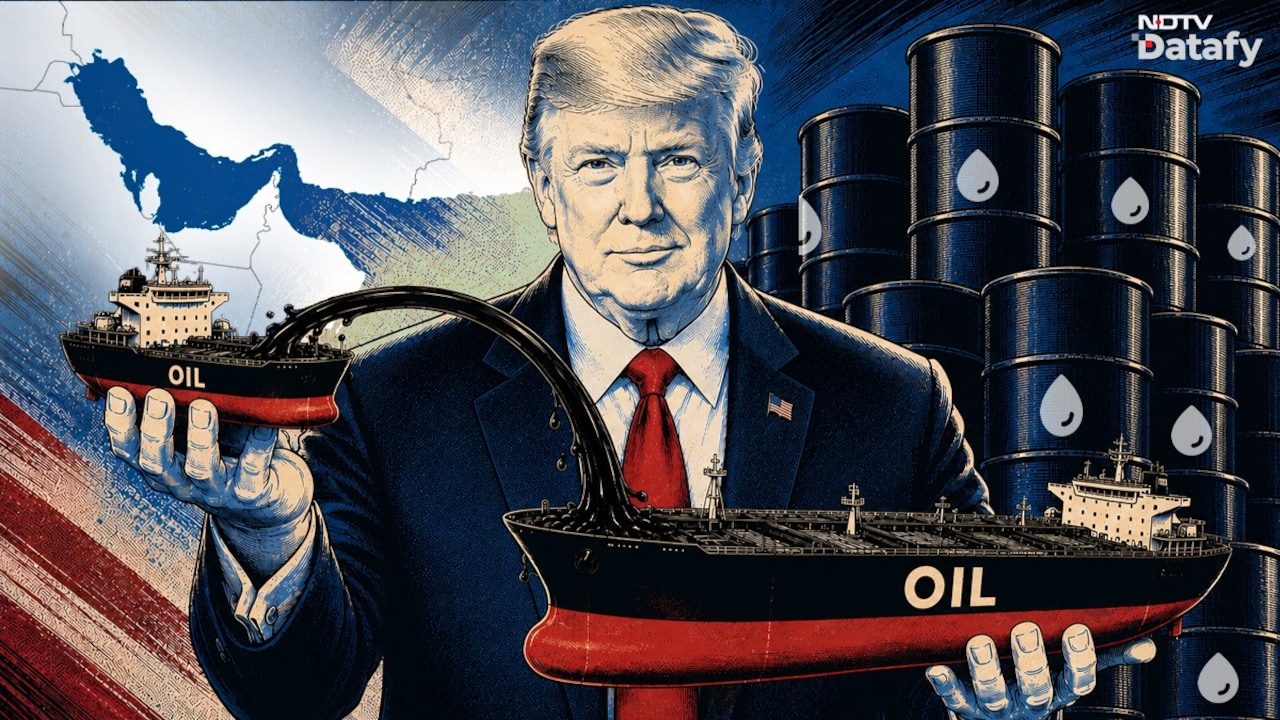
A shadow network of aging tankers has successfully moved an estimated 100 million barrels of American-origin oil and petroleum products through the world's most volatile maritime choke point over the past twenty-four months. Operating under flags of convenience, using disabled transponders, and executing covert ship-to-ship transfers, this "dark fleet" bypasses traditional regulatory oversight to deliver US energy assets directly into highly sensitive markets. This extensive operation exploits regulatory blind spots, showing that the global shadow energy trade is no longer exclusive to sanctioned regimes like Iran, Russia, or Venezuela. It now involves American commodities.
For decades, the dark fleet was understood as a sanctions-busting mechanism used by adversarial nations to keep their economies afloat. But a deep look into maritime tracking data, corporate registries, and insurance filings reveals a massive counter-flow. Traders are using the exact same clandestine tactics to move western crude and refined products into opaque Asian and Middle Eastern supply chains.
The mechanism relies on a sophisticated shell game that begins long before a tanker approaches the Persian Gulf.
How American Oil Enters the Shadow Supply Chain
The journey does not start with midnight smuggling from a Texas port. It begins legitimately. US crude oil exports have surged over the last decade, turning the Gulf Coast into a primary engine of global supply. Millions of barrels leave terminals in Houston, Corpus Christi, and Beaumont every week on fully compliant, well-insured Very Large Crude Carriers (VLCCs).
The pivot to the shadows happens mid-voyage.
A standard shipment destined for a major trading hub like Singapore or Rotterdam is sold and resold multiple times while at sea. Somewhere during this chain of custody, ownership transfers to obscure shelf companies registered in jurisdictions like the Marshall Islands, Liberia, or Panama. The cargo is then transferred to older, poorly maintained vessels that operate outside the Western financial and insurance umbrella.
The Mechanics of the Mid-Ocean Switch
The critical handoff typically occurs via Ship-to-Ship (STS) transfers in designated or illicit lightering zones.
- Location selection: Operators favor areas with high traffic and loose enforcement, such as the waters off the coast of Malaysia, the Mediterranean near Laconia Bay, or international waters outside the exclusive economic zones of West Africa.
- AIS manipulation: The receiving vessel engages in Automatic Identification System (AIS) spoofing. It broadcasts false coordinates, showing it is thousands of miles away, or goes completely dark by turning off its transponder entirely.
- The physical transfer: Over the course of 24 to 48 hours, millions of barrels are pumped from the compliant hull to the shadow tanker.
Once the transfer is complete, the American oil is effectively laundered. It loses its paper trail. It is no longer logged as US export crude; it becomes "Malaysian blend," "Middle Eastern crude," or simply unbranded fuel oil available on the spot market.
The Strategic Detour Through Hormuz
The destination for much of this laundered volume is unexpected. Instead of avoiding geopolitical flashpoints, these vessels are steering directly into the Strait of Hormuz.
This narrow waterway, controlled largely by Iran and Oman, sees the passage of roughly one-fifth of the world’s petroleum consumption. It is a highly militarized zone where western-flagged tankers face constant threats of seizure, harassment, or drone strikes. Yet, the dark fleet moves through these waters with a strange sort of immunity.
The reason is simple. The entities managing these shipments have established deep ties with regional trading hubs that maintain backchannel relationships with both Western institutions and sanctioned states. By moving American oil into the Persian Gulf, operators can blend it with local heavier crudes to create specific fuel specifications demanded by independent refineries in East Asia, particularly China's independent "teapot" refiners.
Furthermore, the storage facilities in places like Fujairah in the United Arab Emirates act as a massive washing machine for energy products. Oil goes into a tank under one origin certificate and comes out under another. The dark fleet provides the logistics pipeline that feeds this system, keeping the origin of the molecules completely untraceable.
Why Western Sanctions and Controls Fail to Stop the Flow
The existence of a US-sourced dark fleet highlights the fundamental breakdown of Western maritime enforcement mechanisms. The G7 price cap and various compliance frameworks were built on a specific assumption. That assumption was that Western dominance over maritime insurance, P&I clubs, and ship financing could act as an effective chokehold on illicit trade.
That leverage is evaporating.
A massive parallel industry has emerged. It features non-Western insurers, sovereign wealth funds willing to look the other way, and ship-breaking yards that sell vessels destined for scrap to anonymous buyers instead of dismantling them.
The Economics of Rusting Hulls
To understand why this trade is so profitable, consider the math behind an aging tanker. A 20-year-old VLCC nearing the end of its commercial life is worth roughly its weight in scrap metal—perhaps $15 million to $20 million.
In the shadow market, that same vessel can be purchased for a premium by an anonymous entity. If that tanker successfully completes just two or three voyages carrying a million barrels of oil each time, it generates enough profit to completely cover the purchase price of the ship, the crew's wages, and the inflated insurance premiums charged by non-standard underwriters.
Everything after that is pure profit. If the vessel is seized, detained, or suffers a mechanical failure, the owners simply abandon it. The corporate structure holding the ship is dissolved overnight, leaving local governments to deal with the environmental and logistical fallout.
The Environmental Time Bomb in the Gulf
This trade is not just a regulatory headache. It is an active ecological threat to the entire Middle Eastern marine ecosystem.
Compliant shipping companies adhere to strict maintenance schedules, vetting processes, and environmental standards enforced by international bodies. The dark fleet operates completely outside this safety net. Many of these ships are rust buckets that should have been broken down years ago. They rarely undergo rigorous hull inspections, their crews are often underpaid and overworked, and their safety equipment is substandard.
+------------------------------------------------------------+
|                THE ANATOMY OF A DARK FLEET RISKS            |
+------------------------------------------------------------+
| 1. AGE: Average vessel age exceeds 20 years.               |
| 2. INSURANCE: Covered by unrated, opaque domestic firms.   |
| 3. INSPECTIONS: Bypasses standard port state controls.      |
| 4. SAFETY: Frequent AIS disabling increases collision risk.|
+------------------------------------------------------------+
If a major collision or hull breach occurs inside the Strait of Hormuz involving a dark fleet tanker, the consequences would be catastrophic. Because these vessels lack legitimate Protection and Indemnity (P&I) insurance, there is no pooled fund to pay for a multi-billion-dollar cleanup operation. The littoral states—Oman, Iran, the UAE, and Saudi Arabia—would be left to manage the disaster alone, while the global energy trade through the strait would grind to a halt.
The risk of collision is amplified by the very tactics these ships use to avoid detection. Navigating one of the world's busiest shipping lanes without broadcasting an AIS signal is equivalent to driving a semi-truck down a highway at night with the headlights turned off. It invites disaster.
The Blind Eye of Global Enforcement
Government agencies are fully aware of these movements. Satellite imagery, synthetic aperture radar (SAR), and radio frequency monitoring can track these vessels even when their transponders are offline. Yet, decisive action remains rare.
The inaction stems from a delicate geopolitical balancing act. The global energy market is highly sensitive to supply disruptions. If regulators aggressively clamped down on every dark fleet vessel moving through the Middle East and Asia, they would effectively remove millions of barrels of daily supply from the market.
The result would be an immediate, sharp spike in global energy prices. For political leaders, the prospect of high fuel prices at home is often seen as a greater risk than the long-term erosion of international shipping regulations.
Therefore, the dark fleet operates in a gray zone of tolerated illegality. It serves as a relief valve for the global energy market, ensuring that despite heavy sanctions and geopolitical tensions, oil continues to flow to where demand is highest. The fact that this flow now involves massive quantities of American crude is the ultimate irony of modern economic warfare.
Tracking the Shell Companies
To dismantle this network, investigators must look past the hulls of the ships and focus on the financial trail. The ownership structures are designed to confuse and exhaust investigators. A single tanker might be owned by a company in Hong Kong, which is owned by a holding company in Dubai, which is managed by an entity in the British Virgin Islands, with the ultimate beneficial owner hidden behind a network of nominee directors.
Banking institutions have upgraded their compliance algorithms, but the sheer volume of global trade allows these transactions to blend into the background noise. Payments are frequently settled in non-Western currencies, through regional banks that do not utilize the SWIFT network, or via complex trade-finance arrangements involving commodities bartering.
This financial insulation means the individuals profiting from this trade face minimal personal risk. They are insulated by layers of corporate law and geographical distance, sitting in comfortable offices far removed from the rusting decks of the tankers they deploy.
The current system of maritime governance is structurally incapable of stopping this traffic. As long as there is a price differential between regulated and unregulated oil, and as long as older tankers can be bought cheaply, the shadow corridors through Hormuz will remain active. The dark fleet is no longer an anomaly born of necessity for isolated nations. It has become a permanent, parallel infrastructure that reshapes how energy moves across the globe, untethered from the control of any single superpower or regulatory regime.


