The dashboard clock reads 8:14 AM. Coffee is cooling in the ceramic mug lodged in the center console. Outside, the windshield wipers slice through a stubborn autumn drizzle, keeping a rhythmic, hypnotic tempo. To anyone watching from the sidewalk, the driver looks completely normal. Hands on the wheel. Eyes forward. A mundane commute on a Tuesday morning.
Except the driver’s right hand isn't holding the wheel. It’s cradling a glowing rectangular screen, thumb flicking rapidly across a text message while a knee keeps the sedan pointed down the lane at forty-five miles per hour.
We have all done it. Or something dangerously close to it. We glance down at a GPS route recalculating, pick up a fallen podcast remote, or sneak a quick look at an email notification that hums against our thigh. We convince ourselves we are different. We are good drivers. We have fast reflexes.
Then the invisible lens catches us.
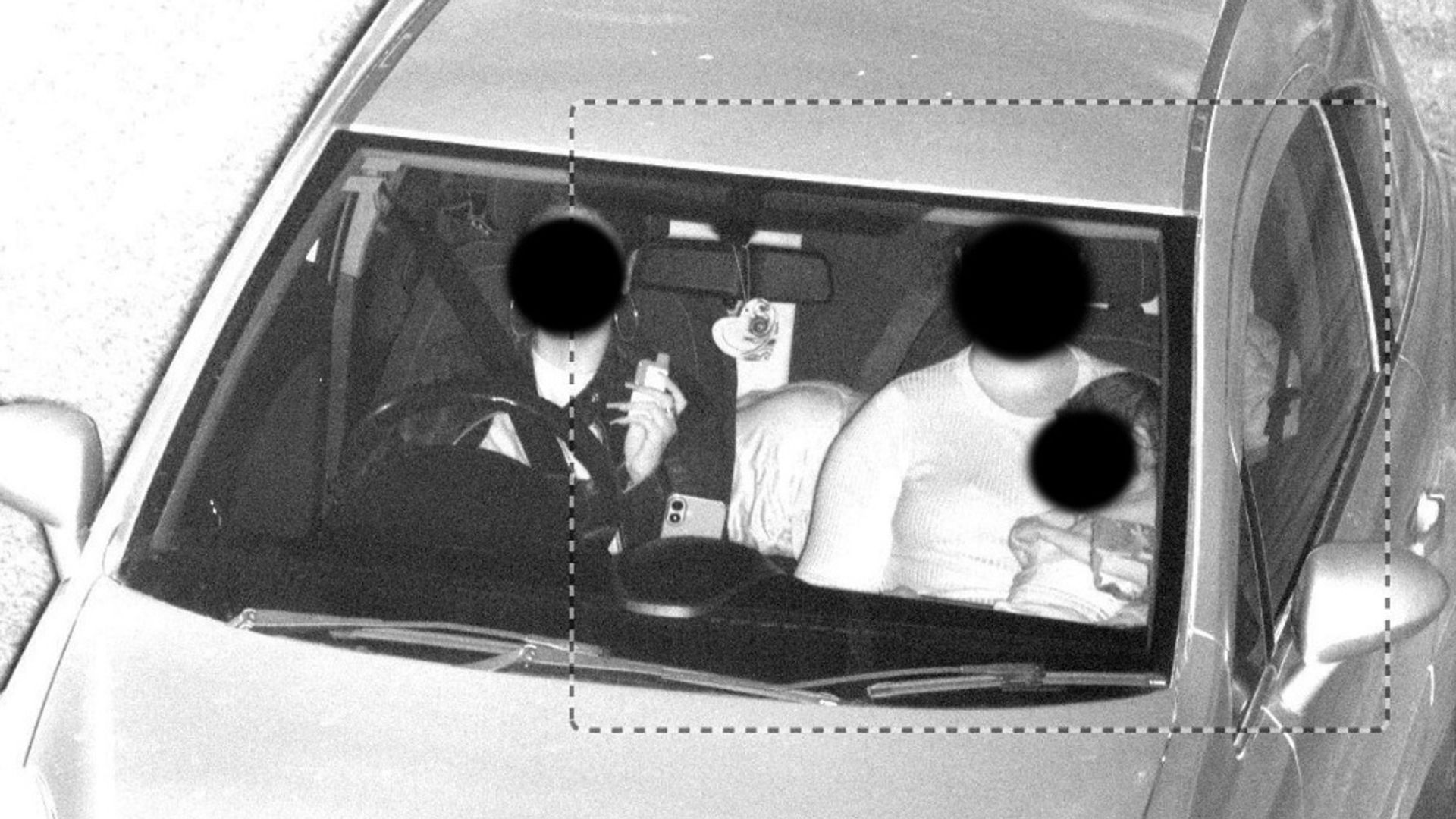
Across intersections and highway gantries in recent months, municipal authorities have begun deploying advanced optical trials—systems powered by artificial intelligence designed to peer through tinted glass and monitor what actually happens inside moving vehicles. The numbers coming out of these trials are not just concerning. They are staggering. Thousands upon thousands of violations captured in mere weeks. Drivers reading books on steering wheels, applying makeup at highway speeds, or staring straight down into laps for stretches long enough to cross entire football fields blindfolded.
The initial public reaction is predictable outrage at the sheer volume of reckless behavior. Headlines call it shocking. Pundits demand heavier fines.
But outrage misses the psychological engine driving this phenomenon. The problem isn't just that people are reckless. The problem is that modern life has trained our brains to treat driving as dead time—an inconvenient gap between two places where we feel compelled to optimize our productivity, soothe our anxieties, or escape our boredom.
The Anatomy of a Blind Second
To understand why a driver looks away for six seconds at sixty miles per hour—covering the length of a football field without looking at the asphalt—you have to look at how our brains process risk.
Evolution built us for the savanna, not the interstate. When a predator approached in ancient times, our adrenaline spiked, our pupils dilated, and we reacted instantly. But cars move at velocities our ancestors never encountered, wrapped in steel cages that muffle the sensory feedback of speed
The Second You Look Away Behind the Wheel
technology, news
The dashboard clock glows 8:14 AM. Rain streaks the windshield in jagged, branching veins. To your left, a commuter grips the steering wheel with white knuckles, eyes darting downward for a fraction of a second. Just a quick glance. Just a text message, a song selection, a momentary escape from the crawl of morning traffic.
In that microscopic blink of time, thousands of pounds of steel roll forward blindly.
We live our lives cushioned by the comforting illusion that we are entirely alone with our choices inside the cabin of a car. But the pavement is changing. The invisible eyes recording our daily commutes are no longer just static lenses capturing a blur of motion. They are waking up. Recent trials deploying advanced artificial intelligence technology along our roadways have exposed a reality that is as terrifying as it is commonplace. Drivers are not just occasionally distracted. They are entirely disconnected from the primary responsibility of piloting a lethal machine.
Look at the data coming out of these recent trials. The numbers do not whisper. They scream.
When authorities deployed high-definition cameras paired with machine-learning algorithms designed to catch illegal mobile phone use and seatbelt neglect, the sheer volume of detections shocked even the cynical engineers who built the systems. Thousands upon thousands of infractions were logged in mere days. Drivers eating breakfast off steering wheels. Drivers staring straight down into glowing laps while barreling down multi-lane asphalt at highway speeds.
(Note: All specific infraction counts referenced here reflect the preliminary, aggregated outcomes of recent automated road safety trials utilizing computer vision.)
Imagine David. David is a hypothetical commuter, a fictional composite built from a thousand real-life observations on any given interstate. David loves his morning coffee. He loves his curated playlist. He considers himself a good driver, a veteran of the asphalt who has never caused a major collision. On a crisp Tuesday morning, David reaches into his coat pocket while navigating a sixty-mile-per-hour curve. His thumb swipes a screen. His eyes leave the road for three seconds.
At sixty miles per hour, three seconds means covering the length of a football field completely blind.
David feels no guilt because nothing bad happened. The universe spared him. The car ahead of him did not slam on its brakes. A pedestrian did not step off the curb. But the camera perched overhead did not blink. It recorded the arc of his hand, the tilt of his head, the glowing reflection of the screen bouncing off his sunglasses.
This is the psychological trap of modern driving. We base our safety not on objective risk, but on outcomes. If we survive a reckless habit, we assume the habit is safe.
Engineers call this automation bias or risk homeostasis, but those are just academic terms for stubborn human denial. We adapt our behavior to feel safe, regardless of actual danger. We assume that because we have survived a hundred distracted miles, the hundred-and-first will be no different.
But the technology does not care about our optimistic self-deceptions.
Computer vision models process thousands of frames per second, isolating micro-behaviors that human observers stationed on overpasses could never hope to catch. These systems do not get tired, they do not suffer from confirmation bias, and they do not look away to check their own radios. They look for specific geometric patterns of human failure. The slumped shoulder. The downward gaze. The strap of a seatbelt tucked haphazardly under an armpit to silence an annoying dashboard chime.
The public reaction to these trials has been predictable outrage. Privacy advocates wave their hands, shouting about surveillance states and creeping panopticons. Motorists complain about being watched, tracked, and nickel-and-dimed by automated municipal revenue streams.
And they have a point. The line between public safety and invasive monitoring is razor-thin. Nobody wants to feel like a lab rat in a behavioral experiment every time they drive to the grocery store.
Yet, consider what happens next on our roads if we reject the mirror being held up to us.
The carnage on our highways is not a force of nature. It is a series of preventable choices. Every year, thousands of families are shattered because someone could not wait until they parked to read an email. When human police officers are tasked with enforcing distracted driving laws, they are hopelessly outmatched. They cannot see through tinted windows at seventy miles per hour. They cannot watch every driver on a four-lane bridge. They are human, and humans have limits.
The machines do not have those limits.
When the first wave of automated detection results hit the news, commentators gasped at the sheer scale of the findings. They called it shocking. They called it unprecedented.
It was neither. It was simply invisible.
For decades, terrible habits festered in the shadows of our daily commutes simply because nobody was watching closely enough. The trial did not create the bad behavior. It merely shined a harsh, unforgiving light on a culture that had grown entirely too comfortable with danger.
Think back to David on his Tuesday morning commute. Imagine if, instead of sliding by unnoticed, a gentle ping notified him that his attention had lapsed for too long. Imagine if the accountability was immediate, systematic, and entirely impartial.
We stand at a strange, uncomfortable crossroads. We have built machines capable of seeing our worst impulses, yet we recoil at the reflection. We want the safety of a modern highway without the discipline required to navigate it.
The rain continues to fall against the glass. The dashboard clock ticks forward to 8:15 AM. Somewhere down the road, a camera lens hums quietly in the gray mist, waiting for the next person to look away.